.webp)
Reading time: 5m 57s
The popular consensus is that crypto has been reduced to four winning categories - perps, memecoin launchpads, stablecoin issuers, and trading apps.
There is some truth to this claim from a revenue perspective.
However, as techno-optimists, we believe there are still more viable use cases for crypto beyond speculation's dominance.
To back up our claim, we are touring some of the major networks to see what interesting things could be cooking within their ecosystems.
Today’s bus stops at Base, the native network of the Base App.
Despite being in the middle of controversy over the discrepancy between the network’s direction and its actions, a look at the charts reveals a healthy network with over $5 billion in TVL.
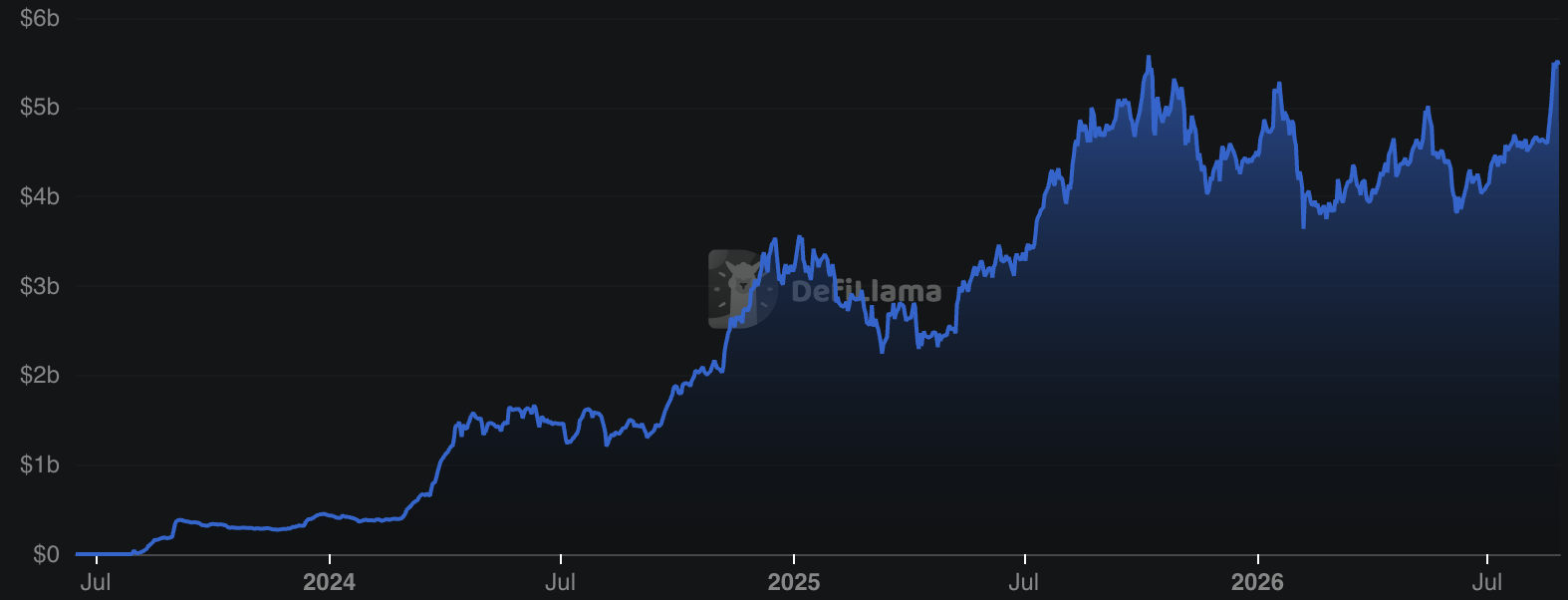
Worth mentioning that this metric is significantly lopsided. Morpho alone accounts for more than 80% of the value locked in the network, totaling over $3 billion.
As of mid-August 2026, the network processed ~12 million transactions per day (ranking among the highest-volume tracked chains), with about 283,000 daily active addresses.
Base also settles ~90% of all x402 transactions, the emerging standard for agent-to-agent micropayments, and has taken the top spot in onchain spot volume for major L1 assets like BTC, ETH, and SOL.
Its share of global DEX volume climbed from 8.8% to 12.1% over the past year (a 38% increase), while overall trading volume is up 38% year-over-year.
In addition, there are refreshing products being built on the network, some of them not yet in the limelight. We have made a list of a few worth mentioning.
Hydrex
Starting off with Hydrex, a Base-native MetaDEX or automated market maker that aggregates native pools with external liquidity sources across the Base ecosystem, routing trades through Uniswap, Morpho, and others to deliver optimal pricing.
Hydrex runs a refined ve(3,3)-style incentive engine where weekly community governance directs HYDX emissions and protocol revenue toward the most productive liquidity and volume.
Account holders who lock tokens capture 100% of the fees generated by Hydrex LPs through weekly distributions, alongside partner incentives, creating a tight flywheel that rewards long-term alignment.
Hydrex has some really cool features, such as the ability to swap tokens and provide liquidity with a single signature, automated liquidity managers, and backing HYDX emissions with real reserve contributions.
SwapRoyale
Sure, we did agree that perps are one of crypto’s four horsemen, but have you tried the DraftKings version?
SwapRoyale brings something particularly compelling to the concept of trading, and it is truly one of the most interesting projects built on the Base network at the moment.
SwapRoyale is a fantasy trading contest app, currently in public beta on iOS. Users pay a fixed entry fee and are furnished with a virtual $100,000 portfolio to enter into real-time trading contests.
In a market where consumer apps are finally starting to win (fomo being the clearest recent proof), SwapRoyale is one of the purest expressions of that thesis: take something people already love (trading), wrap it in a competitive, skill-based format, and make the UX smooth.
Here’s how it works:
- Users sign up with their email
- A wallet is created automatically
- Fund with Coinbase, Venmo, PayPal, Apple Pay, a debit card, or any crypto wallet
- Zero platform fees on deposits or withdrawals
- Users can see and enter contests: assets available, prize pool, payout structure, duration, maximum trades, and minimum entrants
Three contest styles exist:
- Guaranteed Prize Pools (GPPs) - high variance, big top prizes
- Double-Ups/Triple-Ups - lower variance, consistency plays
- Free contests so you can practice the format without risk
SwapRoyale currently averages 300+ daily players and has paid over $100,000 in prizes with over 1500+ paying players.
More integrations are being added to enhance player experience, cutting across rewards, engagement, and usability.
These integrations will introduce a complete 76-badge system with interactive 3D collectibles, revamped streaks, and richer sharing; a weekly Megapot sweepstakes with free-to-earn entries, live pot tracking, and real-ticket-backed prizes; and redeemable partner rewards through Trove, Moonshot, and Beezie.
It also adds Blink instant deposits, a more polished first-run experience, and a broad app-wide UX overhaul featuring a new navigation system, unified leaderboards, smoother gestures, haptics, sounds, animations, and redesigned sharing flows.
The product already shows strong product-market fit and is genuinely one to keep an eye on as things progress.
BlockRun
The onchain agentic economy is being built on Base, and this is far from just a prop.
We’ve watched the most innovative things in onchain AI debut on Base, with x402 among the many significant innovations.
BlockRun adds to these exciting projects as a routing and payment layer for the agent economy.
BlockRun is a permissionless AI gateway that lets autonomous systems discover, pay for, and execute services without API keys, subscriptions, or credit cards.
Through BlockRun, agents can fund a non-custodial wallet with USDC on Base, call any endpoint, and have the x402 protocol embed payment directly into the HTTP request, so settlement happens in a single round-trip.
Through BlockRun, users can enjoy true metered intelligence, allowing them to pay only for what they use.
Payments are settled instantly in USDC as agents operate at internet speed without the friction of traditional API billing.
PixieChess
We also came across a magical, real-money version of chess built on Base, where every piece is a collectible NFT with unique abilities that rewrite the classic rules.
It’s called PixieChess, and players assemble boards from their collection, then either climb the ranked ladder or burn pieces to enter high-stakes tournaments and brawls.
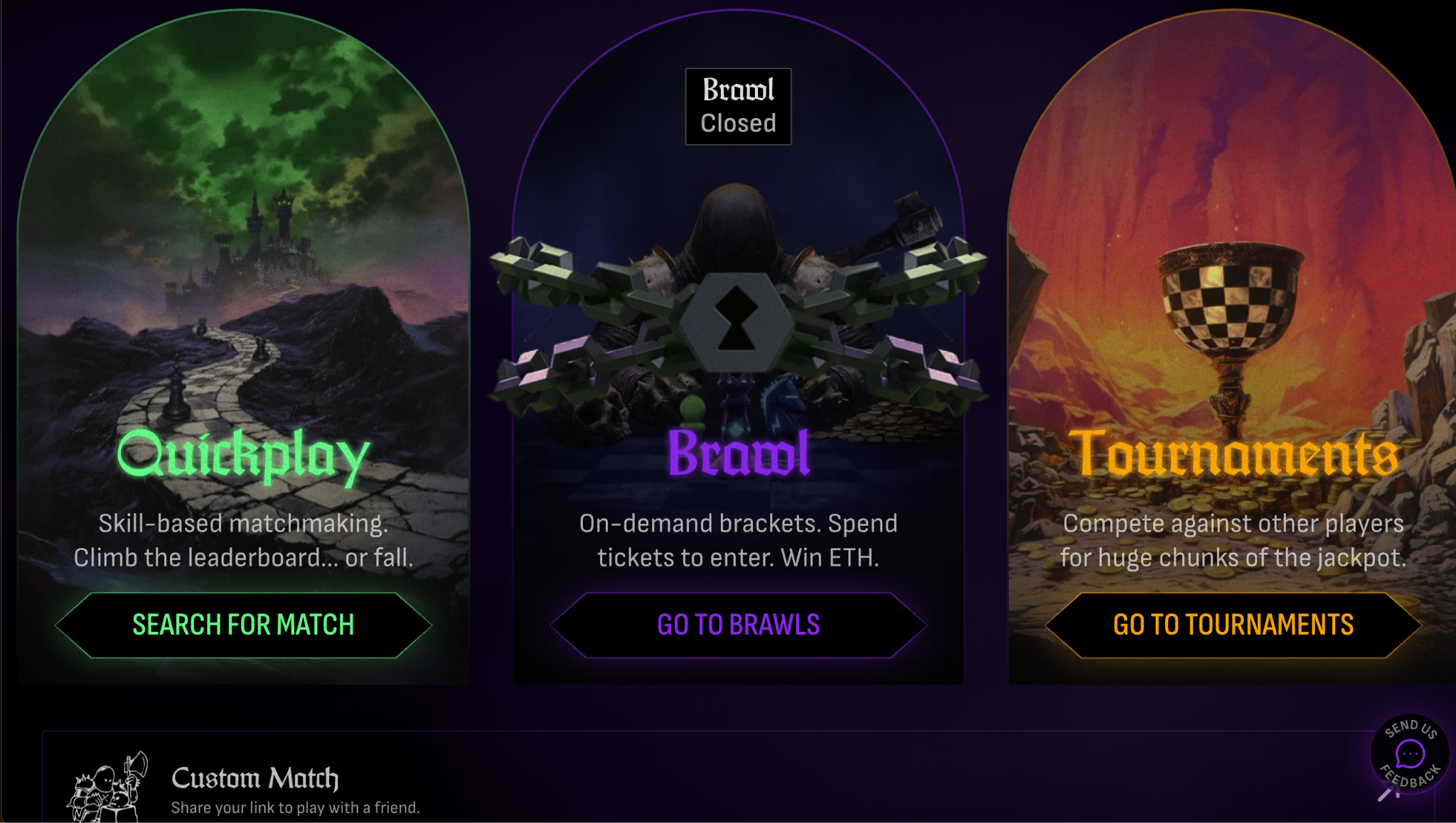
PixieChess is built so that all value stays within the system. Each sale funds the vault, which in turn funds prizes, allowing winners to take home real ETH.
PixieChess uses classic chess as its foundation, with White moving first, players alternating turns, and moving one piece at a time. Standard rules apply for castling, en passant, and pawn promotion (unless a piece’s special ability overrides them).
The goal is to checkmate the opponent’s King. However, draws occur via stalemate, mutual agreement, 50-move rule (no captures or pawn moves), threefold repetition, or insufficient material.
Each player has a clock that only runs during their turn. Running out of time usually means a loss (unless the opponent lacks enough material to force checkmate, in which case it’s a draw).
I’m no chess player, but this is extremely cool and has the potential to break out from CT’s echo chamber.
Tokensto
Almost everyone familiar with AI has experienced the sobriety of unused tokens after spending energy bill money on what they thought was a truly amazing AI product.
Or maybe it’s not just disappointment, it might be that they’ve accrued a good amount of tokens only for them to come across a viral launch video of a competitor product that is just 10x what they’re now subscribed to.
Tokensto solves this issue by allowing users to turn their spare AI tokens into cash. It’s a pretty simple and easy-to-understand product built on the Base network.
Users paste a provider key (OpenRouter, Venice, or any OpenAI-compatible URL), it gets listed, and if the price is competitive enough to win, it gets bought, and the user gets paid directly to their wallet.
The tech is powered by Surplus, an open market for inference, while Usdctofiat auto-prices every listing to the top of the book. Users can get their money directly to their offchain bank apps through Peer, a permissionless on-and-off-ramp protocol.
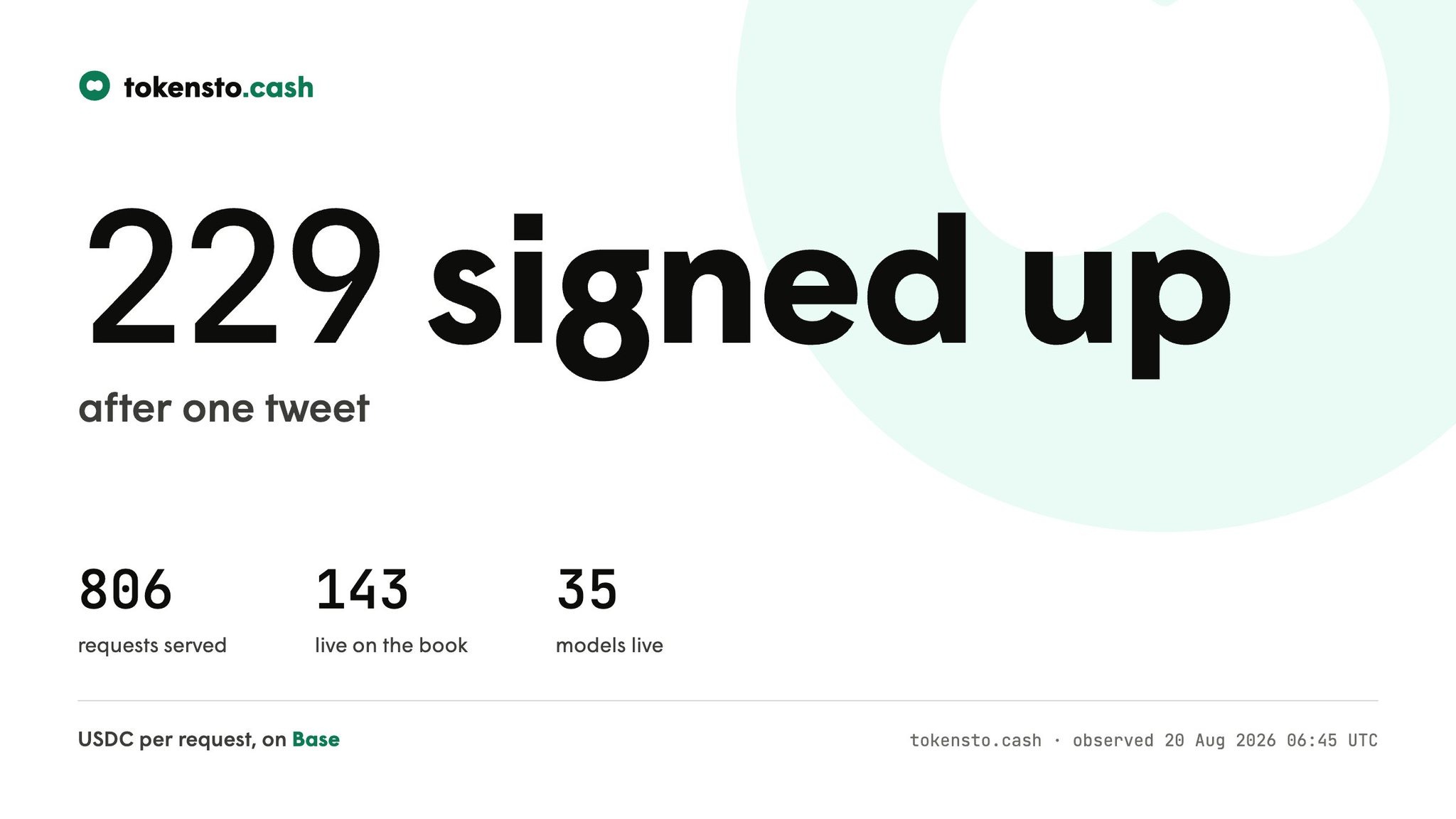
The metrics show that users love it, and it is only a matter of time before it pops.
Thoughts
Our foray into Base has revealed a MetaDEX designed for tighter incentive alignment, a skill-based fantasy trading app that turns market intuition into competition, an agent payment layer that removes the friction of traditional API billing, a magical chess game where collectible pieces rewrite the rules while keeping value circulating within the system, and a platform where you can sell your spare AI tokens for cash.
These experiments may not all become category-defining successes, yet they demonstrate that builders on Base are still willing to explore consumer experiences, agent economies, and novel game mechanics rather than simply chasing the next speculative flywheel.
What this suggests is that the surface area for interesting onchain activity is still wider than the current consensus admits.
As volume creeps in and the “pivot-to-crypto” chant gets louder, we believe more projects will surface. We can only hope that this time is different and that more than just a handful of apps truly break out beyond CT’s echo chamber.
Thanks to the SwapRoyale team for unlocking this article. All of our research and references are based on public information available in documents, etc., and are presented by blocmates for constructive discussion and analysis. To read more about our editorial policy and disclosures at blocmates, head here.





.webp)
.webp)
.png)
.webp)

.webp)
.webp)
.webp)
.webp)





.webp)
.webp)

.webp)
.webp)
.webp)

.webp)
.webp)







.webp)
.webp)
.webp)
.webp)
.webp)
.webp)


.webp)
.webp)


.webp)


.webp)




.webp)


.webp)


.webp)















.webp)





.webp)







.webp)

.webp)
.webp)

.webp)







.webp)

.webp)


.webp)





.webp)