.webp)
Reading time: 9m 10s
Almost every pivotal point in human history is marked by a super-asset.
Super-assets are resources that become so economically and strategically important that they reorganize industries, capital, and geopolitics around themselves - so much so that we historically name those eras after these assets.
A few examples are: Gold financing kingdoms, the spice rush behind the Age of Exploration, the coal-led Industrial Revolution, oil during the twentieth-century industrial mechanization (which gave birth to some of the deepest capital markets ever created), and Messi from 2009–2015 (okay, maybe not, but if you watched Barcelona, you'd be forgiven for thinking otherwise).
Super-assets create wealth and new economic orders that serve as the foundation for markets and institutions.
Look, we get it. AI spend and subscription creep are hitting everyone right now, particularly if you're a business owner. You need to try everything because you want to stay ahead (and so you should).
Your lead dev says they can't work without the latest model, and your sales team is trying to automate their own jobs so they can play padel at noon.
We're in that boat too as a company, which is why we've been using Plasma One to get cash back on our AI spend without giving up the AI tools we rely on.
If you want in, you can sign up here or scan the QR code above to start clawing that cost back... or just keep paying full whack, that's fine too.
See, signing up for Claude or ChatGPT won’t magically spawn an all-knowing entity that prints money from thin air when prompted “create a sales funnel that generates $100,000,000 MRR, make no mistakes.”
The subscription bills will still arrive at the end of the month, and they ain’t getting any smaller. Plasma One quietly gives you some of that money back.

Oil, in the 1980s, for example, went from being a commodity sold in physical markets to being traded through standardized futures contracts that transformed crude into financial instruments.
This transition made oil a true global commodity and one of the most liquid financial assets in open markets.
Around it emerged exchanges, benchmarks like Brent and WTI, derivatives, options, structured products, and an entire ecosystem of brokers, banks, hedge funds, and market makers.
The world is in another pivotal moment with AI, leading to the rise of a new super-asset called “compute.”
What is compute?
Have you ever come across anyone saying, “How many brain cells had to die for you to come up with this?”

What they technically mean is that there was some cost to good reasoning. While this cost is difficult to quantify in human terms, when applied to computers, it takes a different, identifiable shape.
Compute, as a technical term, refers to the computational capacity required to perform the mathematical calculations that produce a result using compute resources.
These resources range from graphical processing units to memory to electricity.
For complex processes to achieve significant results or outputs, like your brain when you come up with a good idea, paint something, or make a good meal, a significant amount of mathematical hard work and computational resources have to run simultaneously and successfully to achieve the desired result.
This is what is defined as compute cost.
What this means is that the next time you prompt an AI to help you turn an empty wedding hall picture into a custom design for your dream wedding, you are not just generating an image; you are consuming a scarce economic resource that is, as a matter of fact, shaping up to be the new super-asset.

Compute as a new super-asset
To determine whether compute is now a new asset class, it must tick certain boxes or possess properties that classify it as such.
Beyond the obvious, which is that it is a scarce resource, it satisfies roughly five conditions:
- Compute has become the new factor of production that’s reshaping how industries allocate capital, labor, and resources.
- As it stands, compute is not just scarce, it is metered and fungible enough to have a unit and a price - measured in Floating Point Operations per second (FLOPS), adequately showing the "amount of thinking per second" an AI model can do.
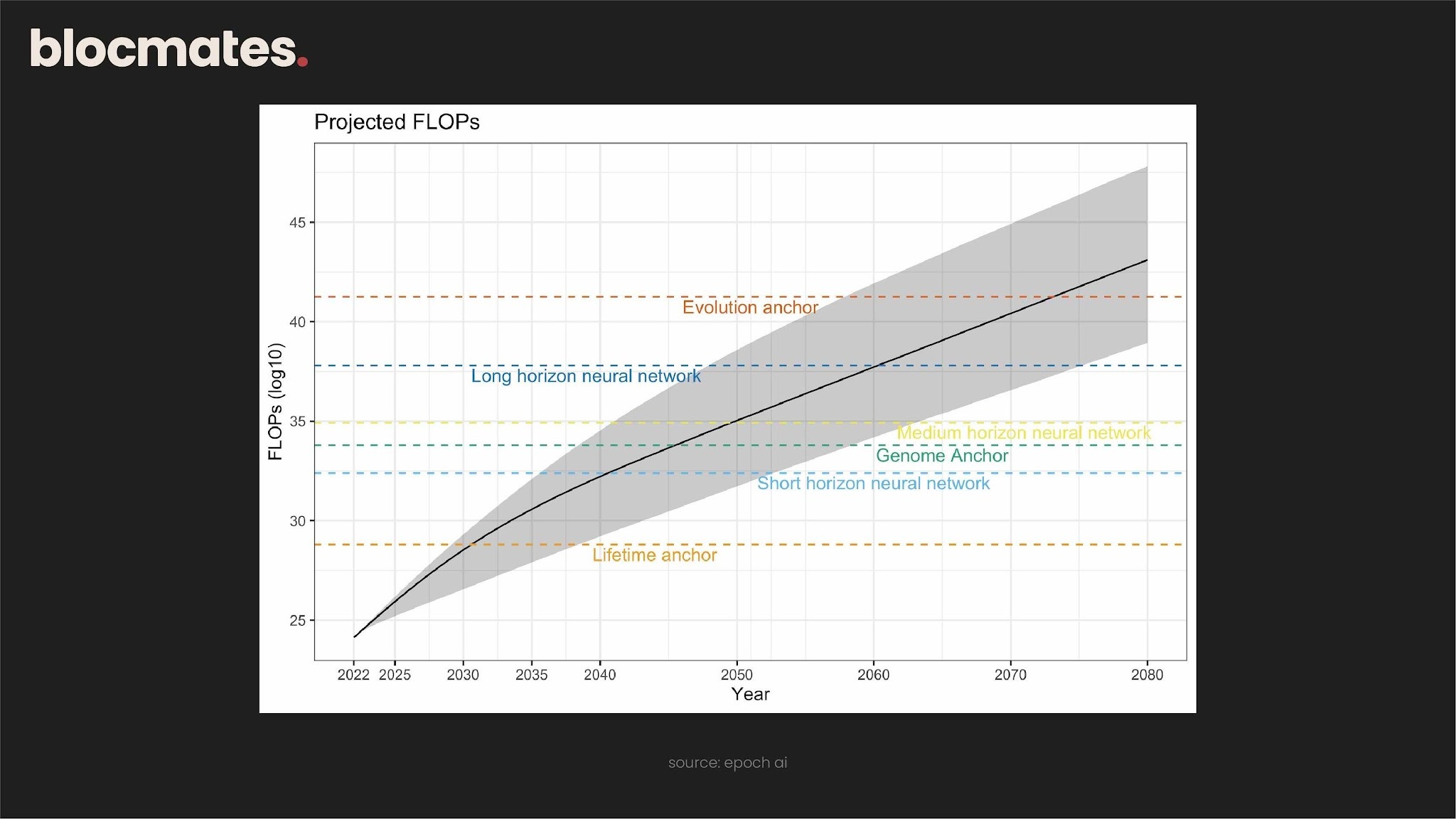
- The public can rent it (GPU/hr), borrow against it, securitize it, or put it on a balance sheet as collateral.
- There is clear architecture for structural products, including spot markets, forward curves, indices, derivatives, and hedging.
- There are signs of a soft war between China and the US, meaning that compute has become geopolitically relevant: rationed, stockpiled, export-controlled.
What makes compute a different kind of super-asset is that it both generates income and rapidly becomes obsolete.
GPU owners can rent out their hardware and earn recurring cash flow, much like landlords lease real estate.
Yet unlike property, a GPU’s economic value can collapse overnight when a new architecture is released, often by the very company that built the chip.
Compute is therefore simultaneously a yield-producing asset, a commodity, and a rapidly depreciating reserve. This remains a head-scratching problem, and it is precisely why sophisticated financial markets formed around compute quickly.
Compute markets
The financial markets that have formed around compute enable buying, selling, trading, and hedging of computational resources, primarily high-performance GPUs (such as NVIDIA H100, H200, and B200) used for AI training, inference, rendering, and other intensive workloads.
We can categorize the compute markets into three distinctive markets:
The spot markets (physical access)
Spot markets are where people get immediate access to real GPUs.
Instead of signing long-term contracts, you simply rent available compute by the hour (or even by the minute on some platforms) and start using it almost immediately.
These marketplaces bring together idle GPU capacity from cloud providers, data centers, crypto miners, and independent operators, making it much easier to find hardware without going through the large hyperscalers.
If you only need compute for a few hours, a weekend experiment, or to handle a sudden spike in inference traffic, spot markets offer that flexibility and are usually the fastest and cheapest option.
The trade-off is that availability changes constantly. Since you’re renting whatever capacity is available at that moment, the cheapest machines can sometimes be interrupted, reclaimed, or disappear if another customer books them.
A few examples of compute spot markets are:
Vast AI
Vast AI connects thousands of independent GPU owners with developers looking for affordable compute.
Providers compete against one another on price, hardware, bandwidth, and reliability, creating a true marketplace.
This competition often makes Vast significantly cheaper than hyperscalers, especially for short-lived workloads.
RunPod
RunPod is a GPU cloud platform built around fast deployment and developer simplicity.
Users can launch containers or serverless GPU workloads without worrying about provisioning infrastructure themselves.
While it offers reserved infrastructure, its spot marketplace remains popular because GPUs can be rented on demand with very little setup.
It has become a common choice for startups running inference, fine-tuning models, and rapid AI experiments.
Ornn Compute
Ornn Compute operates as a compute marketplace focused on matching GPU supply with demand across different providers.
Users can access available hardware immediately through its spot offering while also benefiting from more structured infrastructure than many open marketplaces.
The platform focuses on making enterprise-grade GPU access easier without requiring customers to negotiate directly with infrastructure providers. It also serves as a bridge into Ornn’s reserved capacity and financial products.
At the moment, Ornn also offers benchmark solutions for compute pricing.
Hyperbolic
Hyperbolic is an AI compute marketplace that aggregates GPU capacity from multiple infrastructure providers into a single platform.
Rather than forcing developers to search across different clouds, it presents available compute resources through a single unified interface.
The platform focuses heavily on inference and AI application deployment, making it easy to spin up GPUs when demand suddenly increases. This makes it particularly useful for teams that value speed and flexibility over long-term commitments.

Reserved and forward capacity markets
Chat, while spot markets work well when your compute needs change every day, if you’re training models continuously or running AI products in production, constantly searching for available GPUs becomes risky.
Reserved markets solve this by allowing companies to lock in compute capacity weeks, months, or even years ahead of time at an agreed price.
You can picture it like reserving office space instead of booking a hotel every night. While you may pay slightly more than the cheapest spot price on a good day, in return, you get guaranteed access, predictable costs, and much less operational uncertainty. It’s a win-win in my books.
Some platforms are even introducing secondary markets where reserved compute can be resold if it’s no longer needed, making reserved capacity more flexible than traditional cloud contracts.
Some examples of these markets:
Compute Exchange
Compute Exchange is building a marketplace where compute reservations become tradable assets instead of static contracts.
Companies can secure GPU capacity well in advance while maintaining the option to transfer or resell unused allocations later.
This helps reduce wasted infrastructure and improves overall market efficiency. The model borrows ideas from energy and commodity markets, where forward contracts can be actively traded before delivery.
Ornn Exchange (reserved tier)
Alongside its spot marketplace, Ornn also offers reserved GPU capacity for organizations with predictable workloads.
Customers can secure dedicated compute over longer periods instead of competing for whatever is available each day.
This provides greater pricing stability and reduces the risk of GPU shortages during periods of high demand. It is designed primarily for businesses running production AI systems rather than occasional experiments.
Futures and derivatives markets
Just like oil, electricity, or natural gas have futures markets, compute is beginning to develop financial markets where participants can hedge future prices or speculate on where the market is heading.
Of course, pretty much like every other futures market out there, these contracts are generally cash-settled, meaning nobody actually receives GPUs when the contract expires.
Futures markets allow AI companies to protect themselves from rising infrastructure costs, while investors and traders can gain exposure to compute without ever operating a data center.
We can divide these into regulated markets and onchain markets.
Regulated markets
Architect (AX)
AX is a regulated exchange developed by Architect that brings institutional-grade trading infrastructure to compute markets.
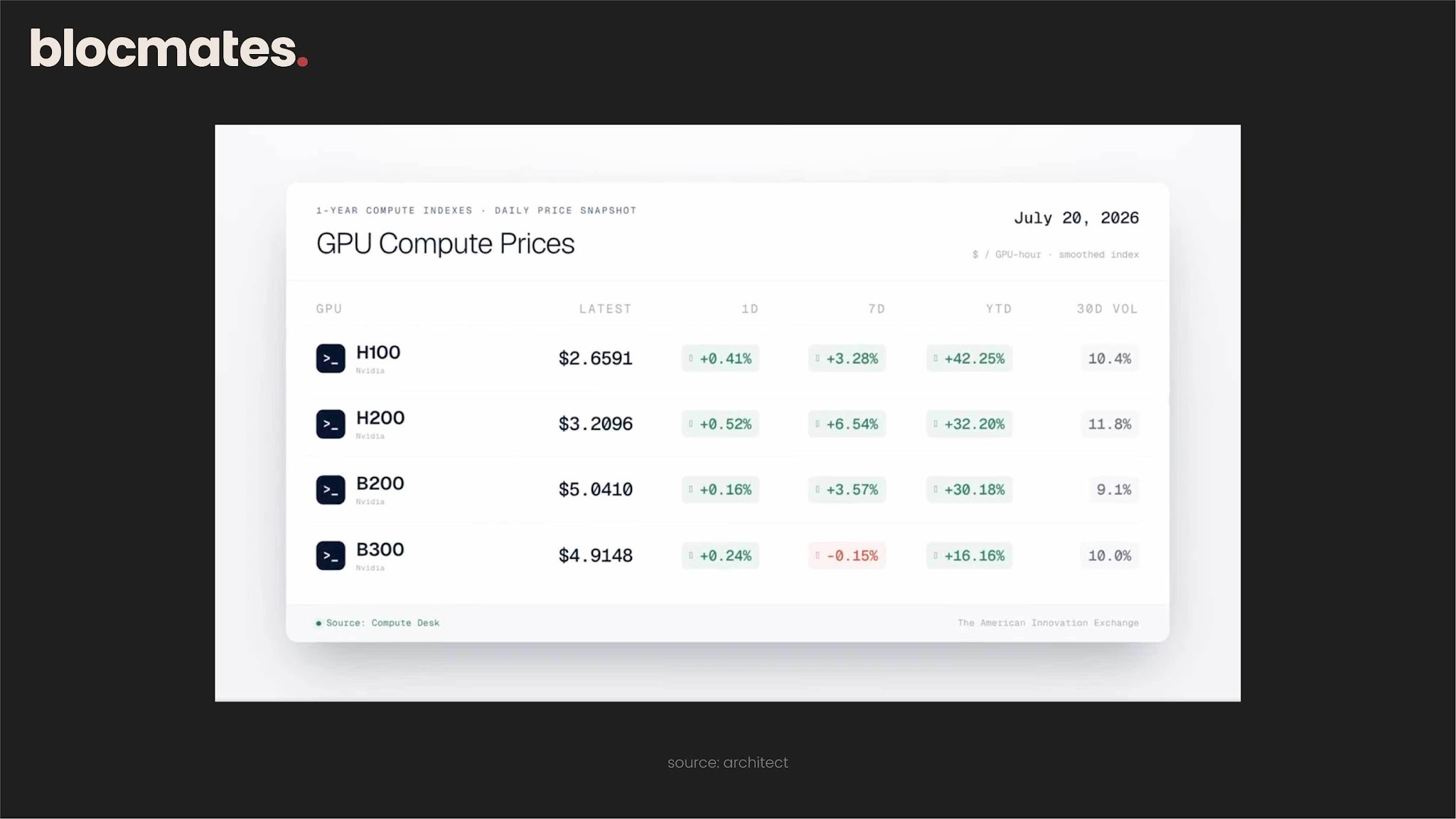
It focuses on creating standardized financial products linked to GPU pricing rather than physical hardware delivery.
By operating within established financial market frameworks, AX gives institutions a familiar environment for managing compute price risk.
Chicago Mercantile Exchange (CME)
As an established derivatives marketplace, CME is working with Silicon Data to offer standardized futures contracts based on GPU pricing indexes.
These contracts are intended to provide a benchmark that reflects broader compute market prices rather than individual providers.
Financial institutions can use them to hedge exposure or speculate on future price movements.
This mirrors how commodity futures already function across energy, agriculture, and the metals markets.
Onchain markets
Hyperliquid (HIP-3 H100 Perps)
For the Hyperliquid enjoyoors, the exchange now offers perpetual futures linked to NVIDIA H100 GPU pricing through its HIP-3 markets.
Traders can take long or short positions on compute prices directly from the onchain exchange, as these markets are being provided by Paragon and trade.xyz.
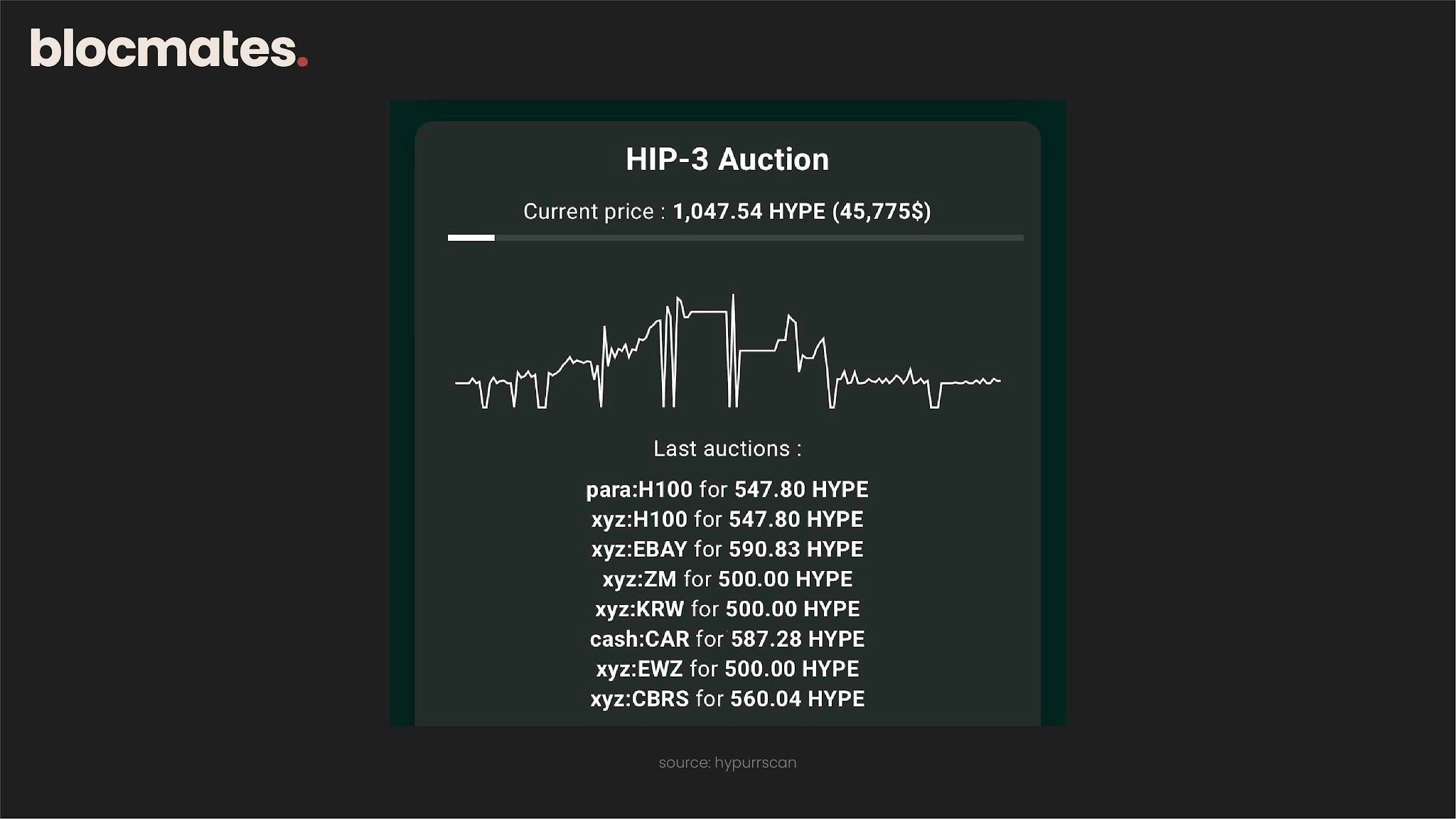
Because these are perpetual contracts, positions can remain open without fixed expiry dates. This brings GPU price speculation into the onchain world.
Helix
Helix supports onchain perp markets for H100 GPUs using external pricing oracles such as Squaretower.
These markets allow decentralized trading of compute price exposure without relying on centralized exchanges.
Smart contracts automatically manage positions, collateral, and settlement.
MNX
New boys on the block, MNX is building financial infrastructure around tokenized compute markets.
The team is working towards making compute a fully tradable digital asset that can be bought, sold, and used across decentralized finance.
Rather than focusing only on physical infrastructure, MNX is attempting to connect compute ownership with financial liquidity.
If successful, this would further blur the line between infrastructure markets and capital markets.

Concluding thoughts
Despite being invisible to the average user, compute remains a rapidly commoditized asset with a lot of markets springing up to deliver commercial and retail exposure.
However, the entire domain doesn’t rest on these three markets mentioned above. The compute race carries far deeper consequences that extend well beyond their availability on spot markets or via contracts.
Countries are beginning to compete intensively for chip fabrication capacity and reliable power, making it an electricity-adjacent market. Also, the entire industry is a cash-guzzler with the need for more infrastructure to serve what we can describe as a vortex-demand for intelligence.
Chances are that we are at the early stage of something that completely redefines humanity. Compute markets, though just a fraction of the overall market, are incredibly important for exposure and for keeping the industry ticking.
Thanks to the Plasma team for unlocking this article. All of our research and references are based on public information available in documents, etc., and are presented by blocmates for constructive discussion and analysis. To read more about our editorial policy and disclosures at blocmates, head here.









.webp)

.webp)

.webp)

.png)



.webp)



.webp)
.webp)
.webp)











.webp)
.webp)


.webp)


.webp)
.webp)



.webp)

.webp)














.webp)
.webp)

.webp)
.webp)
.webp)


.webp)
.webp)


.webp)


.webp)




.webp)


.webp)


.webp)


















.webp)







.webp)










.webp)

.webp)
.webp)

.webp)











.webp)

.webp)


.webp)





.webp)