Apetizers:
- Buybacks are becoming a clear signal of product-market fit in crypto
- DeFi protocols now spend $200 million+ in onchain revenue buying back their own tokens each month
- Hyperliquid alone accounts for roughly half of all buybacks across the sector
- Raydium and Sky are pioneering deflationary and yield-recycling models that enhance their tokenomics
And the more mature DeFi gets, the more obvious the pattern becomes:
Buybacks are the clearest signal that crypto is developing from hype-driven narratives into real businesses.
The rise of fundamentals
In crypto, belief moves way faster than fundamentals.
One tweet, one narrative, and suddenly a token with no revenue is worth a billion dollars.
But beneath all that short-term speculation, DeFi keeps doing what it’s always done best: Generating real onchain revenue every day.
While AI Agents, Robotics, and DePIN are exciting frontiers, they’re still in the “cool demo, no cash flow” era.
DeFi is past that. It has actual customers. Actual revenue. Actual margins. It’s the closest thing this industry has to an actual business sector.
And onchain data backs this up when we compare the revenue of different sectors in crypto.
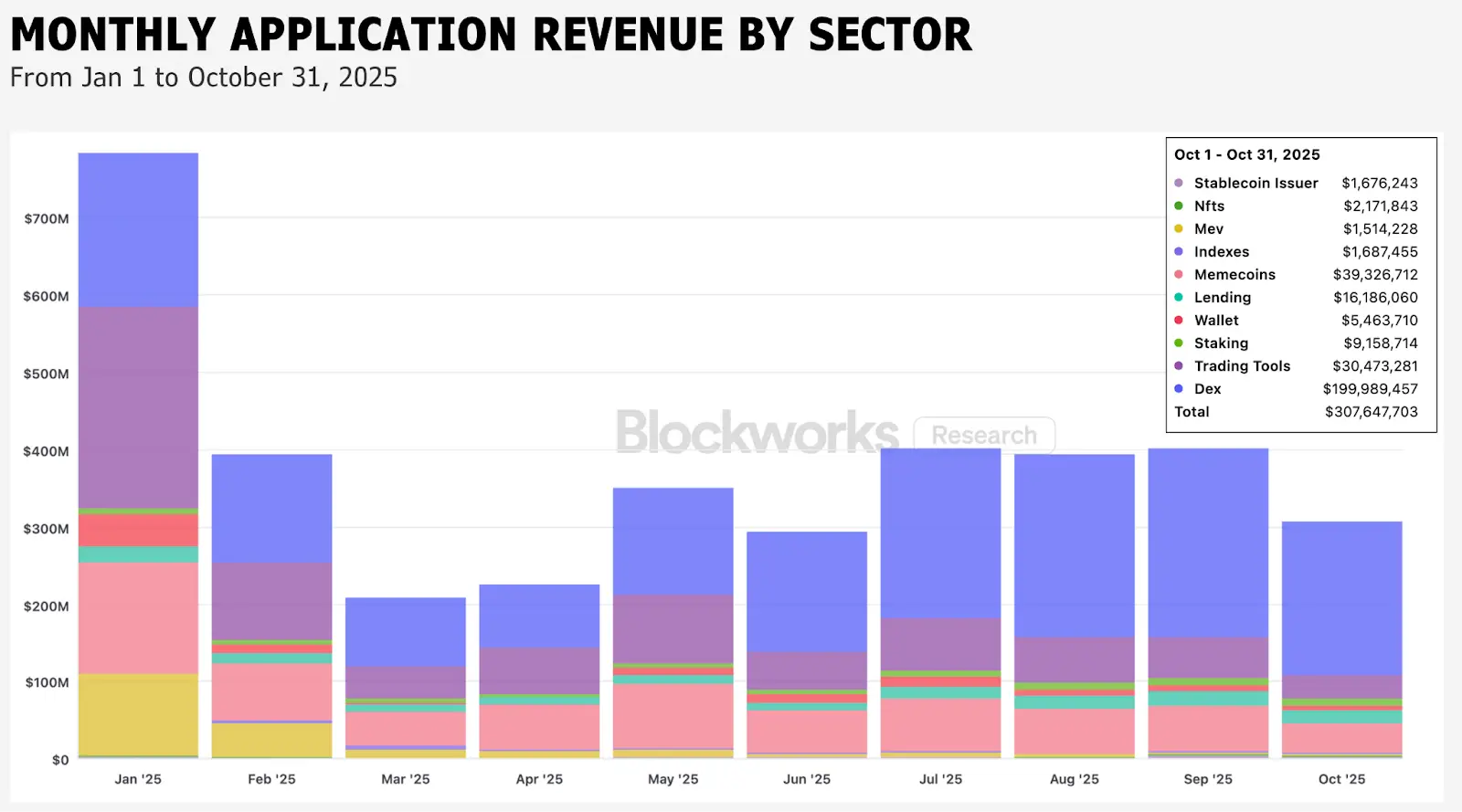
Since June 2025, decentralized exchanges have generated over half of all onchain revenue, which allows them to fund recurring buyback programs.
That is what sets DeFi apart. It runs on utility, not just speculation. Belief can move prices fast, but cash flow makes them last.
Just as earnings became the benchmark for equities, revenue is becoming the anchor for DeFi. And 2025 is the year where token buybacks reveal that shift clearly onchain.
When token buybacks make sense
As always in crypto: Timing is everything.
Early-stage protocols should actually focus on growth, the user experience, and user acquisition, not token engineering.
If you are still figuring out your product or trying to attract users, a buyback is not a show of strength, it is a distraction. It tells the market you have run out of ideas for how to grow.
Buybacks only make sense once a project has matured, found steady revenue, and has more cash than it can use effectively for expansion.
That is true product-market fit. Not hype, not TVL boosts, but profitability.
If a team launches buybacks too early, it risks looking short-sighted. If it waits too long, it misses the compounding effect of using profits to strengthen its token economy.
The best projects find the middle ground. They grow first, then build a flywheel where more users lead to more fees, more profits, and more buybacks that make the token scarcer.
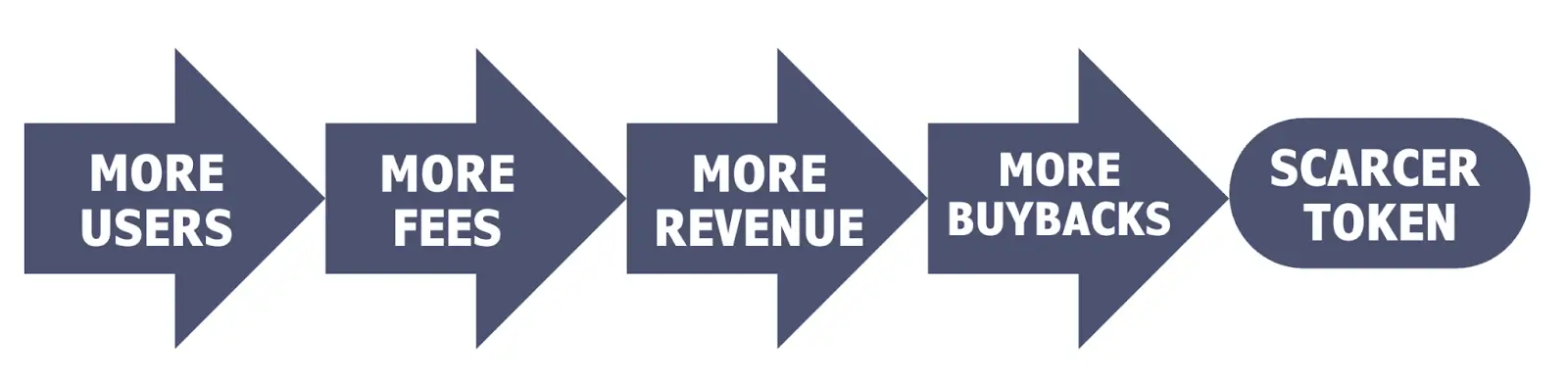
Well-timed buybacks show confidence in long-term sustainability, maturity in capital allocation, and profitability that is measurable and recurring.
It is this moment DeFi starts to look less like a casino and more like an industry.
How buybacks work
Not all buybacks are the same. The difference lies in what happens after the tokens are bought.
There are three main types of buyback models in crypto today:
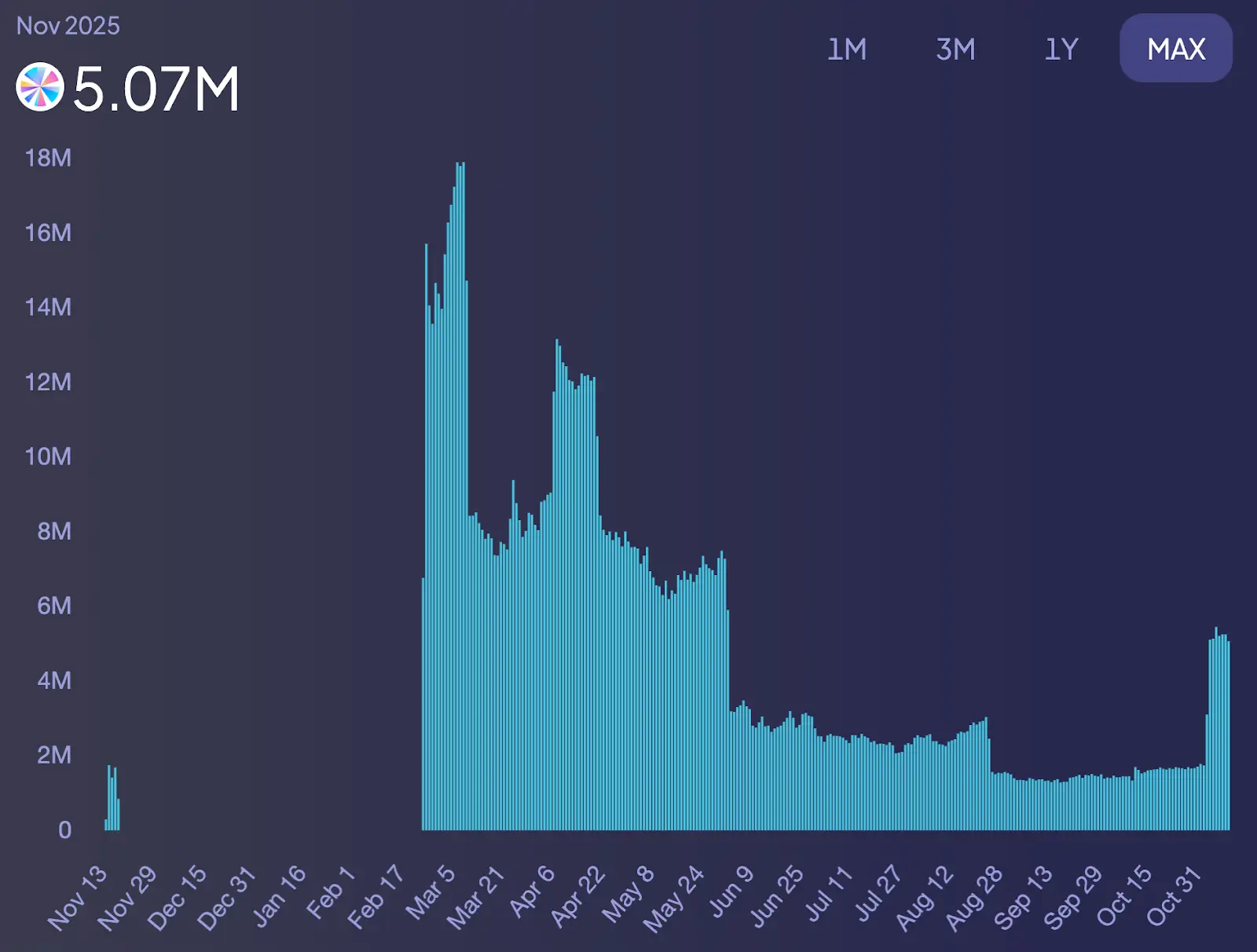
1. Buyback and burn
The most aggressive approach. Tokens are permanently destroyed (by sending them to a burner address). Supply shrinks. Scarcity increases.
Raydium and Sky are the leaders here.
Since February 2025 Sky (formerly MakerDAO) has been buying and burning about $1 million worth of SKY every day.
2. Buyback and accumulate
Other protocols prefer a more flexible model. Instead of burning, they add the repurchased tokens to their treasury to create a reserve that can later be used for growth initiatives, liquidity, or incentives.
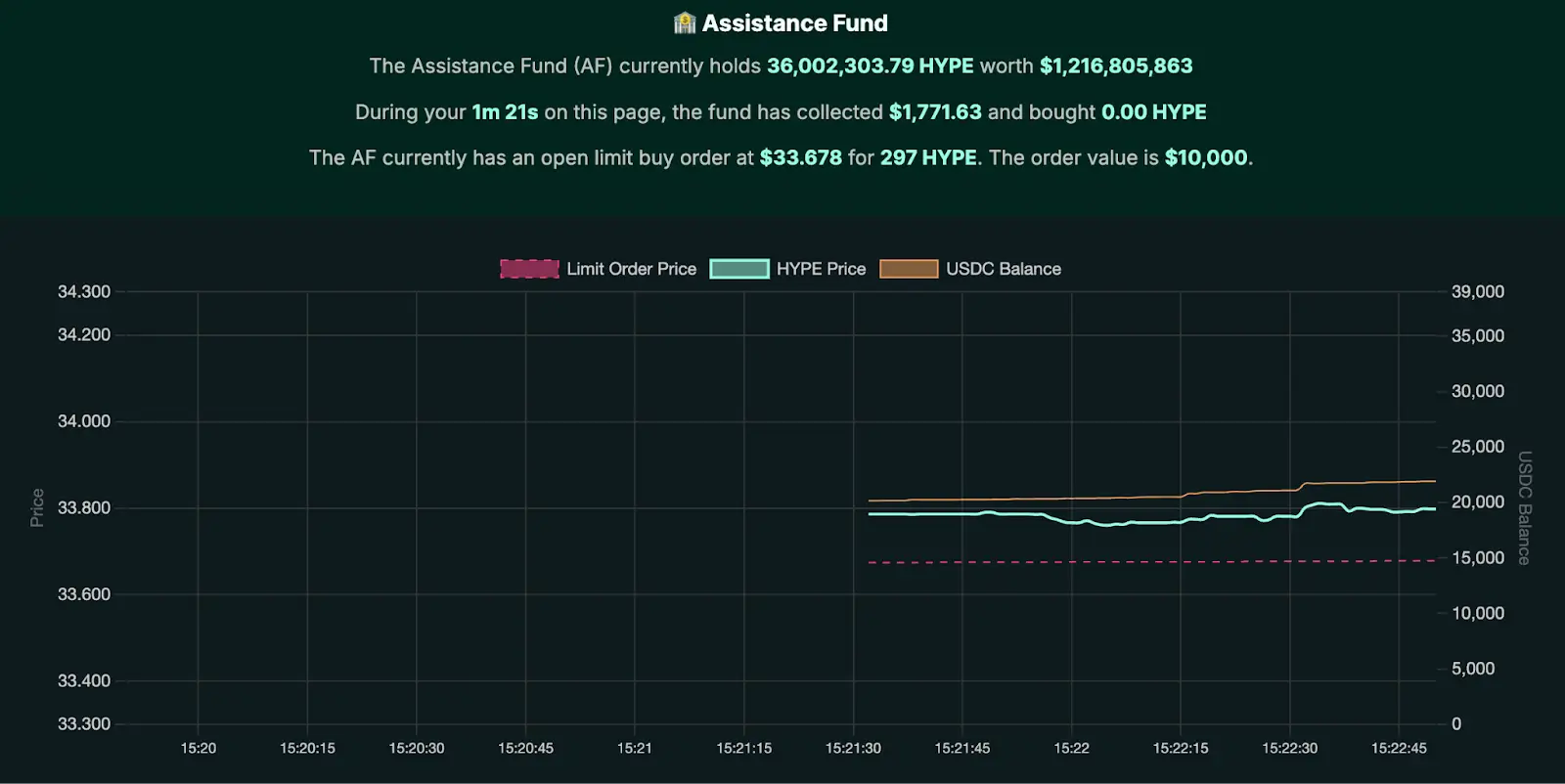
Hyperliquid takes this route. Roughly 97% of its trading fees are routed into an Assistance Fund that continuously buys HYPE on the open market.
By November 2025, the fund had accumulated around 36 million HYPE worth over $1.2 billion.
3. Buyback and distribute
The third model takes the redistributive route. Instead of removing tokens or holding them in treasury, projects reintroduce them into the ecosystem through staking rewards, governance incentives, or yield programs.
Sky’s surplus USDS revenue is used to buy SKY, part of which is burned and part redirected to stakers.
Each model comes with trade-offs.
Burns create scarcity but remove flexibility. Treasury accumulation builds a reserve but takes longer to influence price. Distribution strengthens engagement and yield, but can backfire if inflation is not controlled.
In the end, the key point is not how buybacks are triggered, but where the tokens go once they leave the market. That’s what determines whether a buyback builds value or just paints over weaknesses.
Hyperliquid is proof that the model works when usage, revenue, and transparency align.
But for others, without the right narrative, a strong product, or coherent tokenomics, the effect of buybacks can be little more than expensive marketing.
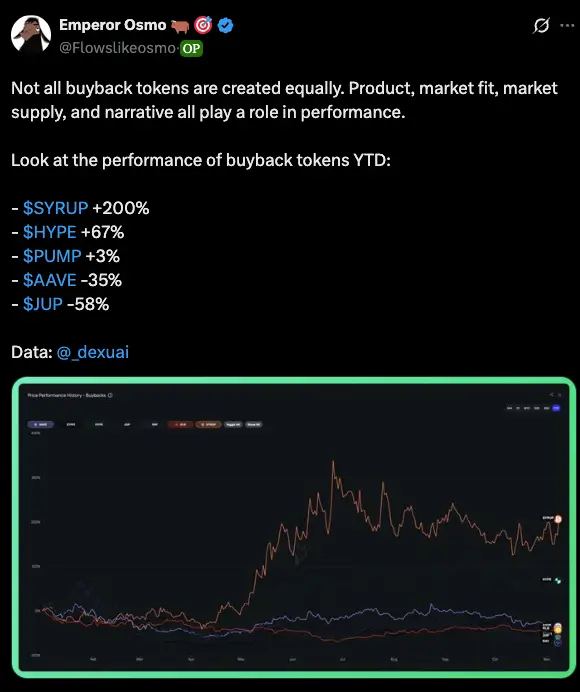
So let’s look at the numbers and assess the success of different protocols that put these ideas into practice.
The 2025 buyback leaders
These are the top 5 projects that turned revenue into a mighty tool and buybacks into a business model in 2025.
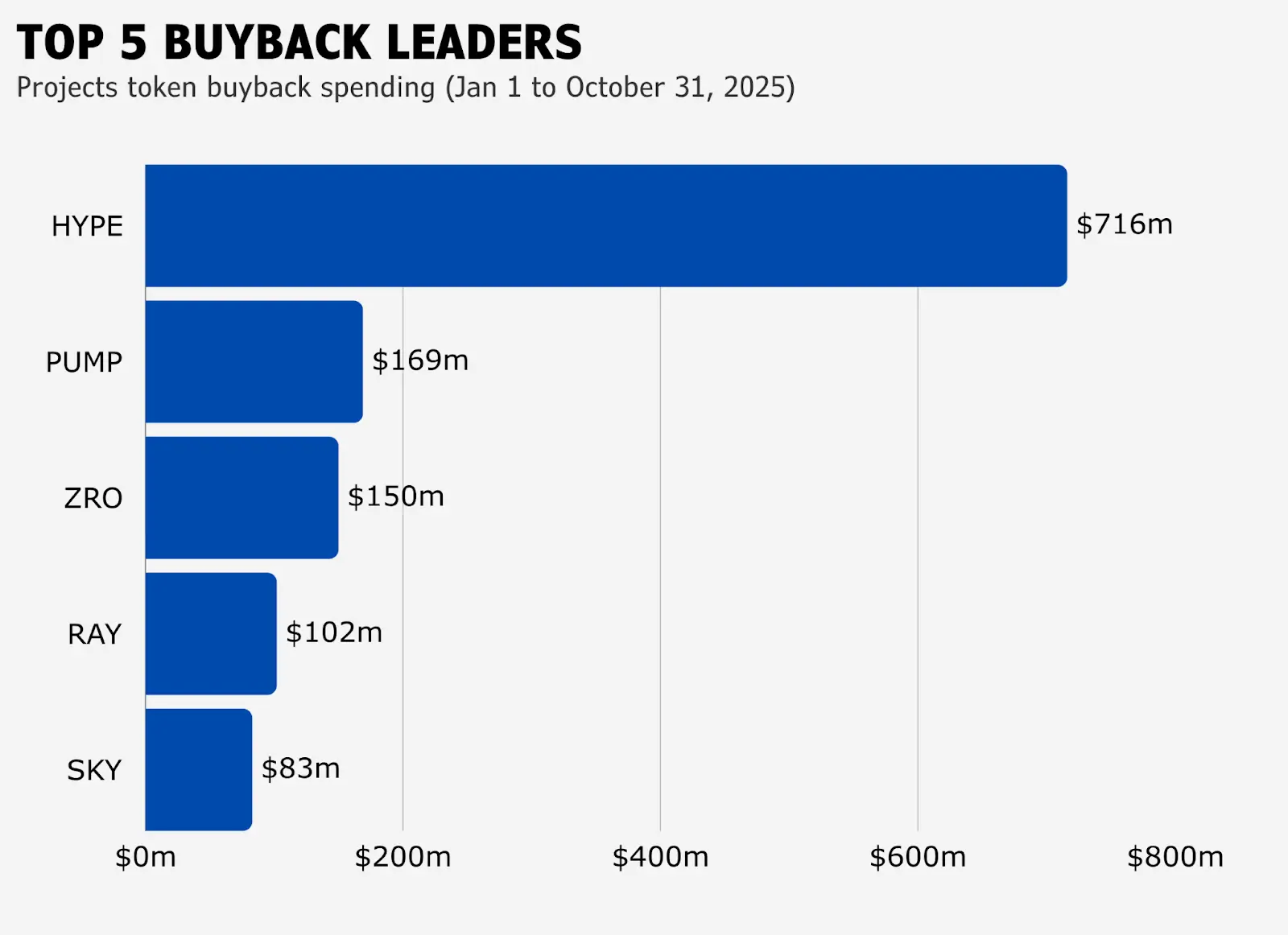
At the top sits Hyperliquid, the undisputed heavyweight. Its buyback system is responsible for almost half of all DeFi buybacks this year. At $716 million, no other protocol comes close.
Pump.fun, LayerZero, Raydium, and Sky round out the top five, each with its own spin on how to turn revenue into token value.
Together, they demonstrate the full spectrum of how buybacks can be used once a protocol reaches maturity.
By percentage
But dollars spent alone don’t tell the full story.
Looking at how much supply each project actually repurchased reveals which models are creating the most tangible impact on holders.

Sky leads with 5.5% of supply repurchased, followed by LayerZero’s one-time 5% treasury buyback and Raydium’s 4.5% programmatic burns.
Pump.fun and Hyperliquid close the list with steady, revenue-funded models that recycle trading fees into continuous repurchases.
And these programs could mark a shift in how DeFi protocols think about capital allocation.
The next wave of buyback momentum
The buyback flywheel is actually spreading right now, and over the past few months, several major DAOs have joined the buyback movement or set up new programs.
Aave (AAVE)
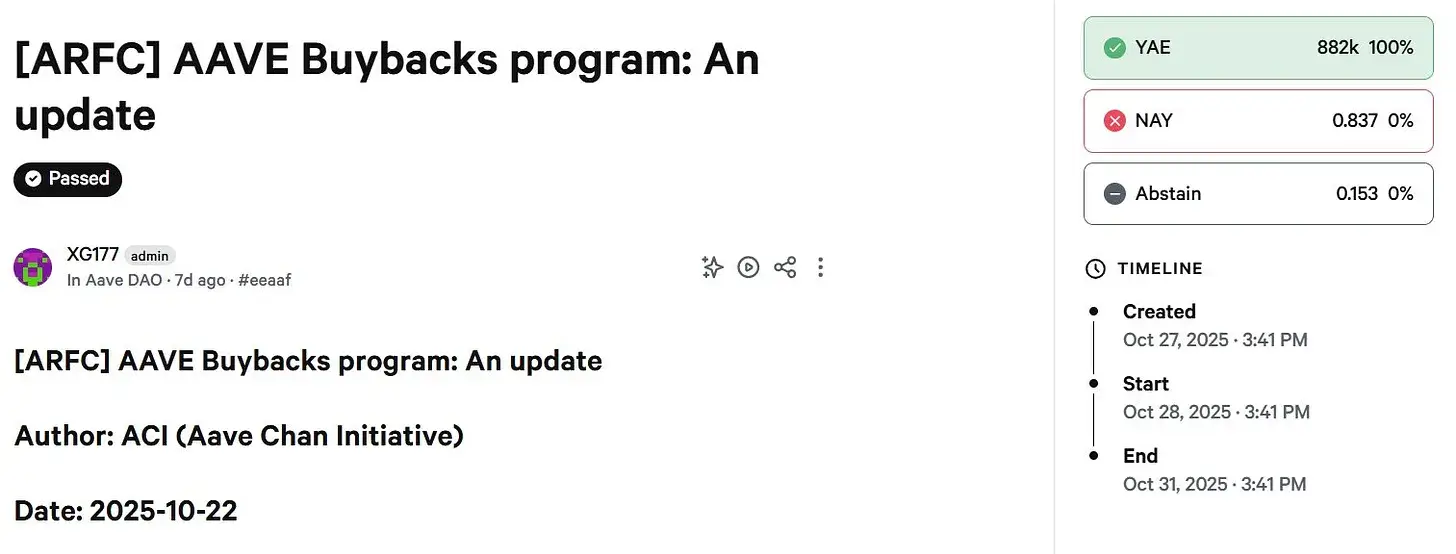
Aave recently approved a $50 million buyback program.
The decision shows confidence in its long-term revenue model and aims to both support AAVE’s price and redistribute value to the community.
Aave’s lending business generates $157 million in annualized revenue, making it one of the few protocols able to deploy such capital without hurting growth.
EtherFi (ETHFI)
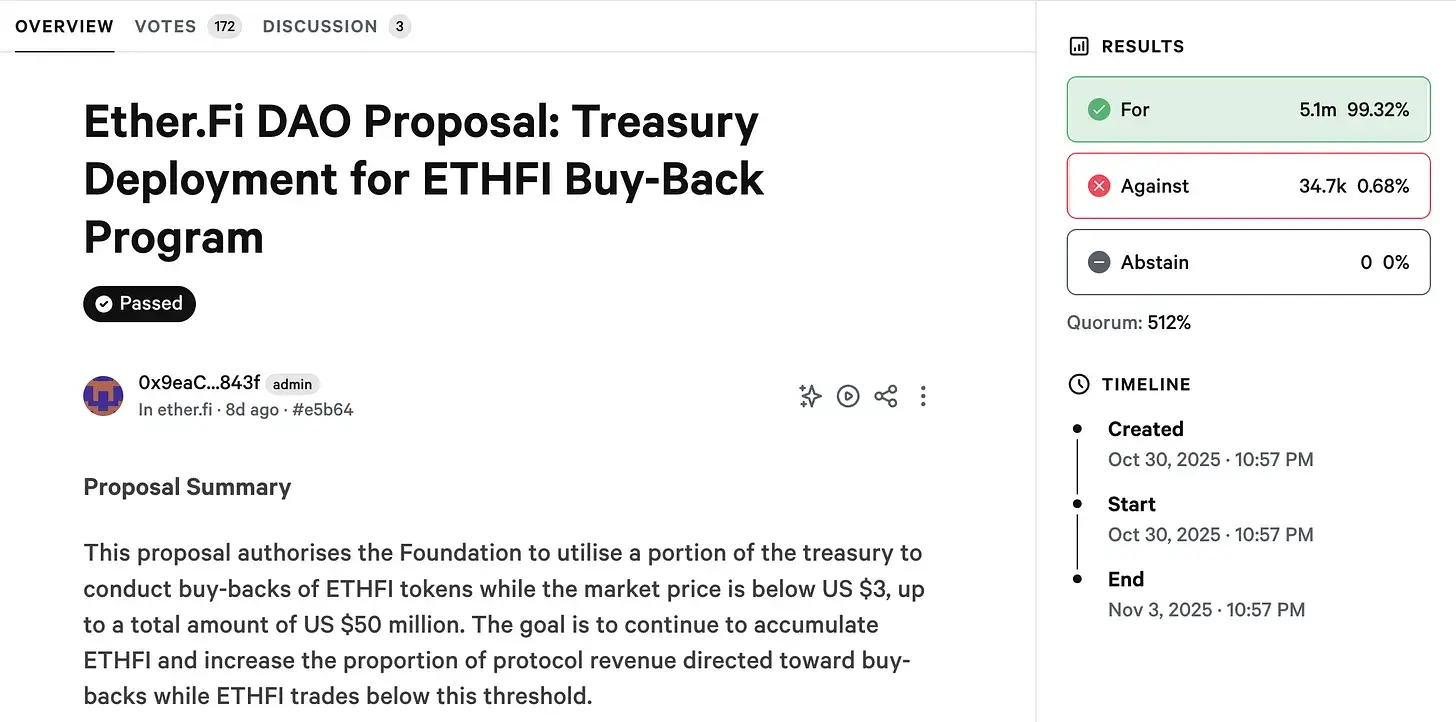
Followed up with its own $50 million buyback proposal funded from the DAO treasury. With $62 million in annual revenue, this is a bold move that strengthens alignment as the restaking narrative matures and the project develops into a neobank.
Jupiter DAO (JUP)
Jupiter took things even further. It voted to burn JUP tokens that had been previously accumulated through buybacks, which is around 4% of the circulating supply. The burn will tighten liquidity and send a clear signal of conviction.

All three moves reinforce the same message: Buybacks are becoming a standard feature of protocols that generate real cash flow.
The buyback investment thesis
At its core, the buyback thesis is simple.
Buybacks highlight which protocols generate real, sustainable profit.
But value creation depends on five variables:
• The funding source: Real revenue versus treasury reserves
• The consistency: Recurring buybacks versus one-off events
• The mechanics: Burned, recycled, or redistributed
• The impact: Percentage of total supply affected
• The net effect: Whether buybacks actually offset ongoing emissions
As UX improves and TradFi starts paying attention, these metrics will become crypto’s equivalent of earnings per share.
This cycle has already made one thing painfully clear: Tokens that rely on endless emissions get punished.
Most of those charts have been down only since 2022. The market will, in the future, reward the protocols that earn more than they emit, the ones with real cash flow instead of constant dilution.
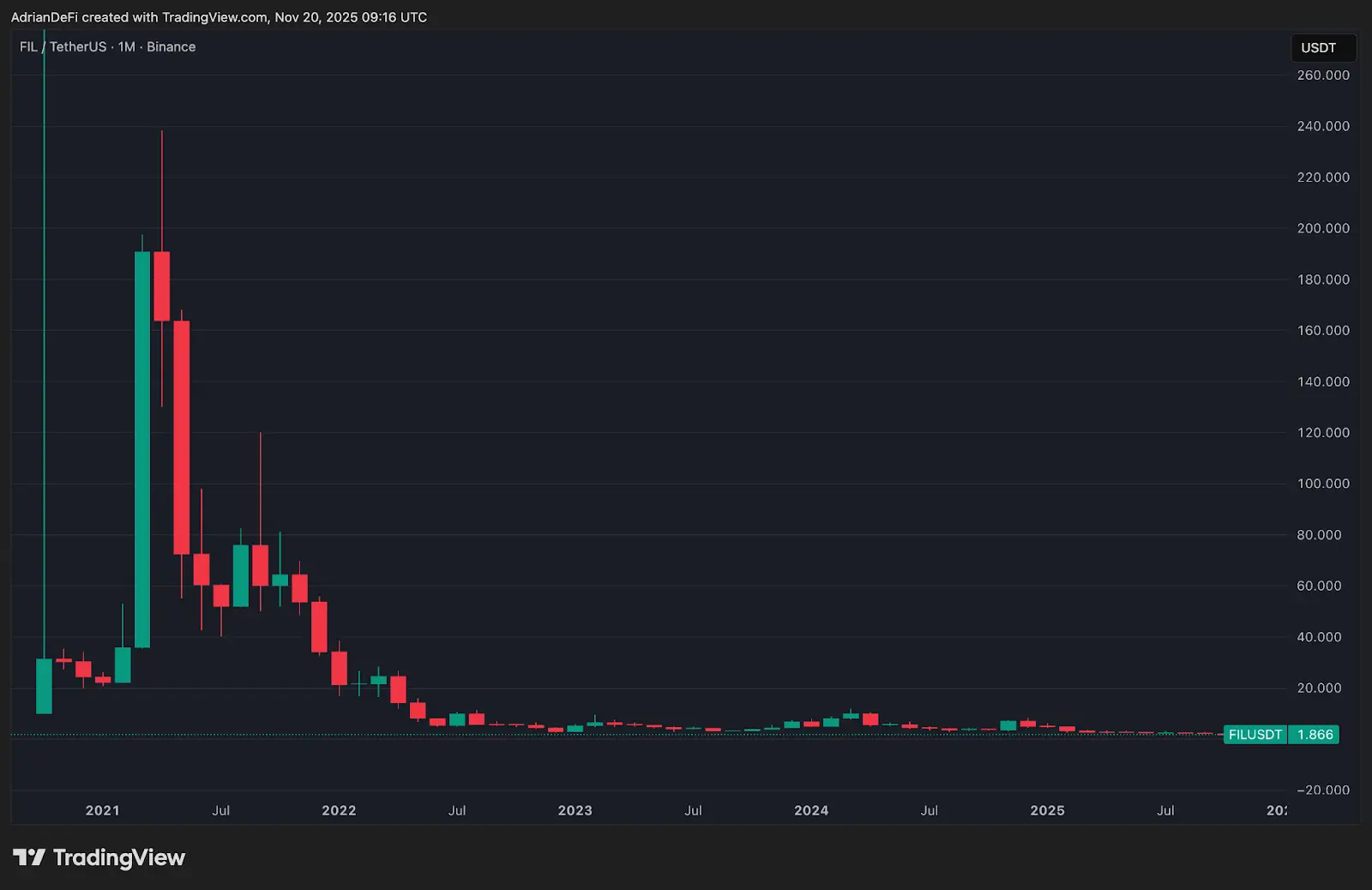
Filecoin is just one prominent example of a project with a huge amount of existing tokens with down-only price action.
Final thoughts
Buybacks are not the shortcut to success; they are the result of it.
They should happen once the hard work is done. Once a team has built something people actually pay for, stacked real revenue, and reached the point where giving value back to holders is the most rational move.
Early-stage projects should stay focused on growth. Mature ones should start rewarding holders. The best will manage both, scaling quickly while using profits to reinforce their token economy.
Buybacks can build a price moat. They put constant buy pressure on the token, making it harder for competing project tokens to keep up and easier for investors to hold through price volatility because fundamentals are transparently visible onchain.
For anyone thinking long term, the strategy can be quite simple: Own the protocols that earn, buy back, and reduce supply.
Eventually, the market will catch up.
Narratives come and go, but profitability does not.
Ownership does not.
Buybacks do not.
Because when the hype is over, and liquidity dries up, the only tokens left standing will be backed by real cash flow. The ones that turned code into revenue and revenue into value.
Those are the protocols building the next era of sustainable crypto value.





.webp)
.webp)

.webp)

.png)
.webp)


.webp)
.webp)
.webp)
.webp)











.webp)
.webp)

.webp)

.webp)
.webp)

.webp)

.webp)












.webp)
.webp)
.webp)
.webp)
.webp)


.webp)
.webp)


.webp)


.webp)




.webp)


.webp)


.webp)










.webp)


.webp)



.webp)
.webp)
.webp)

.webp)







.webp)

.webp)
.webp)



.webp)