Reading time: 7m 38s
For those who have made peace with crypto’s treacherous altcoins and removed them from their portfolios, it is much easier to see that the entire industry isn't slowing down, as others might have thought.
The industry is still alive and kicking, maturing away from the clutter and into the more serious stuff: real-world assets (RWA).
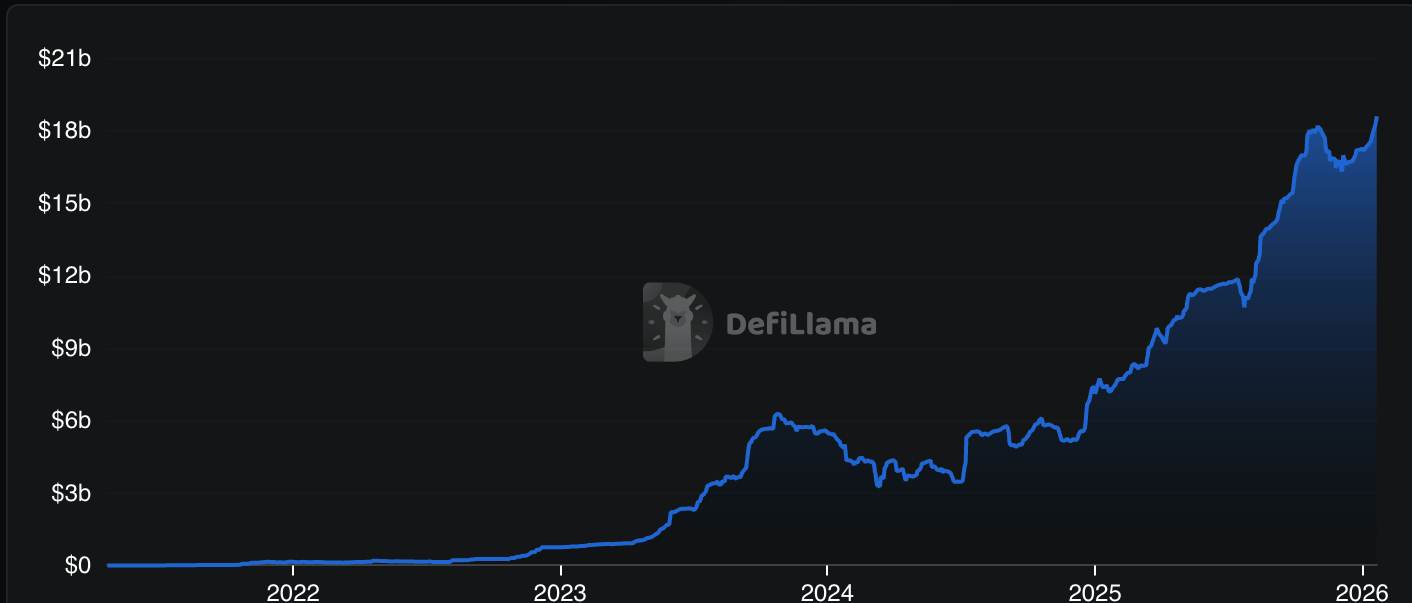
The RWA industry has experienced tremendous growth, with stocks and commodities getting tokenized and brought onchain, moving from a $7 billion industry in 2025 to over $18 billion.
However, this doesn't really paint the full picture.
The problem with onchain stocks
Despite growth in onchain stocks, commodities, treasuries, and private credit, the day-to-day reality for users and institutions alike remains far from smooth.
Users still face unexpected fees that eat into returns and a general sense of clunkiness, largely stemming from the following structural issues:
1. The "issuer token" reality - The truth is, onchain stocks and commodities are not exactly onchain like standard alts. Rather, we have access to issuer tokens that track the prices of stocks and commodities held by an issuer or an SPV.
While this setup sounds clever on paper, it implies that you are not holding the actual Apple shares or barrels of oil; you are holding a digital promise from an entity that they will mirror the performance. This introduces a whole layer of dependency and potential snags.
2. Regulatory and legal friction - The nature of these assets creates plausible operational and legal qualms. For instance, the SEC's stance on what counts as a security token versus a utility one creates endless headaches for issuers.
Further problems include differing tax treatments and potential sanction risks, all of which impede the smoothness of spot positions for tokenized stocks.
3. Liquidity silos - Fractured liquidity is perhaps the most insidious issue, as it undermines the core promise of onchain trading: easy, efficient access to markets. With tokenized stocks spread across various protocols, chains, and issuers, liquidity pools end up siloed.
You might find decent volume on one DEX, but zilch on another, leading to wide bid-ask spreads where buying or selling a sizable position can push the price dramatically, eating into profits or amplifying losses.
4. Asset fragmentation and systemic risk - The issuer-token model exacerbates liquidity issues because each tokenized version is essentially a derivative tied to an offchain holding rather than a fungible asset.
If multiple issuers create similar tokens for the same stock, liquidity gets split even further, with no easy way to arbitrage between them without cross-chain headaches. During market stress, this can cascade into bigger problems, such as flash crashes or frozen trades, as we've seen in some RWA pilots.
5. The problem with TradFi futures - Unfortunately, retreating from the onchain spot experiment to TradFi futures does not help much. The TradFi futures market is bogged down by archaic structures that actively bleed capital from investors.
The most glaring inefficiency is contract expiration, which forces traders to keep buying and selling, a practice that costs participants approximately $10 billion a year in transaction costs.
Clearly, the only real alternative is looking toward a fusion between TradFi assets and crypto’s no-expiry hit product: perpetual futures. With an addressable market of ~$86 trillion and a projected CAGR of 12–15%, perps are the ideal vehicle.
Today’s discourse looks into QFEX, a product that uses a hybrid approach to make TradFi assets available on a perpetual, 24/7, no-expiry market, with an impeccable trading experience built for institutions and individuals.
What is QFEX?
QFEX is a hybrid exchange that introduces a crypto-perp architecture to TradFi assets (commodities, indices, FX, equities, etc.), allowing users to leverage equities, commodities, and other traditional assets up to 50x.
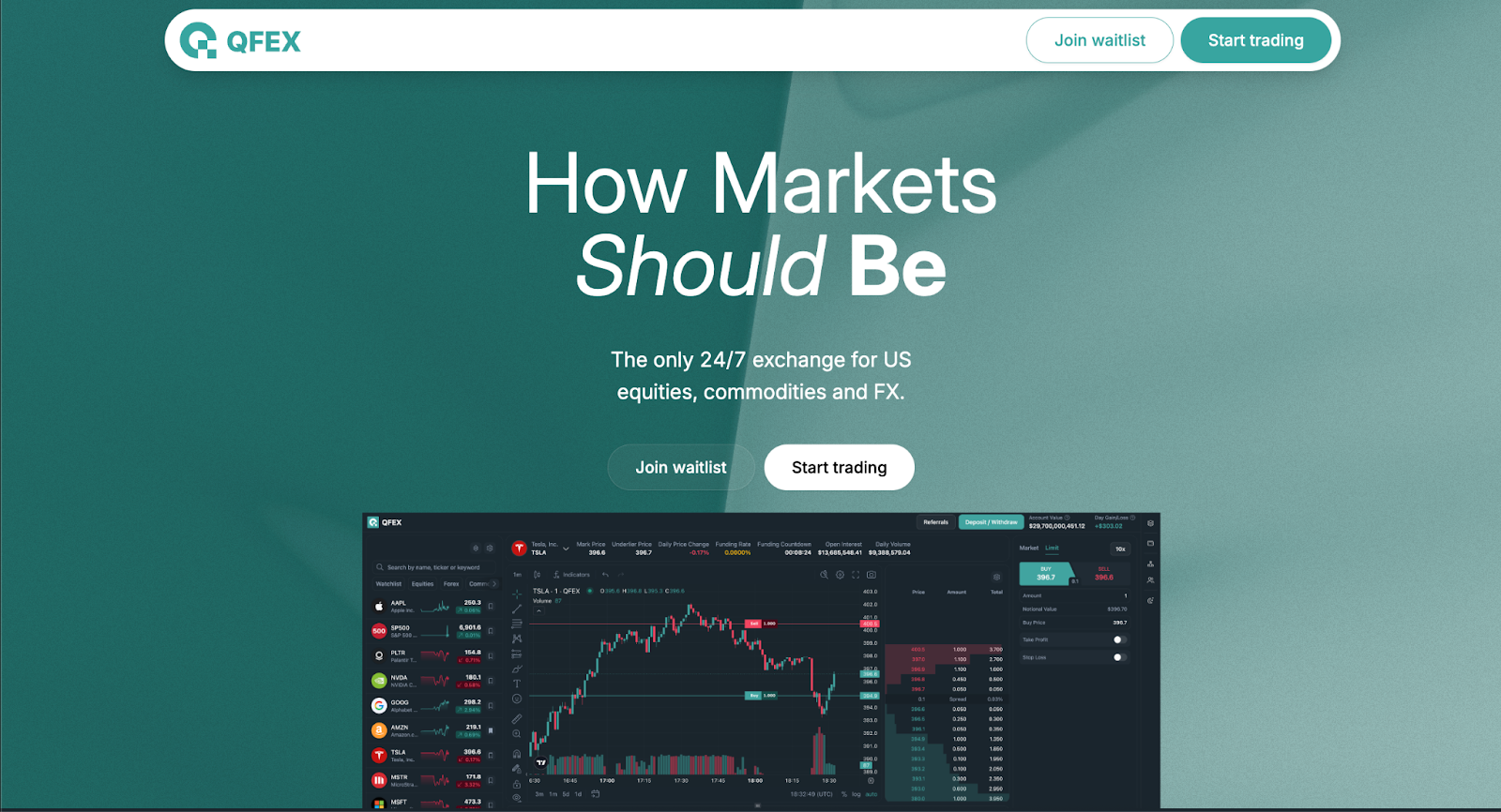
Like regular perps, QFEX operates around the clock (24/7). QFEX uses external market makers and clearing, ensuring users can trade these TradFi assets outside market hours.
The exchange is designed to match trades through a centralized limit order book (CLOB), providing transparent, precise price discovery via user-submitted orders matched directly between buyers and sellers.
As a hybrid exchange, QFEX accepts deposits in fiat and crypto. Users can deposit directly from their offchain bank accounts or simply deposit via crypto on the platform.
QFEX maintains CEX-like features, including microsecond-level latency, enabling rapid transaction and liquidation execution times, anti-HFT arbitrage protections, and circuit breakers.
QFEX is led by a credible team of experienced quants and engineers, with founders Annanay Kapila (CEO, ex-Tower Research, Flow Traders, Cambridge Maths) and Joshua Wharton (CTO, ex-Tower Research, Citadel, Cambridge Maths).
The broader team is also stacked with veteran builders with solid trading backgrounds.
Going by pre-existing examples such as Jeff’s background and Hyperliquid, the minds behind QFEX are strikingly similar, highlighting proven expertise in high-stakes trading and ensuring that QFEX's infrastructure is battle-tested for scale and reliability.
QFEX's key features
Beyond the team’s efficiency, QFEX is designed with key features that confer a direct competitive edge.
1. Deeper liquidity and execution efficiency
The proliferation of CLOB-based crypto perps highlights the inefficiencies of AMM DEXs. They suffer from impermanent loss for liquidity providers and high slippage during volatile periods due to their pool-based model.
QFEX's architecture follows the CLOB model to mitigate these inefficiencies, providing institutional-grade depth and enabling continuous access to quotes, culminating in more stable, efficient markets.
For instance, in traditional futures, fragmented liquidity across expiries increases costs; QFEX's perpetuals consolidate this into a single, unfragmented venue.
2. QFEX is balanced
Considering that the platform was built by ex-HFT quants, the system is designed to support ultra-low latency, making it a battleground for true price discovery without the "casino-like" randomness of some onchain DEXs.
What this does is position QFEX as a bridge between crypto's 24/7 accessibility and TradFi's precision, potentially saving institutional traders billions in operational costs compared to broker-dependent exchanges like CME or broker platforms.
3. Onchain inspiration with offchain speed
Why not just function exactly like a perp DEX? Yup! You see, QFEX undoubtedly draws on crypto perp DEXs.
However, to avoid the millisecond latencies common in blockchain-based order books like DYDX, its architecture takes a hybrid approach to achieve microsecond execution.
This makes QFEX ideal for high-leverage trading (up to 50x) on these assets without the gas fees or finality delays of fully onchain systems.
4. Speedbump implementation on taker orders
QFEX implements intentional micro-delays commonly called “speedbumps” applied specifically to taker orders (those that immediately cross the book and remove liquidity).
This mechanism is inspired by protections in venues like IEX in the stock market, where it's used to counteract predatory HFT strategies.
By delaying aggressive taker orders, QFEX prevents latency arbitrage, where ultra-fast traders exploit tiny time differences to front-run slower participants.
Instead, it levels the playing field, allowing passive makers (who add liquidity) to adjust quotes without being picked off, ultimately improving overall market quality for retail and non-HFT users.
QFEX’s competitive edge
On the competitive side, QFEX’s speedbump implementation makes its architecture overall more protective against exploitation than other CEXs like Binance, et al.
Its architecture also prioritizes long-term market health over short-term HFT profits, providing fairer access to users lacking advanced algorithms.
When compared to pure HFT venues, it strikes a balance, allowing for deeper books and lower effective costs.
An important aspect of QFEX is that it completely eliminates the need to tokenize underlying assets.
To do this, QFEX treats perpetual futures as synthetic derivatives that track spot prices via data sourced directly from primary exchanges (e.g., NYSE for equities, CME for commodities, or interbank feeds for FX).
This means traders get exposure to assets like TSLA, META, or uranium without wrapping them as onchain tokens (e.g., xStocks).
Avoiding tokenization consequently improves user experience, as QFEX can easily integrate a fiat on-ramp for deposits and withdrawals.
This makes QFEX more accessible than DEXs where tokenization can lead to oracle manipulation vulnerabilities, while still offering crypto-like around-the-clock trading.
How to engage with QFEX (step-by-step)
To get started using QFEX, follow these steps:
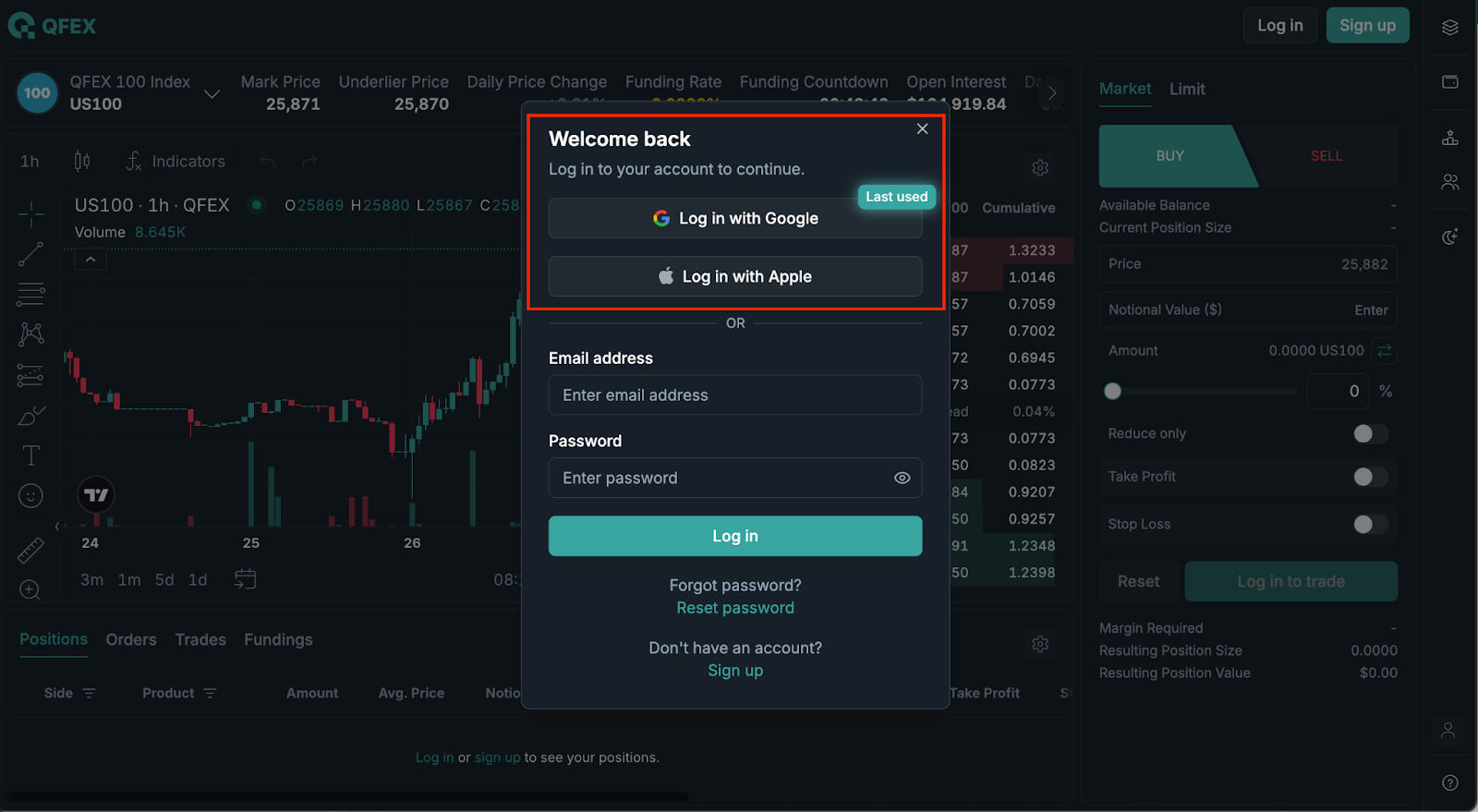
- Go to qfex.com and click on start trading. Proceed to sign up or log in via any of the listed options.
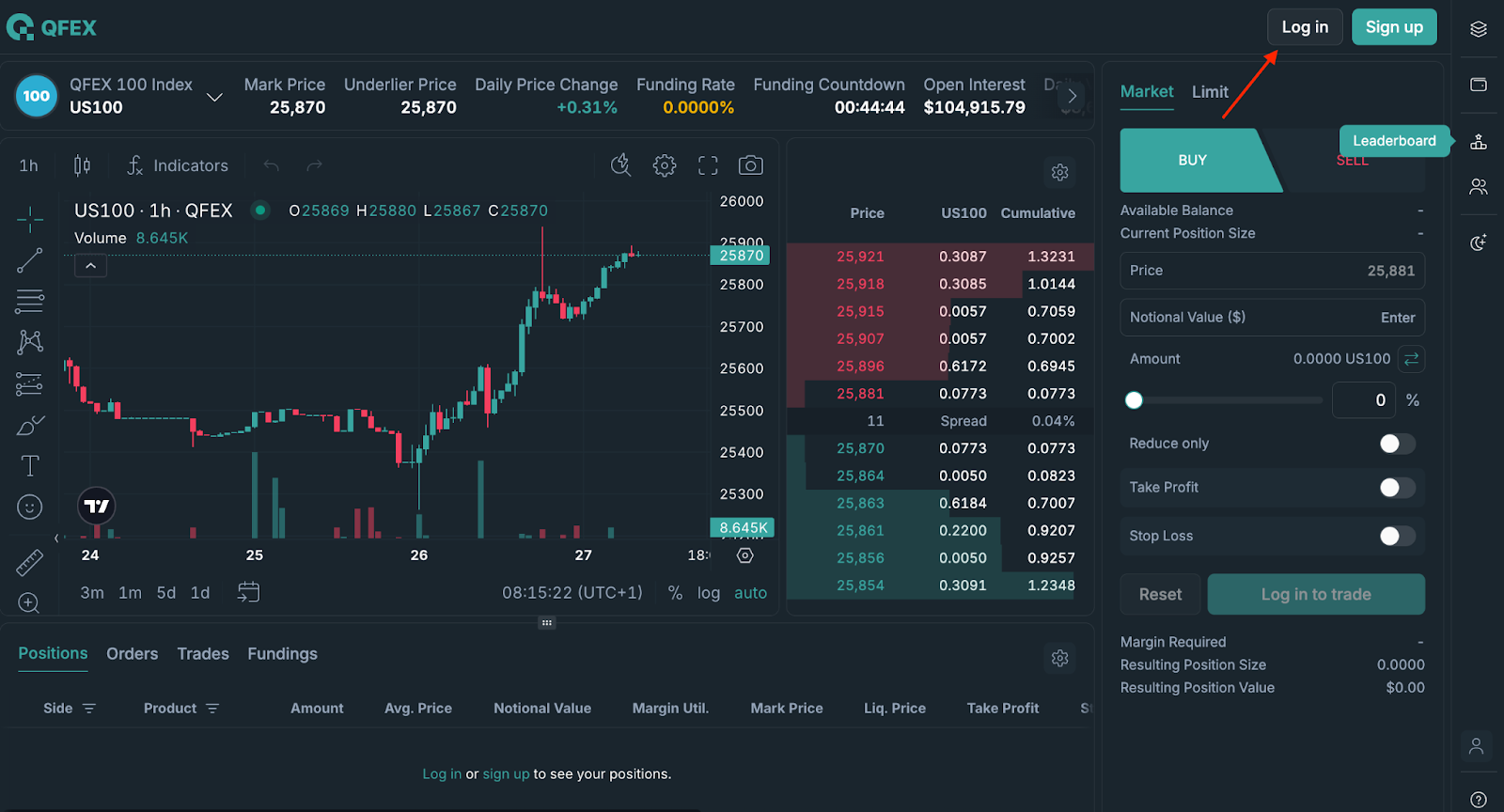
- Proceed to select a username
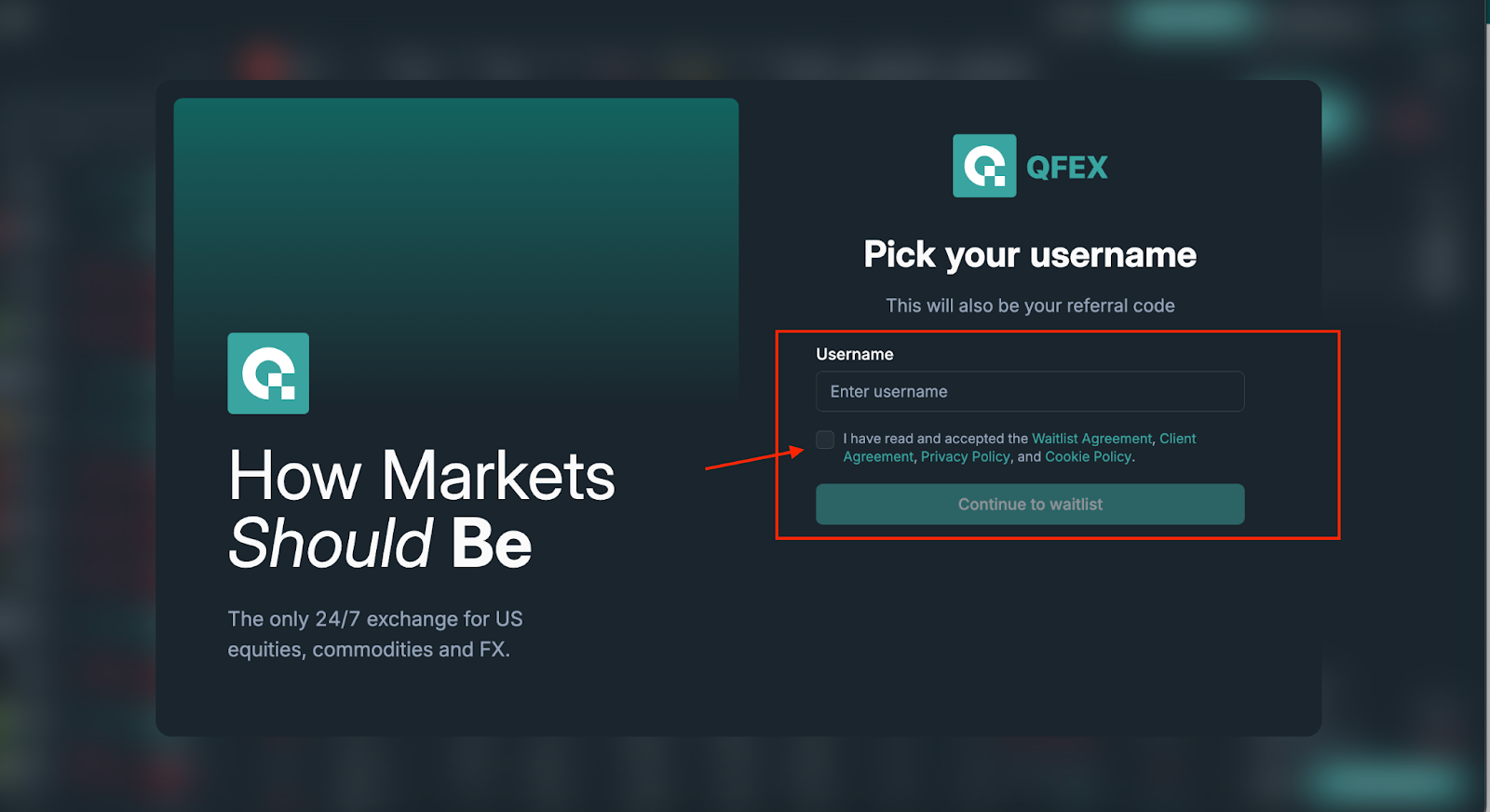
- QFEX allows capped deposits of $1k without KYC or completing the full identity verification process.
- However, the next step is to sign up and complete your KYC - Single sign-on and swift identity verification (selfie/ID) to ensure a secure, regulated environment.
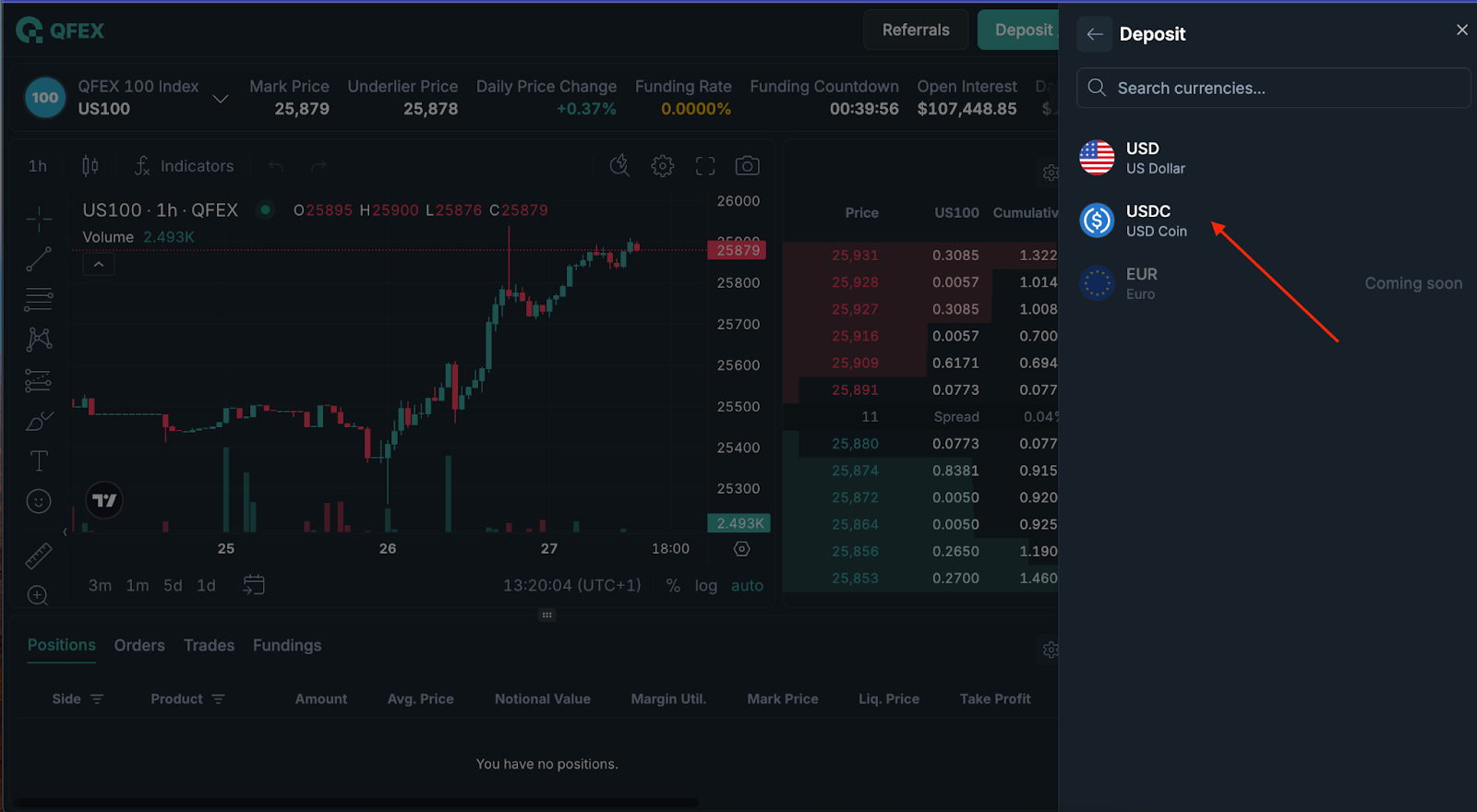
- Next, proceed to deposit by clicking the deposit/withdraw button below.
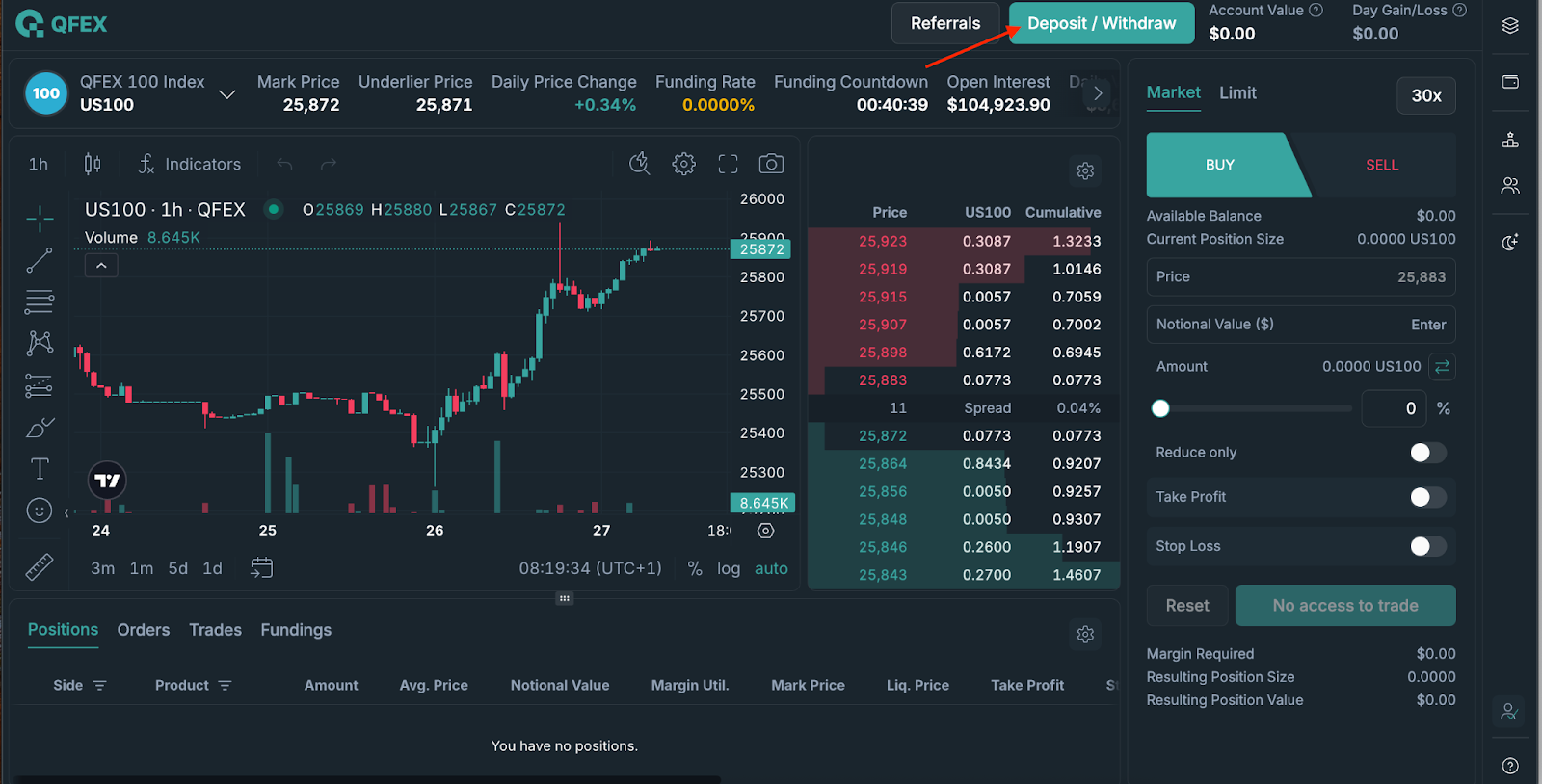
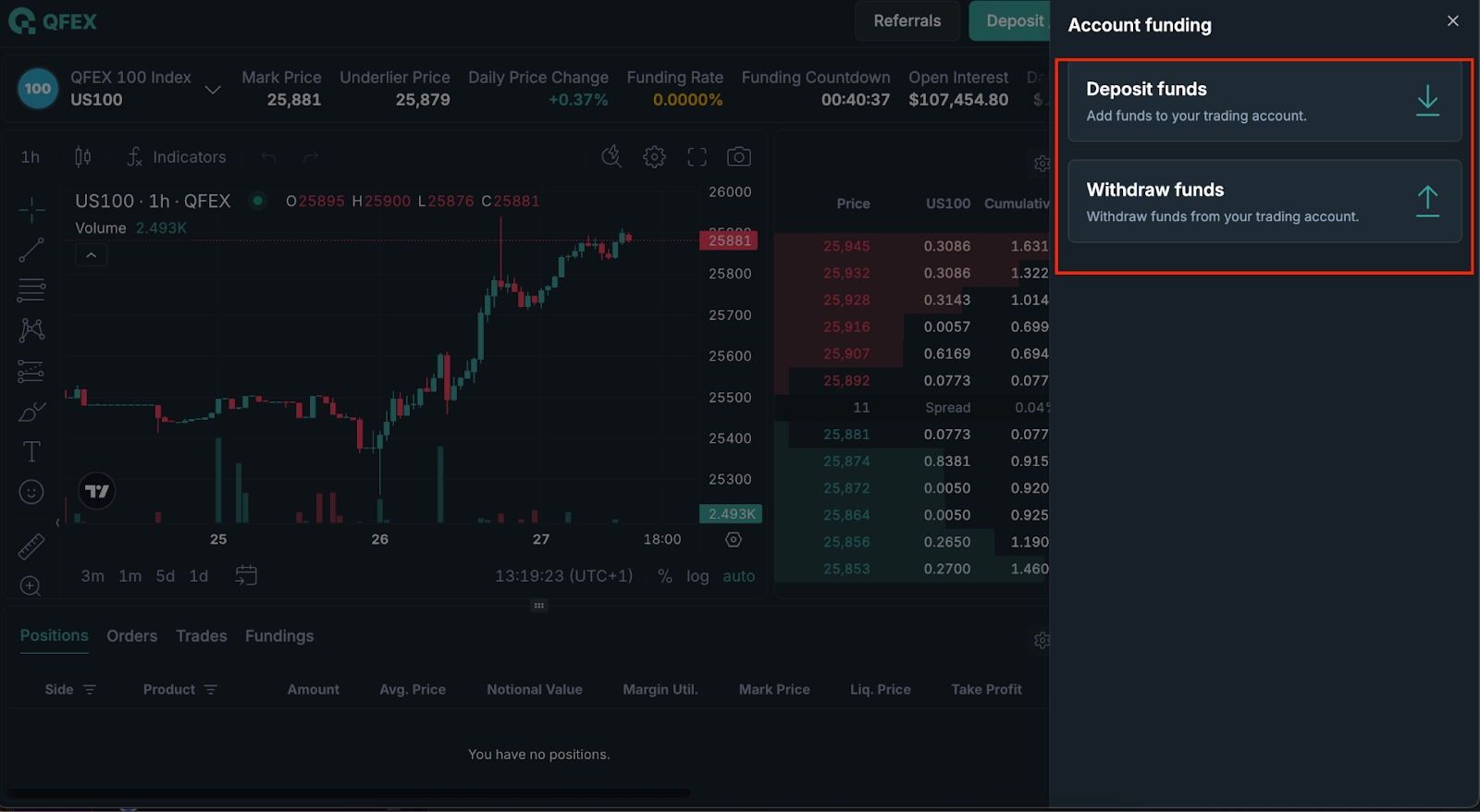
- Users can either deposit using fiat (USD, with EURO coming) or USDC.
- For the sake of this illustration, let’s use USDC. Simply copy the generated address and send USDC on Arbitrum.
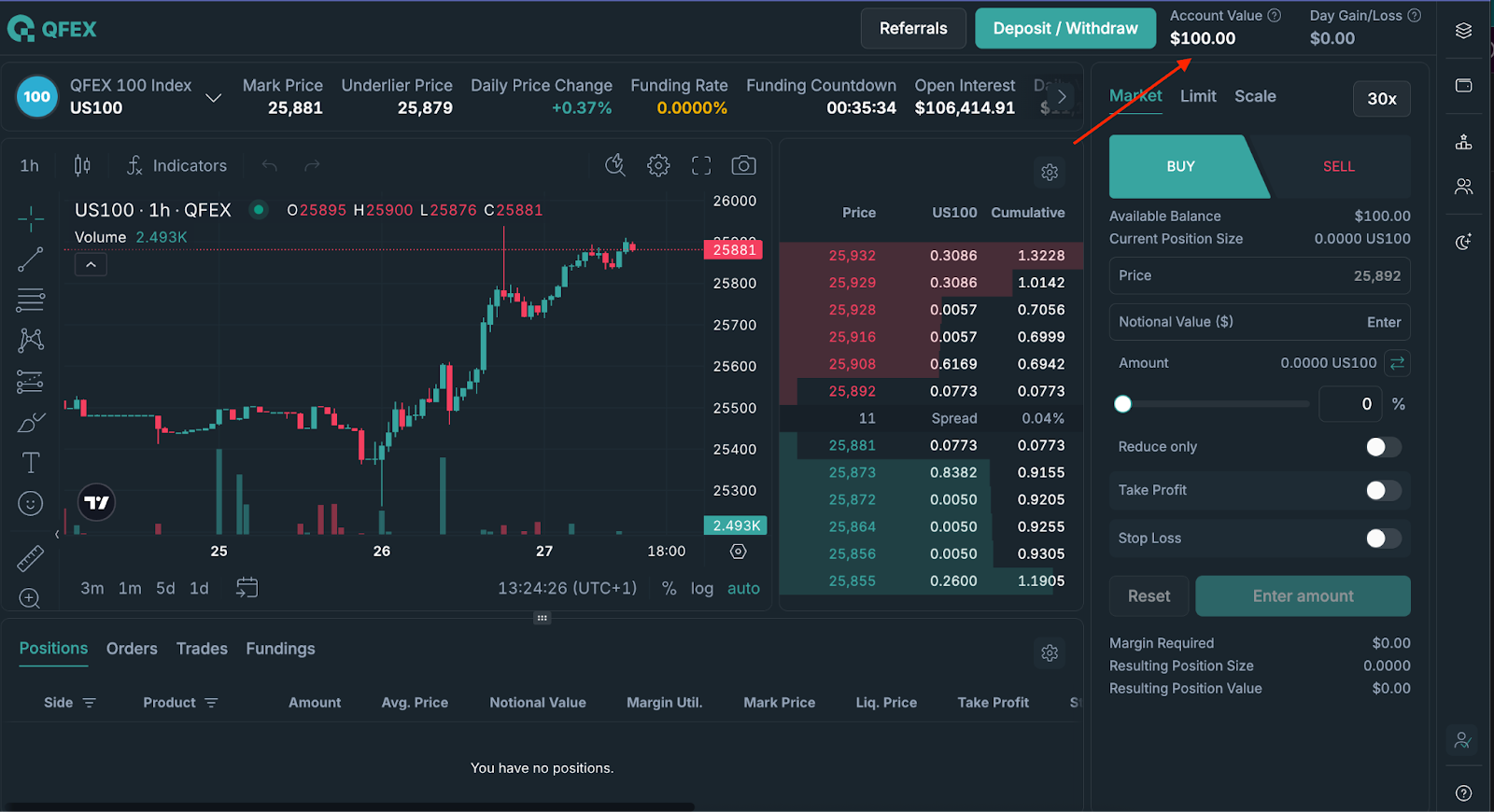
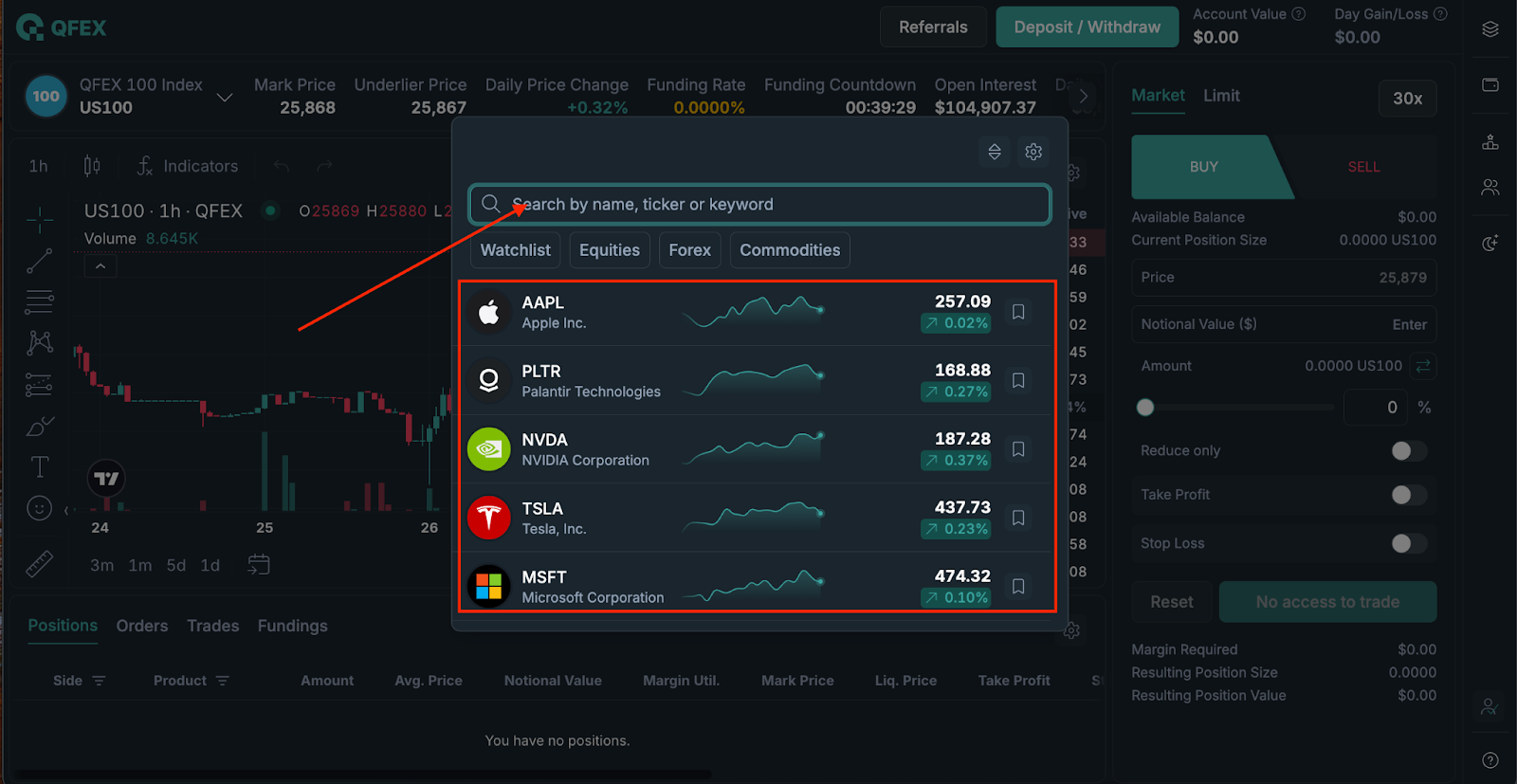
- Proceed to find (or Command +K) or select the asset you want to trade.
- Fill in your parameters by selecting market modes (Market, Limit, Scale).
- Proceed to set your price and select leverage.
- Click on place buy order or place sell order to execute.
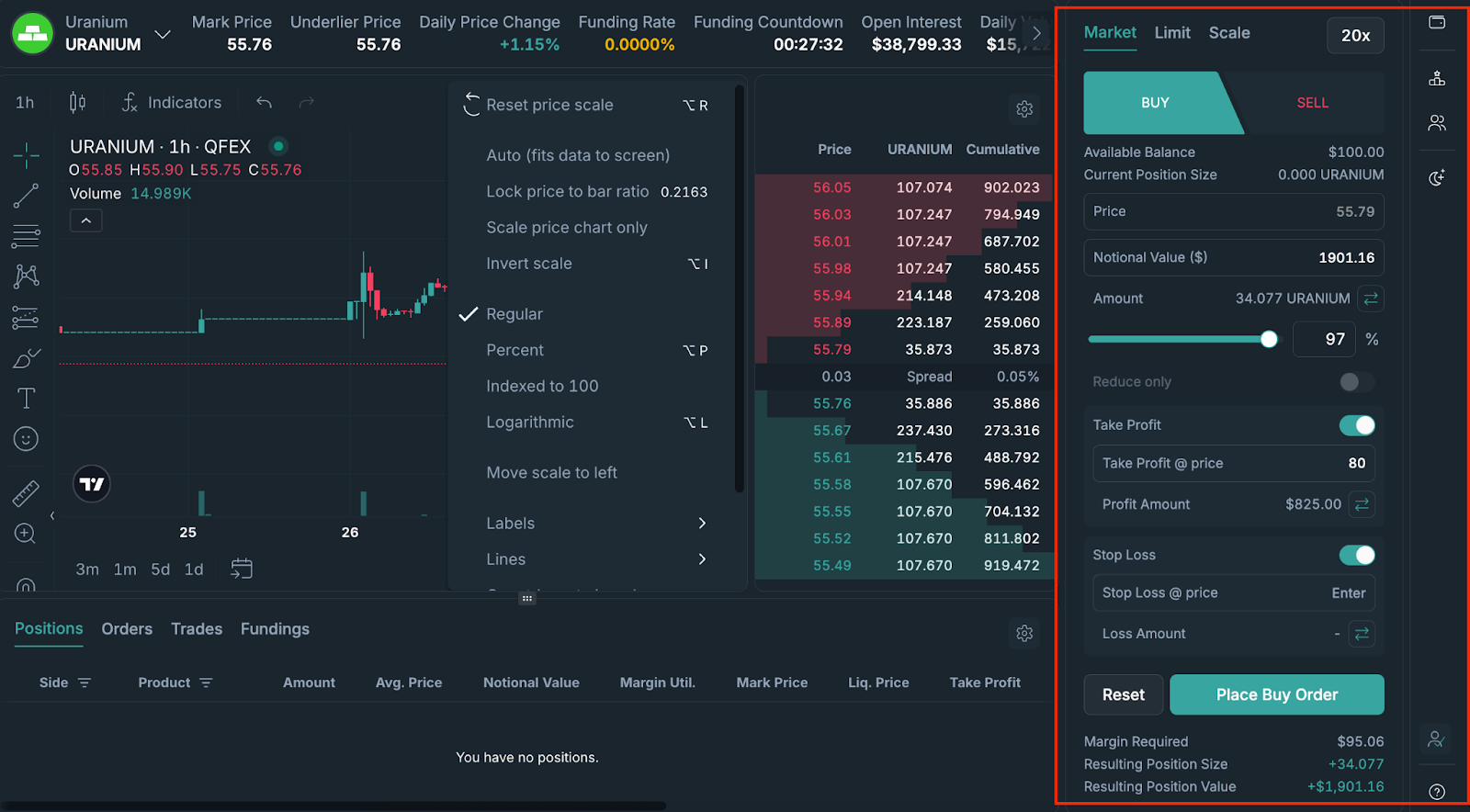
- You can track your placed orders as seen below.
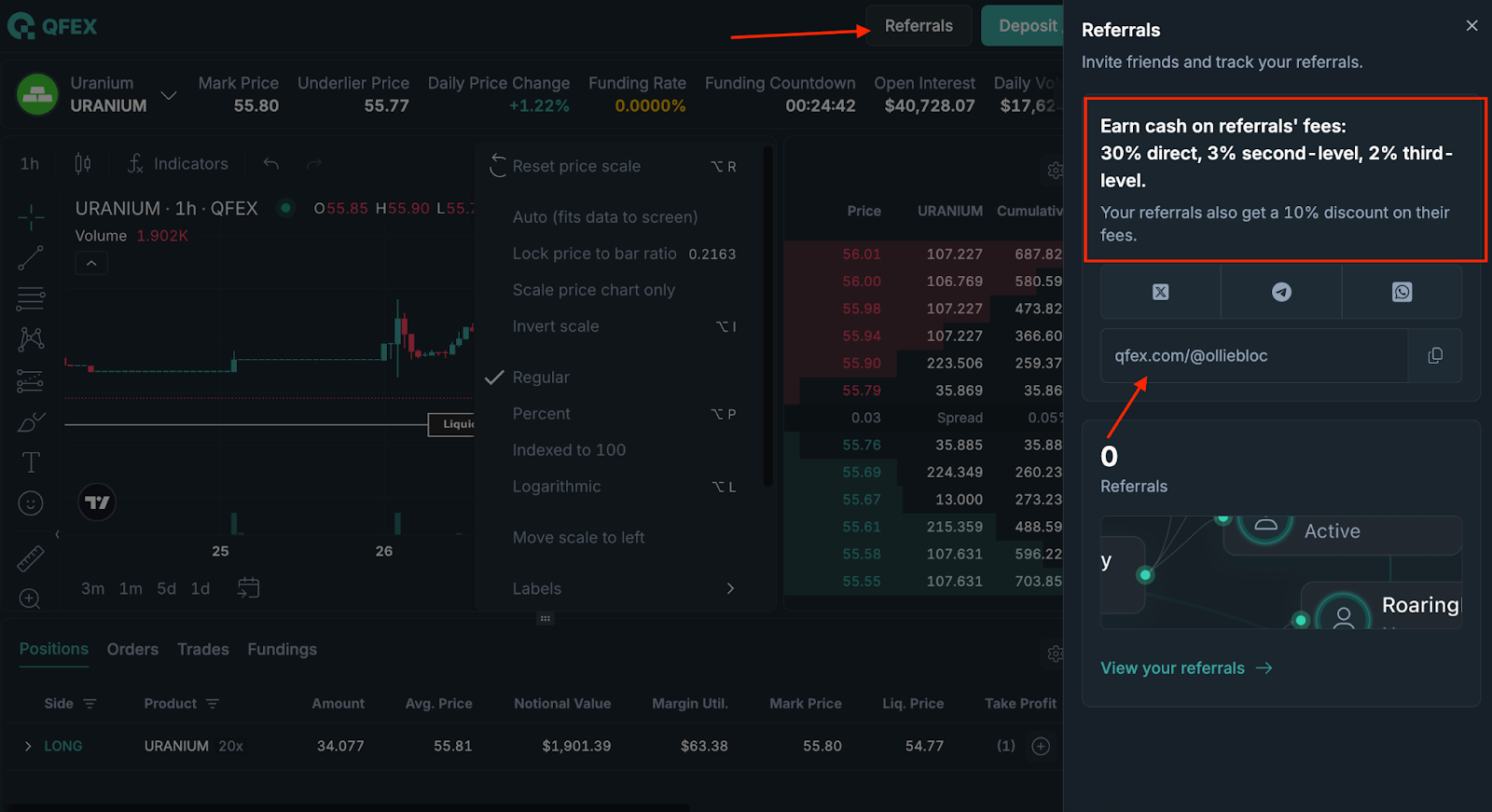
- QFEX also has a referral feature, allowing users to earn referral fees from their invites.

What does QFEX unlock?
The reality for crypto today is that it is maturing towards global adoption, inviting more players and more assets into the playfield.
Crypto’s infrastructure, specifically perpetual futures, works. However, to meet this rapid growth, it demands platforms that give users access to more stable assets, and that’s where QFEX steps in.
For the average crypto native, QFEX enables hedging or speculating on macro markets without leaving the "perps" UX they are used to.
Crypto natives also enjoy a wide range of leverage on traditional assets, from 2 to 50x, depending on the asset and users’ preferences.
For TradFi participants, QFEX opens the door to a growing financial primitive that is better suited to speculation than options. QFEX is designed to feature markets that don't expire and to deliver unmatched execution.
QFEX’s architecture becomes the playground for the men in suits and the more risk-friendly crypto bros, battling it out in one arena. Picture Threadguy versus Paul Tudor Jones or Jez going at it in the orderbooks with George Soros. This is where we are.
Concluding thoughts
Crypto has evolved, and from here on, things will undoubtedly get more blurry. As the lines collapse into each other, it’s important that performance and user experience are at the forefront of consideration.
The QFEX team's markup shows they are seasoned at providing the best experience for traders interested in traditional assets, especially as these assets are becoming increasingly popular amongst the crypto crowd as well.
One thing is clear, the arena for perpetual products has gone from Sunday League to Champions League - lots of players, more competitive.
To this end, for platforms to stand out, they must offer clear value to users, prioritize the platform experience, and prevent manipulation.
QFEX’s architecture is designed exactly for this, making it a suitable platform for institutional investors and individuals.
Thanks to the QFEX team for unlocking this article. All of our research and references are based on public information available in documents, etc., and are presented by blocmates for constructive discussion and analysis. To read more about our editorial policy and disclosures at blocmates, head here.








.webp)

.webp)

.webp)

.png)


.webp)



.webp)
.webp)

.webp)
.webp)














.webp)

.webp)


.webp)



.webp)
.webp)




.webp)

.webp)















.webp)
.webp)
.webp)
.webp)

.webp)
.webp)
.webp)


.webp)
.webp)


.webp)


.webp)




.webp)


.webp)


.webp)





















.webp)







.webp)












.webp)

.webp)
.webp)

.webp)














.webp)

.webp)


.webp)





.webp)