This year has witnessed a quiet but significant reshaping in the way value is being held onchain. The industry is putting full-fledged yield-generating strategies onchain as programmable, tradable assets.
This is noticeable in the growth of real-world assets (RWAs) that bring traditional yield instruments onchain, alongside the emergence of a new primitive of tokenized strategies.
RWA TVL is well into double digits from single digits in 2024, with the current figure sitting at ~$17 billion.

This signals a broader transition from passive stablecoin balances to yield-generating onchain assets, as investors increasingly look for reliable returns instead of leaving liquidity idle.
A big part of that shift is the rise of tokenized-yield infrastructure. Pendle is a prime example - one of the cycle’s strongest performers, reaching a new all-time high of roughly $12 billion in TVL in September.
At a more granular level, this appetite for productive capital extends into the world of synthetic dollars. By design, these assets capture competitive yields onchain, making them intrinsically yield-bearing dollars rather than static collateral.
However, one important thing to note, and frankly the one that sets the tone for today’s discourse is that for most yield-bearing synthetic dollars today, they generate their interest in one of two ways:
- Through traditional finance instruments (tokenized T-bills and money market returns) ;
- Through onchain lending markets like Aave (with most using leverage)
This ties them to macroeconomic rates and lending demand, making them prone to the same vulnerabilities associated with centralized intermediaries.
Leaving us with no other option than to ask the big question, which is:
How do we obtain synthetic dollars with an uncorrelated yield, one that doesn’t fluctuate when rates shift or when markets fluctuate?
While some synthetic dollar protocols have experimented with interesting yield-capture strategies, we believe that the project under our spotlight today has a particularly distinctive approach.
In the following few paragraphs, we will examine Neutrl. We will discuss its strategy, including how it ensures a competitive, uncorrelated yield that remains viable in any market condition.
We will also explore Neutrl’s feasibility while examining the associated risks and mitigation mechanisms of these risks.
What is Neutrl?
Neutrl is a synthetic dollar protocol that generates market-neutral yield by democratizing access to institutional strategies such as OTC arbitrage, hedging, delta-neutral trades, and packages that yield into a pair of tokens:
- NUSD: The easy, spendable synthetic dollar you can mint and hold (made liquid and available through liquidity reserves).
- sNUSD: The yield-bearing version you get when you stake NUSD. It grows in value as the protocol captures real profit from underlying strategies.

Let’s tie it all together.
Neutrl’s working mechanism
In vivid terms, Neutrl identifies and exploits spreads and inefficiencies that persist because markets aren’t perfectly efficient.
One such inefficiency stems from the large volumes of tokens locked in VC deals and, therefore, are inaccessible to the public.
This isn’t limited to venture capital, as Neutrl’s approach also accounts for foundations that require additional runway but are constrained by extended lock-up periods.
Neutrl’s strategy
Neutrl’s market-neutral yield strategy involves purchasing these tokens at a discount in OTC transactions from VCs seeking liquidity or foundations needing funds, with settlements enforced onchain via smart contracts or through a qualified intermediary.
The real innovation, however, begins post-purchase with Neutrl hedging its acquired spot exposure using a delta-neutral strategy that opens a short position in perpetual futures, allowing it to capture yield through basis spreads while minimizing directional risk.
The resulting yield is then distributed to holders of sNUSD.
Beyond basis spreads, Neutrl also captures yield from positive funding rates on their short positions. Funding rates are payments paid to keep the price at parity with the spot market.
Neutrl’s strategy is fundamentally market neutral (well, that’s where its name comes from). Holding large spot positions bought at discounts and combining them with futures positions mitigates the directional risk associated with trading, while capturing yield via basis spreads and funding rates, regardless of market conditions.
Liquidity reserves
An essential aspect of how Neutrl works is through its liquidity reserves. Some of Neutrl’s money is invested in assets that can be accessed instantly, such as USDC, USDT, and yield-bearing stable alternatives such as USDe and USDS.
This portion of the portfolio acts as a liquidity cushion, ensuring that the value of NUSD stays aligned with the collateral backing it.
While only whitelisted, KYC/KYB-verified participants can redeem NUSD directly with the protocol, everyday users still have 24/7 permissionless liquidity through the Curve pool, which currently supports over $10 million in swapping depth. Those reserves also supply a steady base return that gets passed along to sNUSD holders.
To capture yield from Neutrl’s strategy, users must hold the staked version of NUSD (sNUSD). When you stake NUSD and mint sNUSD, you’re not receiving a separate emission token; you’re earning a share of the protocol’s actual earnings.
Instead of sprinkling new tokens into the ecosystem as rewards, Neutrl uses something called a reindexing model, where the value of sNUSD gradually increases relative to NUSD as yield is realized.
For example, if you hold $5,000 sNUSD in your wallet & $5,000 NUSD, over time your balance would reflect the yield earned on the sNUSD directly, meaning your new balance could read something like $5,521 sNUSD (made up numbers, but you get the point) & $5,000 NUSD (yield doesn’t accrue to NUSD) in your wallet.
This keeps returns tied to actual profit rather than token inflation.
On the safety front, Neutrl layers protections through overcollateralization, hedges for every OTC deal, diversified counterparties, and liquid reserves to handle redemptions.
To further transparency, Neutrl ensures that attestations, audits, and onchain proofs make the backing visible. These design choices mitigate the typical contagion risks associated with protocols that heavily rely on a single yield source.
Why is Neutrl different?
As we mentioned earlier, most yield-bearing synthetic dollars today draw from two long-standing playbooks, both of which come with significant blind spots.
First, many stablecoin wrappers are simply tokenized versions of traditional short-term credit.
They park reserves in short-dated US treasuries or tokenized money-market funds, then pass that yield on to holders.
The appeal is obvious: Treasuries are liquid, familiar, and relatively safe. But that familiarity comes at a cost; it fully exposes these assets to macro interest-rate cycles.
When the Treasury curve flattens or yields compress, onchain returns follow suit. In other words, your yield is essentially the same as everyone in TradFi is getting, moving in lockstep with Fed policy and global money market conditions.
The recent boom in institutional interest around tokenized treasuries and money market products only reinforces how dependent these wrappers remain on traditional finance liquidity.
The second model channels deposits into onchain lending markets, such as Aave or Compound, or earns interest from collateralized lending.
While this can generate substantial returns during periods of high borrowing demand, those yields are inherently cyclical, driven by leverage, market sentiment, and liquidation events.
DeFi lending rates spike when risk appetite is high and collapse when demand dries up. They’re also tightly correlated with broader onchain volatility.
Neutrl takes a different route. Instead of chasing macro rates or onchain credit cycles, it sources yield from structural inefficiencies, things like discounts on bulk private sales and funding rate arbitrage opportunities.

Because these returns stem from market frictions rather than interest rate policy or lending demand, sNUSD’s performance remains largely uncorrelated with both Treasury yields and DeFi lending APRs.
That makes it a truly complementary building block in a diversified onchain portfolio.
How Neutrl’s sNUSD is complementary to Ethena’s sUSDE
Neutrl’s NUSD isn’t alone in the world of synthetic dollars with uncorrelated yield. Ethena’s USDe has also carved out a strong reputation, delivering consistent returns through a distinct, battle-tested approach.
Ethena leverages a combination of funding rate arbitrage, basis spreads, interest from stablecoin reserves, and other market inefficiencies to generate yield for its sUSDe holders.
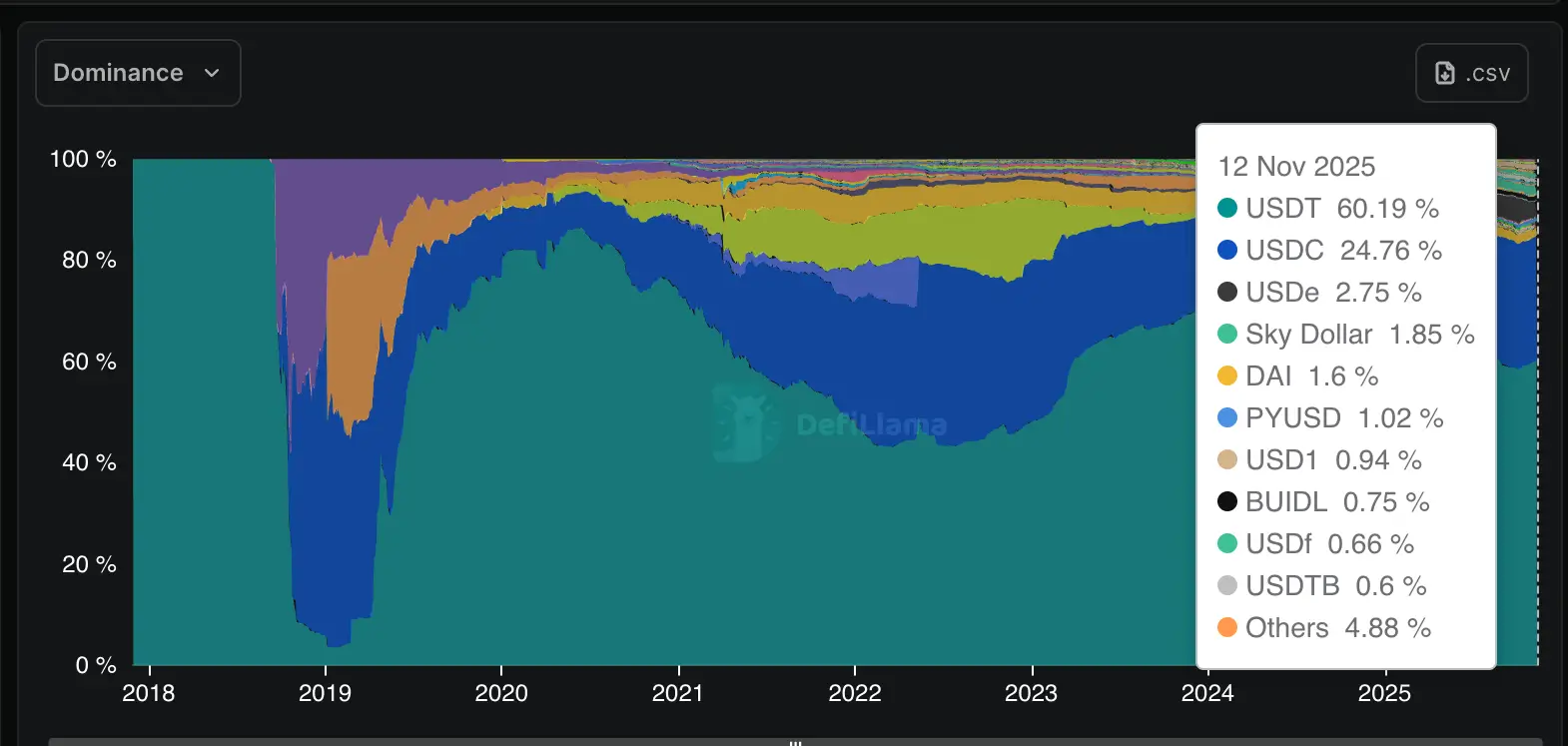
The sustained success of Ethena since its launch as the third most dominant synthetic dollar, just behind USDT and USDC, doesn’t just highlight the strength of its own design; it also reinforces the soundness of Neutrl’s architecture, particularly in how it captures yield through OTC arbitrage.
Neutrl’s performance and traction
Early traction has been substantial. During its private beta, Neutrl scaled from zero to about $52 million in TVL over three months through a small set of LPs.
When the team later opened the public pre-deposit vault, demand surged - both the $50 million cap and the follow-on $25 million cap filled in under an hour.
Today, that figure has grown to over $136 million+ in total value locked since going live, underscoring the rising confidence of professional trading desks and crypto-native funds willing to allocate capital behind the strategy.
The private beta delivered historical yields of 26–30% APY, driven primarily by delta-neutral arbitrage across OTC markets.
Yield is ramping up for public launch. The first yield distribution for sNUSD holders was 16.58%, with the latest yield distribution reaching 17.48%.
This return reflects realized gains from Neutrl's delta-neutral and OTC strategies as positions vest and cycle through the portfolio.
Approximately 10% of reserves are now actively deployed in arbitrage, with the remainder held in liquid stablecoins such as USDC, USDT, USDS, and USDe.
Yields are expected to increase even further as capital is progressively allocated into fully operational OTC positions and deals vest.
On the risk side, Neutrl maintains full collateralization, supported by real-time, zero-knowledge proof attestations via Accountable to verify solvency.
Its reserves are over-collateralized to ensure a robust 1:1 redemption peg for NUSD, providing both transparency and capital security.
Momentum in the broader market also favours Neutrl’s positioning.
The rise of tokenized treasuries, money market products, and synthetic yield instruments from leading financial institutions highlights a clear appetite for yield-bearing, onchain cash equivalents, making Neutrl’s approach both timely and strategically aligned with this macro trend.
Launch features: What you can do now
With Neutrl now live, users can interact with the protocol in various ways.
You can mint NUSD by depositing any of the supported collaterals or by swapping stablecoins into NUSD via the app.
You can then proceed to stake NUSD for sNUSD. Staking will enable you to start earning the market-neutral yield stream, with sNUSD’s value reindexing upwards as profit accrues.
However, Neutrl is also running a points program, allowing early depositors to farm Neutrl points to qualify for additional rewards for staking and general activity.
This additional reward adds a bit of fun to the entire system as points are awarded based on your choice of activity, such as:
- Holding
- Staking
- Locking
- LPing
What this means is that users can choose to forgo sNUSD yield and instead, lock NUSD to gain exposure to Neutrl points. Users who do this will earn more points but will not earn yield, as that only streams to NUSD stakers.
However, if users choose to lock their sNUSD, they will earn even more yield.
Let’s chalk this out for additional clarity:
- Hold NUSD - earn 5 Neutrl points daily.
- Lock NUSD - earn up to 150 points daily.
- Hold sNUSD - earn yield and also earn 1 Neutrl point per day.
- Lock sNUSD - earn yield and also earn up to 40 points per day
And so on!

It gets even more interesting when users divert NUSD into external liquidity pools. They can simply hold the resulting LP token to earn Neutrl points, or they can lock that LP token on Neutrl to earn even more points on top of their underlying yield.
For example, a user might deposit NUSD/USDC into Curve. They can either keep the LP receipt token and earn Neutrl Points passively, or lock that receipt token on Neutrl to stack Curve yield + Neutrl points simultaneously.
The Neutrl points system is also designed to be integrated across ecosystems. At the minute, the NUSD secondary market is live on Pendle. Users can earn fixed yield through PTs or 50x Neutrl points on LP or SY-NUSD, unlocking even more ways to participate in the program.
Concluding thoughts
It is pretty evident that with clearer regulations and growing institutional tokenization of cash-like assets, as well as apparent design success stories like Ethena’s USDe, synthetic dollars are no longer a niche experiment.
It is in this regard that Neutrl is attempting something pragmatic, opening up once-locked private markets through OTC deals and providing sustainable yields that are resistant to market volatility through delta-neutral techniques.
If you want yield that’s earned by finding gaps in the market rather than by hoping rates stay high or more tokens get minted, Neutrl is an exciting play.
That doesn’t mean it’s risk-free, but it does mean the yield comes from activity that’s somewhat orthogonal to the big macro levers.
If you have idle stables lying around, we recommend trying the protocol to increase yields and accrue points.
Of course, as always, don’t just take our word for it. Go a step further to do your own sniffing around, and if it fits your appetite and doesn’t ring any alarm bells, feel free to take a plunge.
Thanks to the Neutrl team for unlocking this article. All of our research and references are based on public information available in documents, etc., and are presented by blocmates for constructive discussion and analysis. To read more about our editorial policy and disclosures at blocmates, head here.









.webp)

.webp)

.webp)

.png)


.webp)



.webp)
.webp)

.webp)
.webp)













.webp)
.webp)

.webp)

.webp)
.webp)


.webp)

.webp)











.webp)
.webp)
.webp)
.webp)
.webp)


.webp)
.webp)


.webp)


.webp)




.webp)


.webp)


.webp)















.webp)






.webp)








.webp)
.webp)
.webp)

.webp)












.webp)

.webp)

.webp)





.webp)