Do you ever get that feeling, like the magic of crypto is slipping away?
This jadedness primarily comes down to two things:
First, it’s knowing that each and every coin out there is entirely worthless, granting no rights to the underlying tech or company, as recently highlighted by Pump’s acquisition of Padre Terminal and Coinbase’s acquisition of Vectordotfun, which gave no benefit to token holders.
The second, and perhaps even bigger problem, is the absurd valuations at which most projects launch, completely sidelining retail from any meaningful price gains.

But what if there was a solution? A solution that directly addresses both issues with high-float, low-valuation launches and ownership rights embedded into the coins, making them comparable to equity.
What is MetaDAO? Quick primer
To illustrate why MetaDAO represents a complete paradigm shift, we’ve included a snippet from a Meal Deal report authored by Kai.
See, most onchain organizations today operate with fragmented structures. Projects typically form both a DAO and a foundation at launch: the DAO manages onchain governance for tokenholders, while the foundation serves as the off-chain legal entity for hiring, payroll, and fundraising.
This legal workaround — used even by Solana and Ethereum — lacks a clear link between onchain governance and off-chain ownership.
Tokenholders often have no legal claim to the organization’s profits or treasury. Instead, the foundation controls assets, IP, and strategic direction, with decisions usually favouring VCs and shareholders over the DAO.
Through MetaDAO’s partnership with MetaLex, each new DAO forms an accompanying LLC that holds all assets and IP. These LLCs legally recognize onchain governance as their decision-making authority.
Key operational decisions — from capital allocation to minting new tokens — are bound by futarchy markets. For tokenholders, this means their onchain votes directly shape the organization’s legal and financial outcomes.

It’s important to note that the “ownership” and legal setup are merely a stroke of genius from MetaDAO and do not equate to futarchy.
On MetaDAO, futarchy is but one out of many underlying tools that make projects launched on MetaDAO so special.
It is for this very reason that futarchy won’t be discussed explicitly in today’s article, and we’ll move straight into the good stuff — the actual projects.
And with the recent dip across the entire basket of ownership coins, now’s the best time to shop before all the money is spent on Christmas gifts.
That is, if you have anything left at all, which I certainly don’t.
MetaDAO project guide
Avici
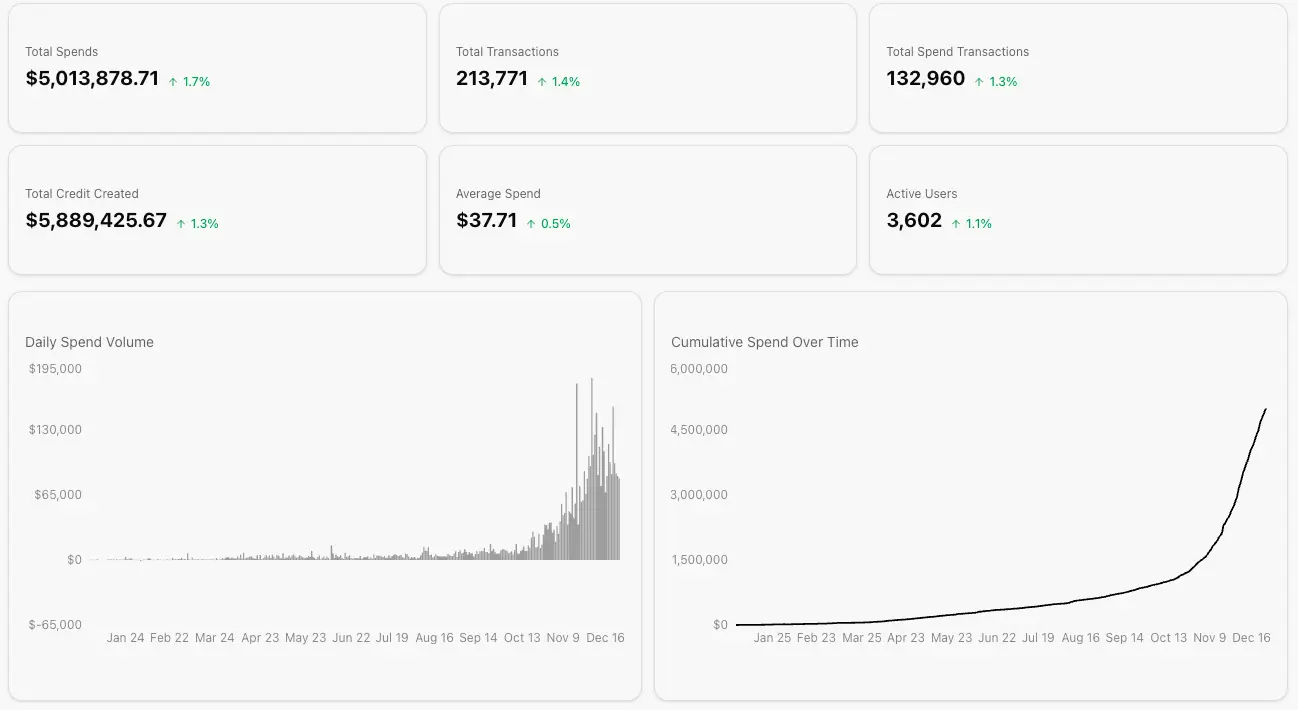
It’s only natural that we start the list with the people’s bank, Avici, which has experienced exponential growth across all metrics since its ICO.
After AVICI surged over 1800%, climbing from its ICO valuation of just $5 million to over $90 million, the token has now stabilized around $40 million, or $3.2 per share.
In its current form, it offers self-custodial wallets, Visa cards (both virtual and physical), USD/EUR balances, with virtual bank accounts and business accounts launching imminently.
However, Avici's vision goes beyond just offering a visa card and virtual bank account, as such a product wouldn't be distinctive.
As outlined in their masterplan, this is simply a way to achieve initial distribution.
Here are the key bull(et) points:
- A product in its exponential growth phase, with over 3,600 active users, more than 213,000 total transactions, and nearly $6 million in credit created
- Lies within a hot sector — neobanking
- Comparable competitors like EtherFi and Plasma are sitting at FDVs of $800 million and $2 billion, respectively, providing a high ceiling for future price movements
- FDV matches the market cap since the team currently has no tokens (expect this to change in the near future, subject to futarchy vote)
- Impeccable shitposting on X from Avici’s intern
Now, what’s in store for Avici in the near future? Thanks to Ram’s latest monthly report, it’s all out there in the open for us to digest.
Solomon
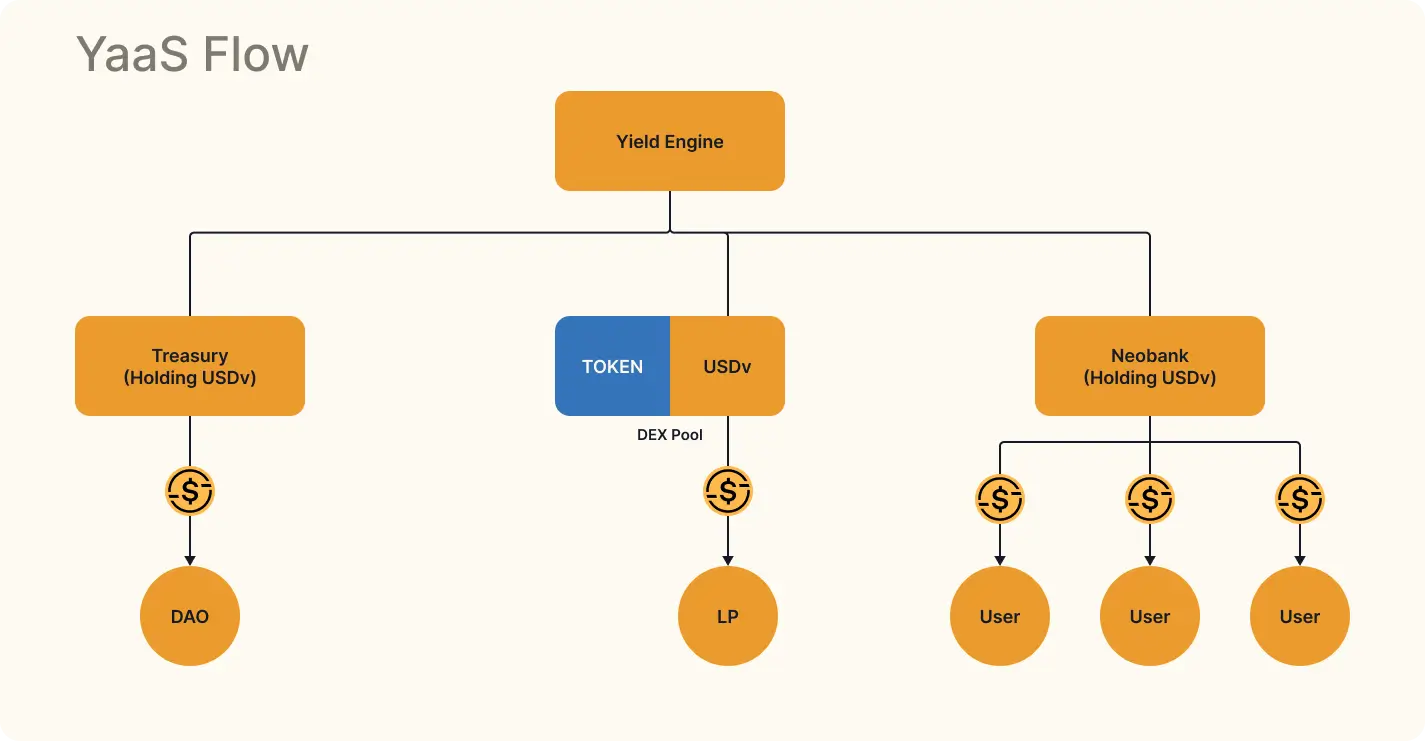
The most recent launch on MetaDAO, Solomon, is building Solana’s composable dollar, with the key innovation of Yield-as-a-Service, offering a yield-streaming mechanism for LPs, treasuries, wallets, and neobanks. Wink, wink.
Launched at a $10 million valuation or $0.8, $SOLO currently sits just above that at 90 cents per share.
The team is actively expanding beta access beyond current approved users, with priority given to $SOLO holders.
Once they’ve finished rebuilding the UI/UX and tightened all the mechanisms behind the stablecoin peg, the product will become available to the broader public.
Additionally, the T-bill integration is nearing completion, and the much-anticipated YaaS is also set to be launched soon, as mentioned in xranga’s latest post.
Here's why Solomon has the potential to become a strong player in the stablecoin wars:
- The product has been live in closed-beta for more than a year and survived the widespread liquidations of October with flying colors
- The founder has hinted at a future collab with Avici
- The holy trinity of stablecoins: Hard peg + composability + yield delivery through delta-neutral basis trades (spot-long/perp-short strategies)
- YaaS: Innovative yield streaming mechanism for institutional clients
- The team's tokens become accessible after an 18-month cliff and are priced based on price performance in tranches of 2x, 4x, 8x, etc., subject to a TWAP, effectively making the FDV equal to the market cap at the current price levels.
Umbra
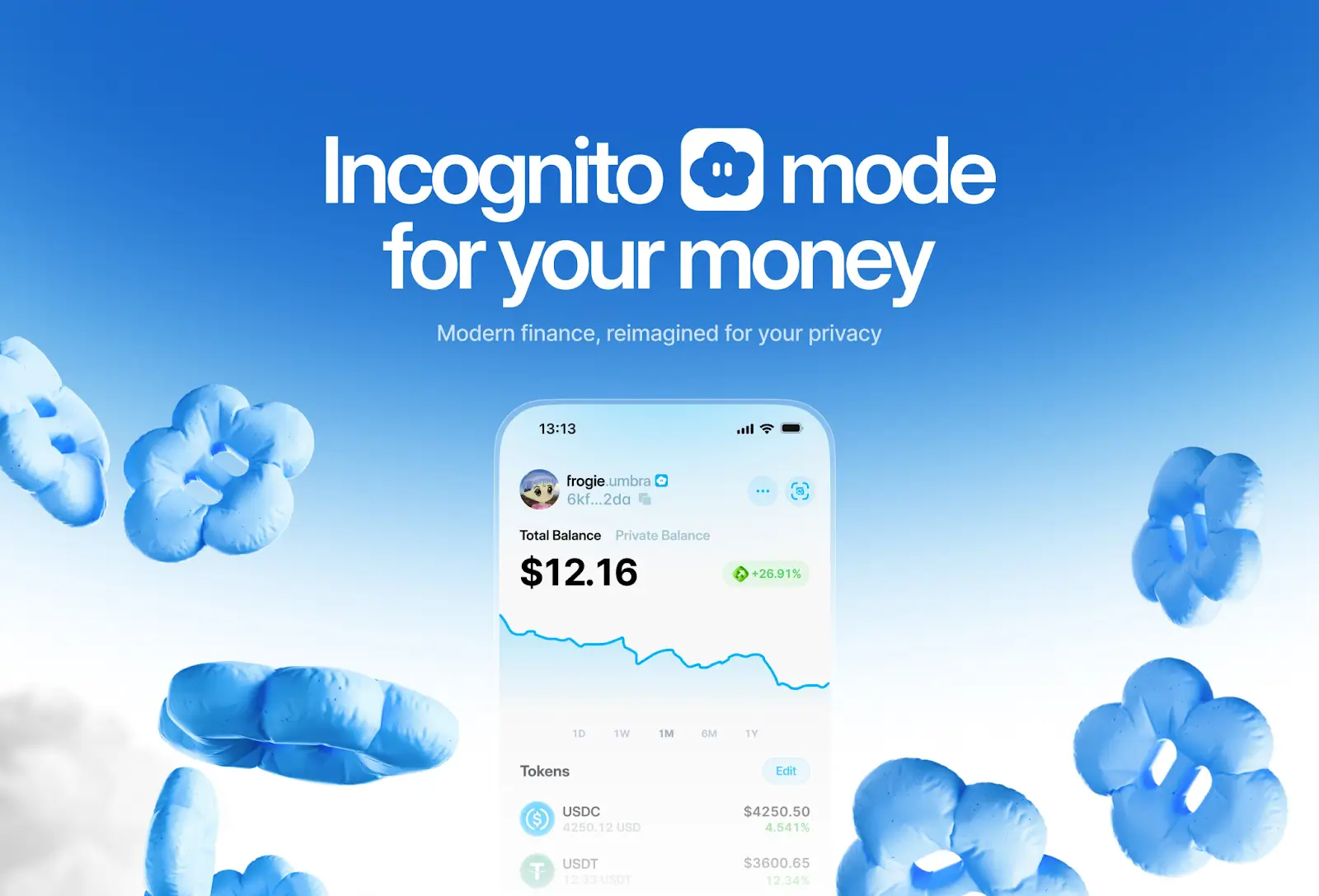
MetaDAO's privacy play, Umbra, is building the "incognito mode" that Solana, and all public blockchains for that matter, desperately need.
With a market cap of around $11 million, $UMBRA is now trading at $1.1, almost 4 times its ICO price of 30 cents.
Initially, the team aimed to deliver a privacy SDK that would allow developers to easily add transactional privacy features without needing to understand complex cryptography and architecture, as the core “product.”
After realizing how powerful their creation is and how cumbersome existing privacy solutions are, they quickly shifted gears and began shipping Solana's first privacy-first wallet, set to launch on the Second day of Christmas.
The privacy thesis is still going strong, and $UMBRA has many tailwinds going for it as we approach the end of the year:
- Positioned to become the primary privacy infrastructure for Solana
- Developer SDK launched on November 14 for external testing, with over 50 teams already signed up
- Mainnet for the SDK launching in December
- Mobile wallet with on-device encryption and stealth addresses to launch on the second day of Christmas
- Just like Solomon, the team’s tokens are locked for 18 months and are performance-gated.
Omnipair
If you thought DeFi innovation was happening only within the EVM ecosystem, think again. The project’s cleverly named token, $OMFG, currently trades around $1, a solid 9x from its ICO price.
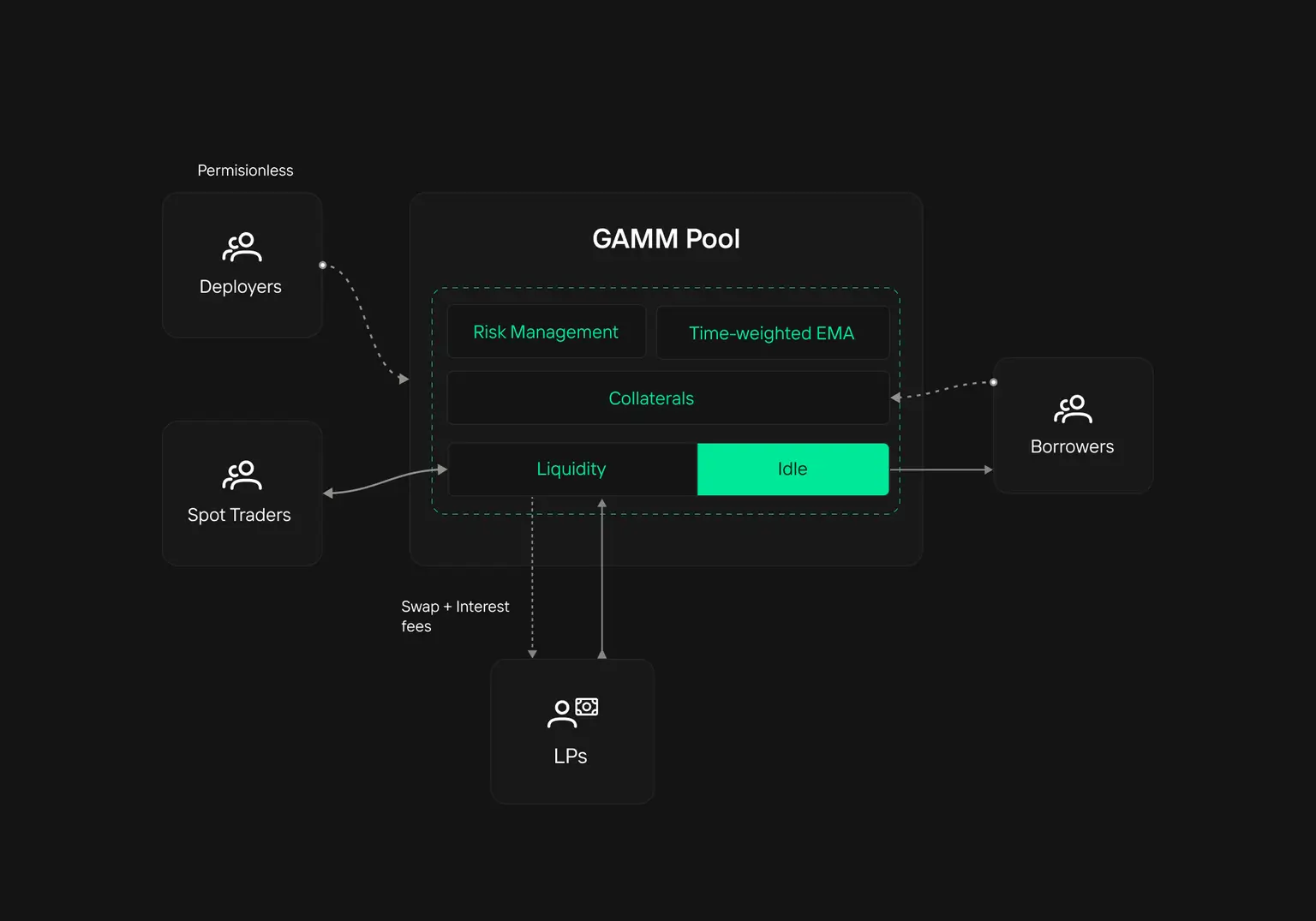
Omnipair’s innovative GAMM pools enable any pair to be launched permissionlessly, offering swap functionality, time-weighted EMA-based margin borrowing, interest accrual through utilization-based dynamic rates, and liquidations- all within a single pool.
The result is a unified solution that connects spot pools with money markets, removes reliance on external oracles, internalizes liquidation to protect pools, and automates risk management to avoid governance delays.
A practical explanation can be found here.
Development-wise, Omnipair's mainnet launch is "right around the corner," and audits are in the final stretch.
TL;DR of what makes Omnipair interesting:
- Novel GAMM architecture: Enables spot trading + isolated margin lending for long-tail assets without external oracles or governance dependency
- Permissionless hyperstructure: Anyone can list, trade, and lend without gatekeepers or oracle dependencies
- Clever positioning: Attacking the oracle problem that plagues most DeFi lending protocols
- Unified LP yields: LPs earn from trading fees + lending spreads in one position
Loyal
MetaDAO's all-in-one AI and privacy solution, Loyal, focuses on building tools and infrastructure using private, permissionless AI oracles powered by MagicBlocks.
With a market cap of 3 million, $LOYAL is currently trading at the same level as its ICO price.
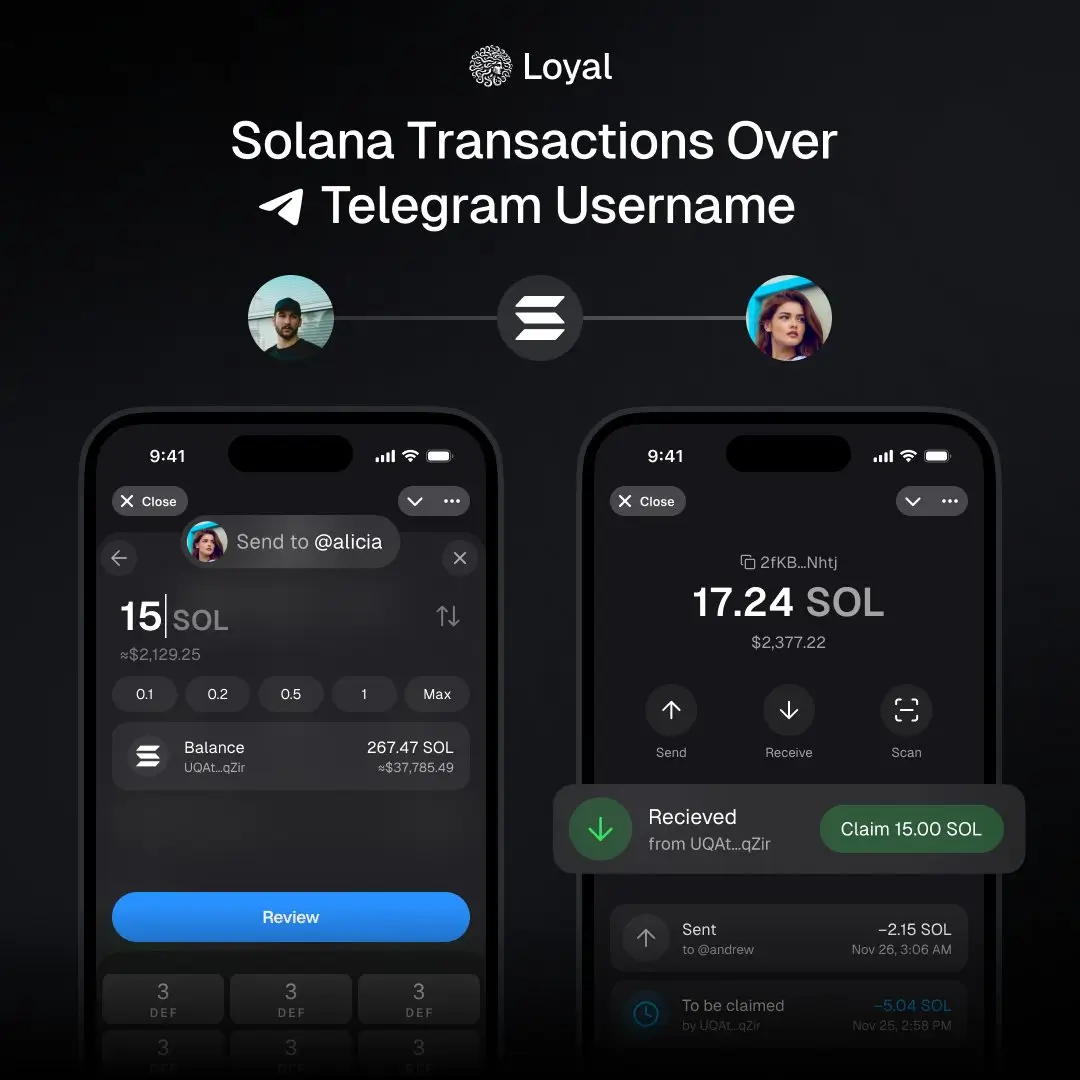
Aside from their flagship AI app with built-in privacy and upcoming DeFi integrations, the team has recently introduced a Telegram mini-app allowing users to make private $SOL transactions simply by knowing a Telegram handle.
But the fun doesn’t end there: this mini-app also includes an AI-powered anti-spam and filtering feature that helps users improve the visibility of the otherwise cluttered TG feed.
Loyal’s specific direction is hard to grasp because it overlaps with many areas, making it a bit of a dark horse. Nonetheless, here’s the bull case summarized:
- Positioned at the intersection of two major narratives: AI & privacy
- On Solana today, there is no obvious default for: "Where do I route AI workloads that must not leak?” That slot is entirely open
- Application-layer oracles for private, verifiable on-chain computation via TEEs
- Telegram mini-app will serve as a BD magnet and aid massively in gathering distribution
- The recently approved conditional buyback proposal has passed, establishing a soft price floor and safeguarding long-term holders
Turbine cash (prev ZKLSOL)
Turbine Cash brings yield-bearing privacy to Solana's LST ecosystem, with a mission to protect your privacy without compromising your earning potential. At an ICO price of $0.097, $ZKFG is currently trading 20% below that level.
The core issue they address is that all mixers face an inherent paradox. To protect your privacy, you must keep your funds in the mixer for as long as possible to hide your activity from others. However, this conflicts with the goal of retrieving your funds as quickly as possible.
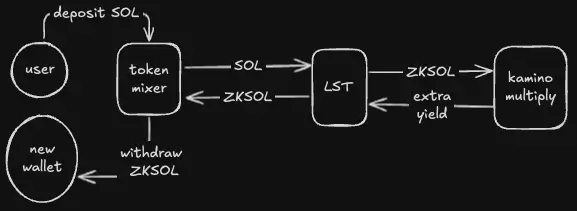
Turbine Cash is designed to solve this by denominating the base mixer in an LST (Liquid Staking Token). This way, your funds earn yield while you wait for the required time to ensure your privacy.
Additionally, through third-party DeFi protocols like Kamino Multiply and Turbine Cash, Turbine Cash offers leveraged mixer pools with yields higher than those of an unleveraged LST token.
The privacy + LST combination hits different:
- Unique value prop: Earn SOL staking yield while maintaining transaction privacy through mixer integration
- Sanctum integration: Leveraging Solana's premier LST infrastructure for yield generation
- Bulk deposit features: Jito bundle support for ZSOL and USDC deposits
- A partnership with Range Risk API ensures compliant privacy through illicit actor detection and prevention mechanisms
- A proposal from the team to burn their performance package just passed
Paystream
Paystream is a peer-to-peer lending protocol on Solana featuring a built-in leveraged engine that maximizes APYs by directly connecting borrowers and lenders. Idle capital is directed into the LLP (Leveraged Lending Pool) and fallback pools, ensuring no idle funds and removing the APY spread.
At a market cap of $680,000, trading 30% below its ICO price, Paystream is a micro-cap, even by MetaDAO standards. If you believe Paystream has a place in Solana’s DeFi, you can’t get a better deal.

Paystream’s LLP (Leveraged Lending Pool) terminal is currently in closed beta, and the team is heads down building.
Once they have resolved all existing bugs, the primary focus will shift to onboarding users and expanding access.
Here’s Paystream’s bull case condensed:
- Idle capital routing: Automatically deploys unused funds to Kamino and other yield sources
- Flexible streaming payments: Linear, cliff, and step-wise payment structures for real-world use cases
- Liquidity unification: Solves DeFi's fragmentation problem by connecting lending pools
- APY spread minimization: Protocol design targets better rates for both lenders and borrowers
Concluding thoughts
Nowadays, it can be hard to get excited for new launches. It’s either the 152nd iteration of the same lending product on a new chain, or, if there is anything novel, by the time you buy it in the open market, all the price appreciation has happened behind closed doors.
MetaDAO represents a shift for both investors and founders. For us, the retail pleb, we get access to innovative products at the ground floor with certain rights and protections built in (see mtnCapital scenario).
For founders, this involves challenging all assumptions about how tokens function, believing in the integrity of the ownership coin design, and, most importantly, having confidence in oneself.
Just think about it: the team doesn’t earn a dime if the token’s price doesn't increase. It can't get any more real than that.
Also, issuing a token early on can lead to doubts and uncertainty — especially if it doesn’t increase tenfold in the first week, while critics repeatedly question its utility or demand buybacks and burns, without having the slightest idea of what an ownership coin is to begin with.
While there are no guarantees, MetaDAO’s recent string of launches has been a breath of fresh air.
Teams look exceptionally strong, and the potential here grows materially, especially if the market starts pricing ownership coins at a premium, which, in my opinion, will eventually be the case. It’s not a matter of if, but when.





.webp)
.webp)

.webp)
.png)

.webp)



.webp)
.webp)
.webp)
.webp)










.webp)
.webp)

.webp)
.webp)
.webp)

.webp)

.webp)











.webp)

.webp)
.webp)

.webp)
.webp)
.webp)
.webp)
.webp)


.webp)
.webp)


.webp)


.webp)




.webp)


.webp)


.webp)
















.webp)





.webp)







.webp)

.webp)
.webp)

.webp)










.webp)

.webp)


.webp)





.webp)