.webp)
Reading time: 8m 39s
AI is taking our jobs, all the world leaders are pedophiles, every country is getting bombed, World War 3 is just beginning, commodity prices are all over the place, the market is going to shit, AND, MOST IMPORTANTLY, you still can’t get a girlfriend.
Just as you thought it can’t get much worse, I’m here to tell you that IT CAN.

I stumbled upon a Bloomberg article that basically spoke about how BlackRock has put withdrawal caps on one of its private credit funds, which is one of the biggest in the sector.
This immediately got me to look further down the private credit rabbit hole, and let me tell you, things don't look pretty. If you thought the current unwind with wars and commodity volatility is where it ends, there’s a whole lot more in store for you.
So I decided to take a deeper look into what the contagion of a private credit squeeze would look like and, more importantly, how it would impact crypto. Here’s everything I found.
What is private credit?
Private credit is basically non-bank lending.
Rather than going to one of the established banks for a loan, a company would approach a private institution like BlackRock, BlackStone, Apollo, Ares, Blue Owl, and so on to secure a loan from their private credit investment fund.
These companies basically tell institutional investors to invest in their fund. These investments are over a very long-term horizon, and investors accept the trade-off of illiquidity for a high yield on capital through the loans this private credit fund is making to companies.
Non-bank lender → raise capital from investors → issue private loans to companies (small to medium market firms) → loans held to maturity → investors receive higher yield than usual.
Over the past decade or so, one of the biggest booms has been the rise in software, technology-focused companies, all of which needed a lot of capital for growth and operational expenses.
Lending from traditional banks proved to be very difficult and expensive, which is why the private credit market boomed.
Estimates now suggest that the market size is roughly $3 trillion as of the start of 2026.
The private credit risk
So what are the problems?
1. Liquidity structure mismatch
Yes, institutions are among the biggest investors in private credit, but it has now also ballooned way beyond that, with pension funds and even individual investors having their money locked up in private credit investments.
Now the problem occurs because the loans are supposed to be “long term,” but every fund has different rules on redemptions and withdrawals.
This creates an almost FTX-esque situation where in the good times, it's all fine, because who’s withdrawing right? But when shit hits the fan, and everyone is running for the exit at the same time, you have a bank run type scenario.

You have a long-term loan, but sometimes there are quarterly redemptions. Then there are withdrawal limits on some funds, which vary. The liquidity structure across these funds is a bit of a mess, and with investors now heading for the exit, they can’t fulfil withdrawal requests because the money is simply not there.
2. Opacity and regulatory uncertainty
Related to the above point is the opacity and uncertainty of these facilities.
Nobody really knows how the loans and payments are structured, as each company gets different terms and each fund has different structures.
To go one step further, these are non-bank lenders, so the rules and regulations around loans for these entities are a lot more in the “gray area” for lack of a better way of saying it.
What does this mean?
Well, for starters, nobody other than the people actually running the fund has any idea what’s going on, and trusting a fund manager with loans is like trusting a hooker in Bangkok; you can just never be sure.
Furthermore, if we look back to the 2008 crisis, no matter how unethical and corrupt the situation was, there were still clear regulations in place for banks, which then led to bailouts, payments, and so on.
In this scenario, there is regulatory uncertainty, which brings into question whether the government will step in as a lender of last resort to bail out these institutions.
Just to make things a little scarier, the default rate in the 2008 crisis was 10%-12%. Currently, companies like UBS are already estimating a 15% default rate for companies that have taken loans from private credit.
A 15% default rate, but with no intervention to stop the bleeding? Yeah, it might be time to hit the coal mines.
3. Banking spillover
This is not as much of an issue, but it is nonetheless an issue.
Of course, banks aren’t going to watch a trillion-dollar industry grow right under their nose and not have their paws in the pie.
Banks are huge investors in private credit, with $300 billion invested through loans to private credit providers and another $300 billion through private equity funds.
Essentially, if everything in the private credit space eventually goes tits up, the banks will be exposed for roughly $600 billion. Yes, banks are very rich, and $600 billion might not be THAT much in the grand scheme of things, but $600 billion is no drop in the bucket.
It will hurt, and it will hurt bad. There are likely to be some spillover effects of all the major banks taking such a huge hit, although I’m pretty sure they will come out on the other side relatively fine, as they often do.
4. Software companies
Now we come to the main culprit behind this entire risk.
Roughly 70%-80% of private credit loans have been made to “software” and “technology” companies, with over 50% of the money borrowed by these companies being used for operational costs.
In other words, every trendy SaaS company that operated on a burn-to-grow model without being profitable essentially took private credit money, burned through it all in the name of growth, only to never actually become profitable and ask for more money to burn in the hopes of future profitability.
Now, the jigs up. The likes of Anthropic and OpenAI said we are coming to eat all of your lunch.
The tremendous growth in AI products has rendered a large chunk of these “Software” and “technology” companies useless. AI spooked investors, and now they want to pull out of any involvement in traditional software.
This is exactly where the issue stems from.
With horrible macro conditions, geopolitical tensions, and AI coming for everyone's jobs. All the investors are running for the exit at the same time.
Unfortunately, the long-term loans these private credit companies are tied into mean they can’t meet redemptions/withdrawals.
This is a recipe for a bank run.
So, what does this mean for crypto?
The private credit crypto contagion
Step 1: Deleveraging
We prayed for institutional adoption, and now almost every major financial institution has some form of exposure to crypto, whether it be through spot or ETFs.
Now, with the likes of BlackRock, Blue Owl, JPMorgan, and Apollo halting/limiting withdrawals from their private credit funds, it signals a clear liquidity shortage.
What will these funds do in such an event? Sell their risk assets first.
That means every single institution that’s mildly affected by this private credit risk will first offload its crypto exposure, whether through spot or ETFs. But it’s important to note that the selling in this scenario will come from institutions, so it will be measured, consistent, and drawn out over time.
With sentiment so weak, it remains to be seen whether there is any organic demand to absorb this selling pressure.
I mean, BTC dropped 8% on the day BlackRock announced a reduction in its withdrawal limit to 5%. This is likely to continue.
With prices of the majors dropping through institutional offloading, the dominoes then begin to fall.
Step 2: Liquidations
No matter how many times one gets liquidated, the average crypto participant simply cannot help but trade with leverage.
The next domino will be liquidations. Whether through CEXs or Perp DEXs like Hyperliquid, a period of continued sell pressure with very little organic demand naturally leads to liquidations. Once the bid completely falls out, that’s when you start to see liquidation cascades.
Of course, the events of 10/10 are unlikely to be seen again, as that was a clear systematic failure in all departments. But I think those of us who have been here a while know how this story plays out.
Traders get stop hunted, causing sharp spikes; those spikes are often longed on leverage, which then leads to further liquidation cascades until ultimately the market finds a natural bottom, off of which things start to rebuild.
In such events, we can expect perp DEXs and even spot DEXs to be hit hardest, with a mass exodus of liquidity and participants.
Step 3: DeFi cascades
Regardless of how boring DeFi has been these past couple of years, there are still billions of dollars locked up in DeFi protocols, which act as the pillar of the onchain economy.
When you have sustained drawdowns and liquidation cascades, a lot of the DeFi lending positions remain at risk, as a lot of the loans are collateralized by these majors. Who remembers the Curve founder almost getting liquidated?
As most of you may know, the main causes for concern here are clearly forced selling events to shore up collateral and bad debt events. Both of these can easily occur if there’s a proper deleveraging event caused by the private credit squeeze.
Step 4: Stablecoin depegs
Whenever there is chaos or a massive deleveraging event, the first thing to follow is stablecoin depegs.
Now we’ve seen enough stablecoin FUD over the years to know that things will likely be fine in the long run, but nonetheless, you can never be 100% sure.
Stablecoins like USDe and OUSG, which are heavily tied to institutional capital and also leverage Blackrock's BUIDL reserve, can very easily be affected by this, causing a bigger spillover. We saw how they got affected during the 10/10 event, so it’s not out of the question that something worse could potentially happen. Although unlikely.
Then you also have the classic pool imbalances on Curve, which happen ever so often, but often amount to nothing, as stablecoins like USDT and USDC have been through multiple stress tests and stood the test of time.
Regardless, it’s good to stay cautious with stablecoin depegs at all times.
Step 5: Funding squeeze
When private credit firms were providing funds to “technology” companies, that term was very vague. It often included funding to crypto infrastructure companies either through direct means or through subsidiaries.
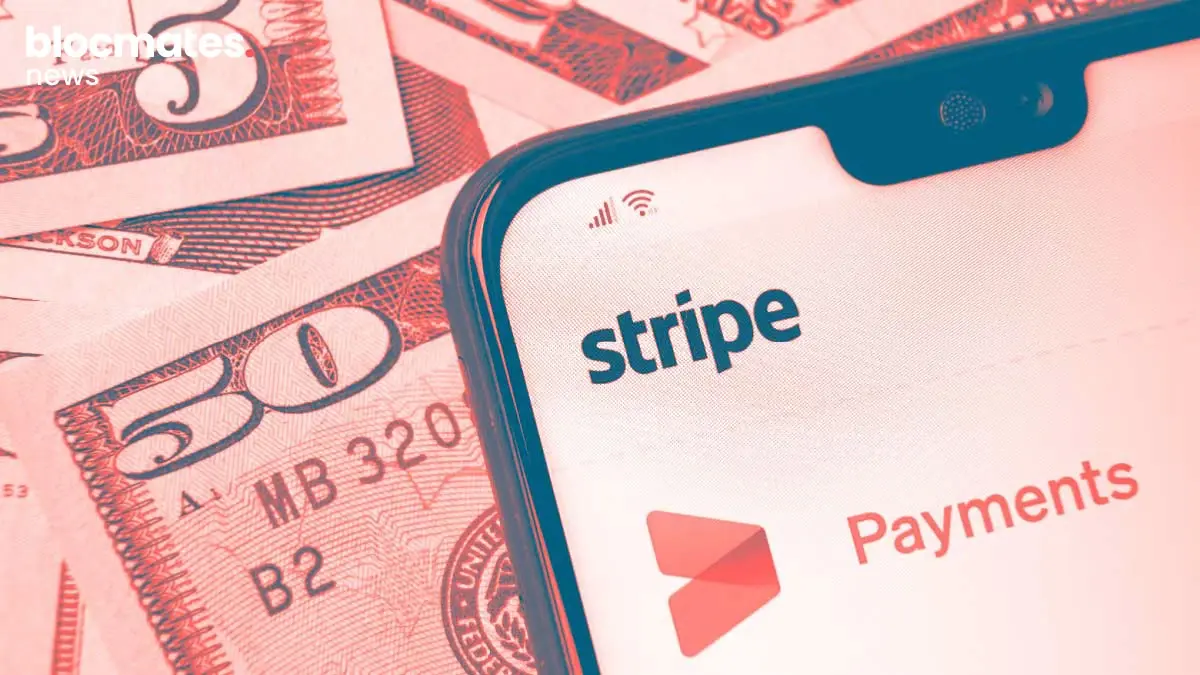
The likes of Kraken, Stripe, Chainalysis, FireBlocks, MoonPay, BitGo, Ripple, Anchorage Digital, and many more have, in some form or another, received private credit money for operations.
These are all key parts of crypto infrasturtucre whether it be analytics, payments, custody, data, or general purpose. At every level of the stack is a potential funding squeeze.
Then you couple this with the massive deleveraging domino effect that has been outlined above.
The result?
Well, if the funding situation wasn’t already dire (as of March 2026), then it will likely get a whole lot worse as people go into capital preservation mode, and crypto infrastructure is one of the last places investors would look to deploy capital.
This means companies/protocols will find it more difficult to fund operations, which ultimately stifles innovation. The lack of money will then force developer talent out of the industry to greener pastures in fields like AI, and so on.
Concluding thoughts
Ultimately, this is all a hypothetical. Has it already played out to an extent? Potentially. Is there likely to be a bigger fallout to come in the near future once the private credit contagion fully hits? Also yes.
At the end of the day, I don’t know. I don’t have a crystal ball and am frankly not very intelligent.
However, this was just written as a thought experiment and to serve as a potential roadmap for what we will see if this scenario does, in fact, play out in the near future.
If it doesn’t, then perfect. Upwards we go. If it does, well then, at least you have a little playbook here.
Anyway, that’s all from us. Cheers.












.webp)

.webp)

.webp)

.png)



.webp)



.webp)
.webp)

.webp)
.webp)


















.webp)

.webp)


.webp)




.webp)
.webp)





.webp)


























.webp)
.webp)

.webp)
.webp)
.webp)


.webp)
.webp)


.webp)


.webp)





.webp)


.webp)


.webp)





















.webp)







.webp)















.webp)

.webp)
.webp)

.webp)














.webp)

.webp)


.webp)







.webp)