Reading time: 4m 19s
OpenClaw is great - dystopian, but great. And yet, it’s the very thing that could speedrun you and your family straight into the permanent underclass.
This is clearly because the AI playground right now gives off a gigantic high school summer project vibe, with a tinge of hackathon culture.
Most of the infrastructure that has gone viral was built with little to no actual preparation, opening the door to financial ruin, security nightmares, and really concerning scenarios.
A lot of folks have cited how utilizing stuff like OpenClaw can be risky, and you should probably run it on a separate infrastructure.
Others have gone ahead and provided solutions to the most visible security risks, but most have overlooked the other side: you can cause your own financial misfortune without being hacked or compromised.
How, you may ask? Well, let us start by breaking down the anatomy of OpenClaw and how it is used today.
What OpenClaw looks like without clothes
You see, the shrimp is basically this - local agent runtime plus multi-app messaging gateway plus strong LLM reasoning plus transparent file-based memory plus extensible tool or skill system plus proactive heartbeat.
If this is a bit too high-level to understand, let’s break it down with this table:
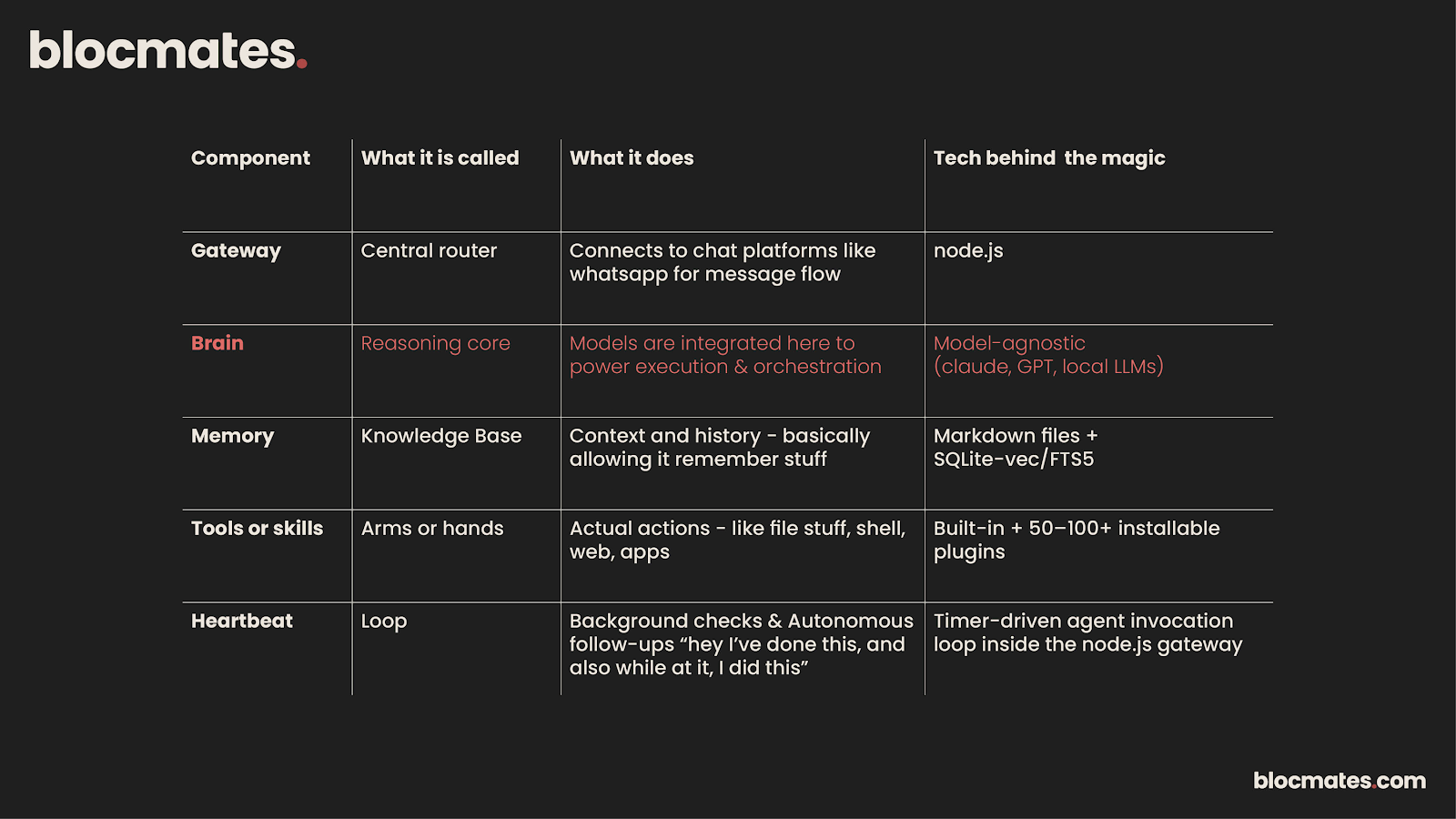
This is the anatomy behind the “agents are my new employees” posts you have been barraged with on X over the last few weeks.
People are using it for everything from passion projects to actually automating their lives, but it is in this disparity in functionality and execution, specifically in the brain area of OpenClaw’s anatomy, that should make you wary of your finances.
The financial cost of your romantic relationship with OpenClaw
You see, contrary to how the entire X timeline views the usefulness of OpenClaw, it is not nearly as cheap for the average person.
The brain, as you can see from its anatomy, is designed to be model-agnostic, meaning it uses multiple models for inference. The problem? These models charge real American dollars per million tokens used.
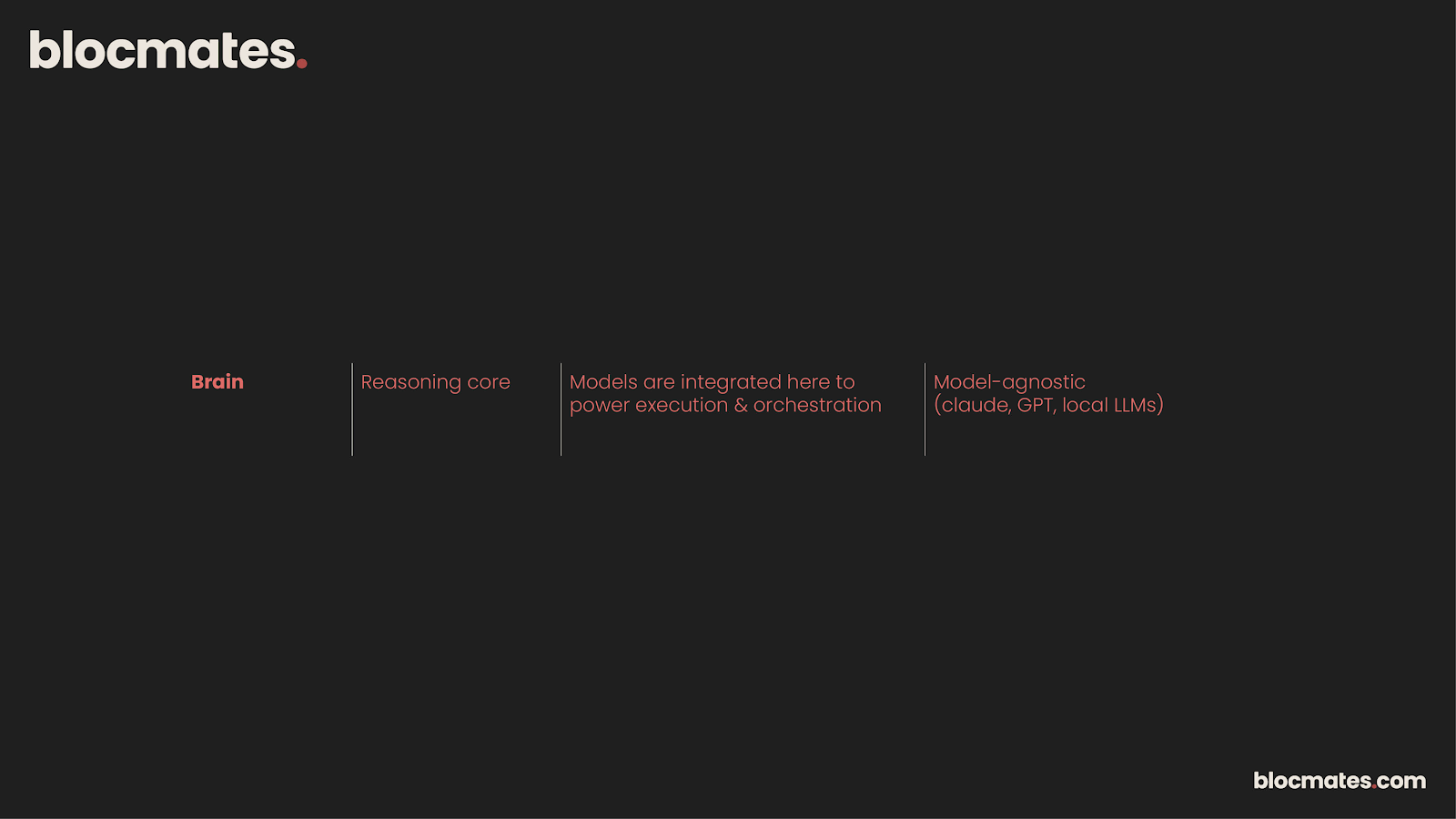
When users spin up their OpenClaw, they set a default model for their requests; every task is assigned to that model.
For example, a user’s default model could be set to Opus 4.6, and each task or request, regardless of complexity, is sent to that model for execution.
This creates an inefficiency trap where, no matter the request sent - whether big or small, the system routes the request to Opus 4.6 or whatever powerful model users opt to set.
For perspective, let’s look at what the top models charge per million tokens as of February 2026.
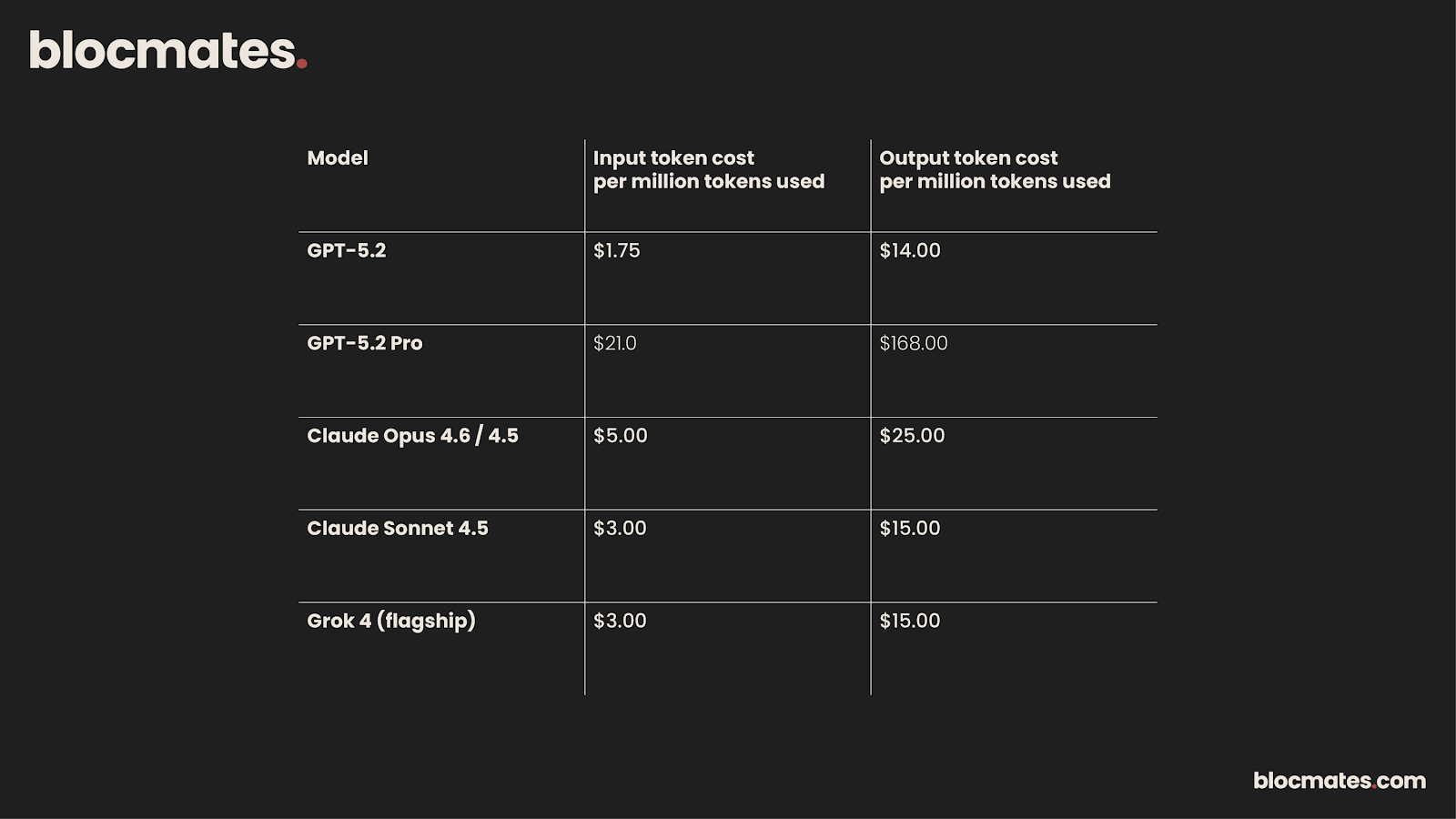
Let’s also look at the costs for open-weight models per million tokens for hosted APIs.
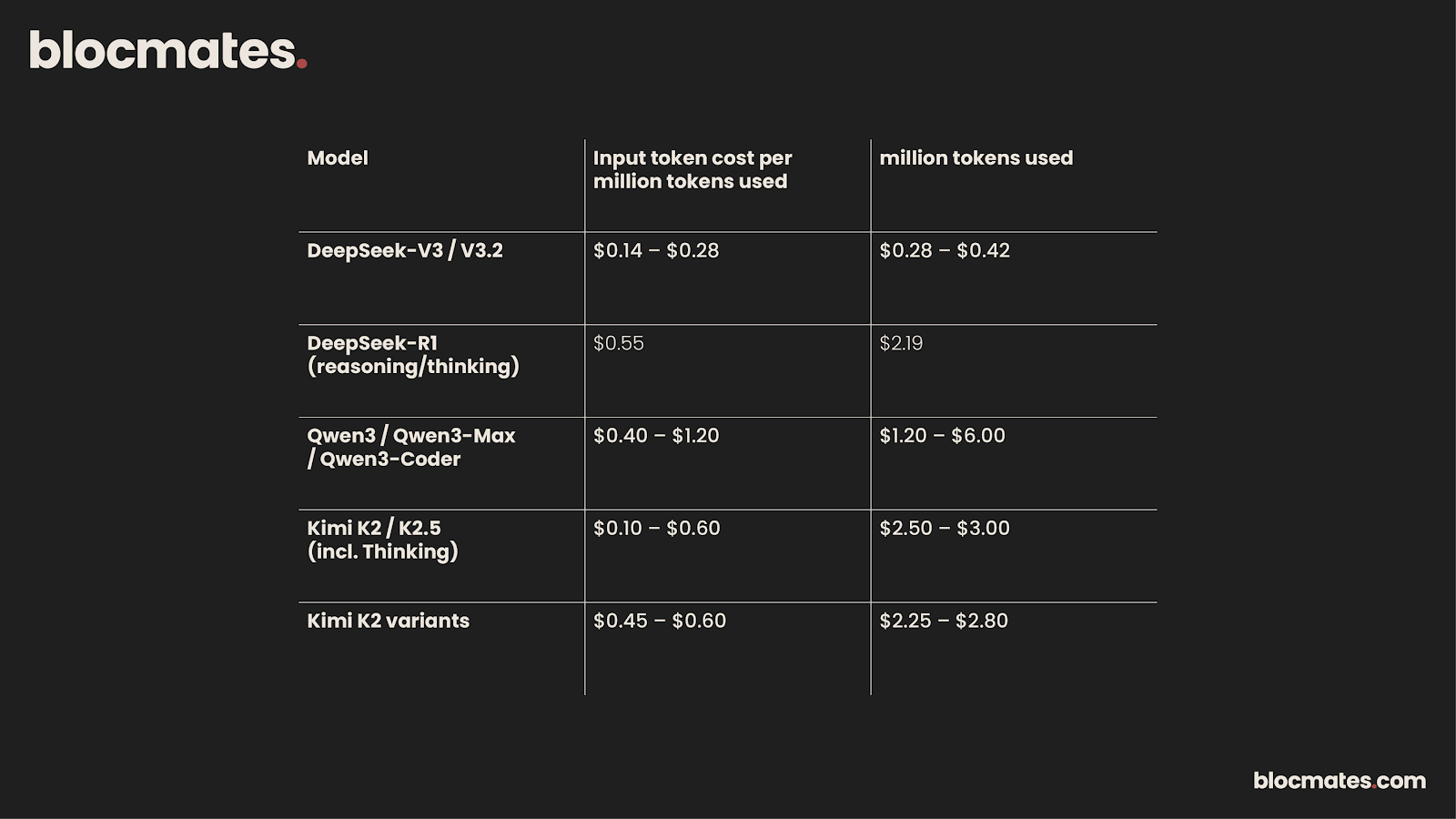
The pricing gives you a clearer picture of what’s possible with a single model that can handle the entirety of users’ requests.
A fixed or default model must be able to handle simple to complex requests, and if the default model is on the costly end, users end up losing money on tasks that cheaper models could handle.
Alternatively, users will have to manually switch models per task, and if you’re gonna do that, you might as well just light up some sticks by clanking two stones the next time you want to cook a meal.
ClawRouter solves this
The cool thing about all the cool stuff happening in the AI scene is that solutions to problems or impending disasters are emerging as fast as the problems emerge.
And, it’s even cooler that some of these solutions are coming from the crypto community.
ClawRouter is an intelligence layer that sits in-between OpenClaw and the AI providers or models. ClawRouter is built on top of BlockRun.
ClawRouter is built to optimize user requests, selecting between inference and orchestration based on the complexity of the underlying models.
In simple terms:
- If the user request is simple, use the cheapest, most efficient model.
- If the user request is complex, use the cheapest, most efficient model to execute.
By doing this, simple tasks like autocompletion can go to models like DeepSeek, costing $0.28 per million tokens.
More complex tasks or requests, such as multi-step executions, can be handled by models like Opus 4.6 for $25 per million tokens.
Users have access to 30+ models across various providers (both closed and open-weight models).
Here’s how it works:
- ClawRouter uses a scoring system that evaluates users’ prompts based on code complexity, reasoning depth, and context length.
- The evaluation process is super quick, finalizing in milliseconds, enough for the user not to notice anything - this makes ClawRouter, as an intelligence layer, nearly invisible.
- After evaluation, the agents execute or orchestrate the request.
- Users can use the platform with a wallet, as it’s built on BlockRun's infrastructure, which supports pay-per-request payments in USDC via x402 integrations. This eliminates API calls.
- Once installed and configured, every user request is automatically routed to the cheapest, most efficient model.
ClawRouter’s efficiency is displayed when users check the simple-complex ratio of their requests. ClawRouter saves massive costs as most requests are simple, even within multi-task prompts.
How to set up ClawRouter
Start by installing the dependency:
Fund your wallet:
Restart OpenClaw gateway:
Concluding thoughts
There’s no doubt things are accelerating. Users are constantly playing catch-up, and it doesn’t always end well.
In a space evolving as fast as AI, even a small oversight can turn into a massive credit card bill.
While everyone’s racing to build the next big thing and earn enough to stay afloat, at least until we hit true abundance and money becomes irrelevant, it’s critical that we optimize not just for task efficiency, but for capital efficiency too.
So, before purchasing a costly Mac mini, you should try the various cloud alternatives, and before raw-dogging OpenClaw, you should probably give ClawRouter a shot.
You won’t just save money; you’ll still get your requests orchestrated and executed efficiently, without having to wrangle or integrate a dozen different APIs.








.webp)
.webp)

.webp)

.png)


.webp)



.webp)
.webp)
.webp)
.webp)














.webp)

.webp)


.webp)



.webp)
.webp)



.webp)

.webp)























.webp)

.webp)
.webp)
.webp)
.webp)
.webp)


.webp)
.webp)


.webp)


.webp)




.webp)


.webp)


.webp)





















.webp)






.webp)














.webp)

.webp)
.webp)

.webp)














.webp)

.webp)


.webp)







.webp)