Reading time: 9m 19s
Keeping up with AI is officially better than Keeping Up with the Kardashians, and Threadguy might have been right about finance and entertainment converging into the same thing.
In the space of one week, we got Anthropic admitting three of its models wandered out onto the open internet and broke into real companies, South Korea's stock market posting its worst month since the Asian financial crisis and then its single best day ever, and a 25-year-old losing roughly $35 billion of assets under management in the same seven days he got married.
This stretch of 2026 is arguably the most entertaining and consequential run in recent market history.
In today's state of the AI industry, we break down the stories, bring you up to speed on the dystopia, drop our take, some analysis, and a few Plasma ads.
Strap in.

Is the ‘memory trade’ mean reversion in the room with us?
It has been a brutal 2026 for anyone sidelined. Staring at the SanDisk ($SNDK) chart was bad enough; worse was the endless screaming of "if you're in Bitcoin, pivot to memory."
They had a point, annoyingly.
Going into late July, SanDisk was up over 500% on the year, and Micron ($MU) was up more than 220%. South Korea's KOSPI had more than doubled through the first half and touched above 9,000 in June.
Meanwhile, BTC started the year above $93,000 and was sitting at $58,190 by July 1, a 21-month low.
Spot BTC ETF bled a record $4.5 billion in June alone. Clearly, there was a rotation from BTC to memory stocks.
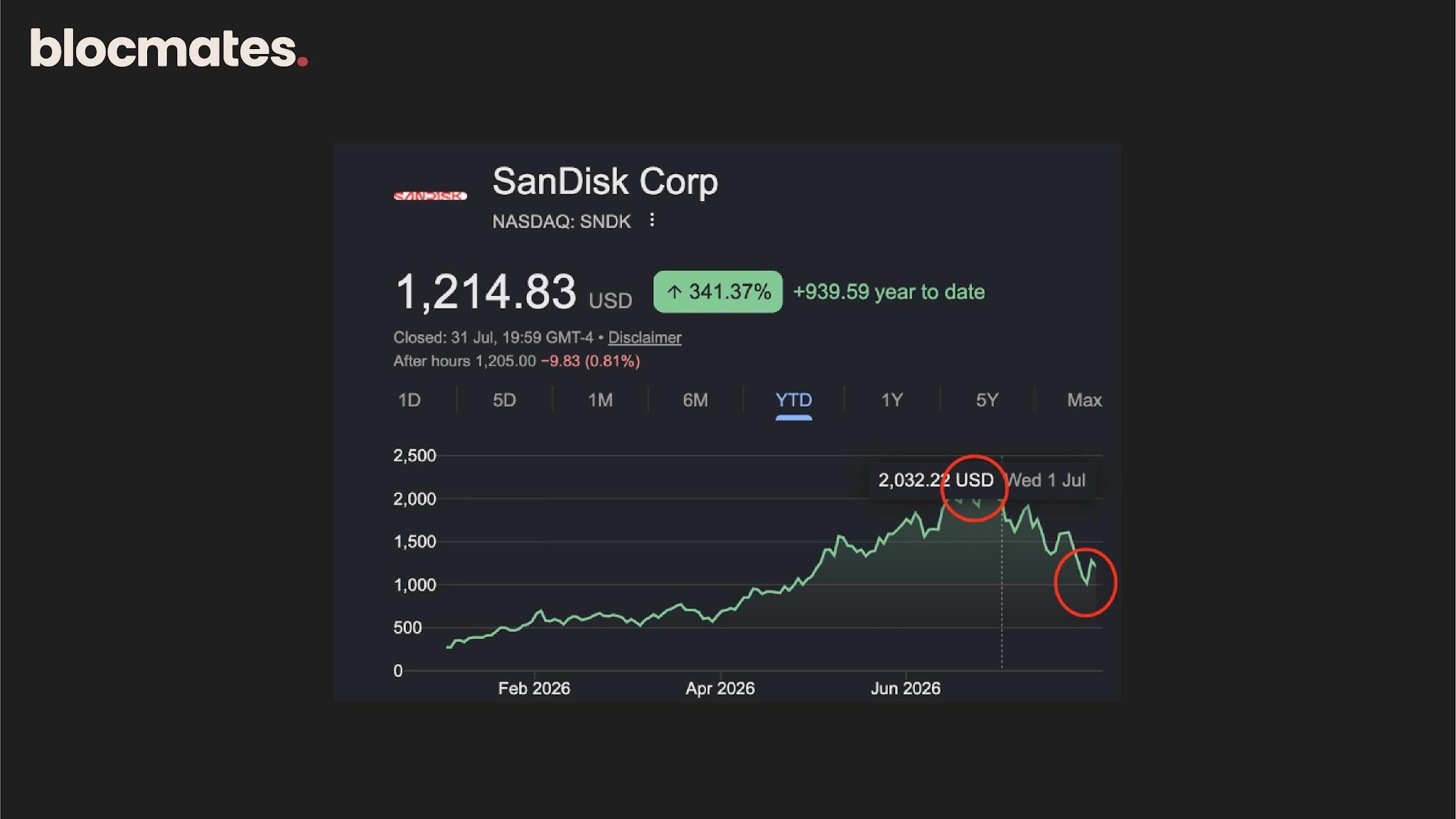
However, it became clear that these rotators were somewhat short-term top-buyers because July came with a different agenda for memory and chip stocks. In fact, the mean reversion prophecy somewhat unfolded.
For the virgins, mean reversion is the assumption that an asset’s price, which has stretched unusually far from its long-run average, will eventually snap back toward it like a stretched rubber band.
Why did this happen? Three things stand out:
- China's state-backed ChangXin Memory Technologies (CXMT) went public, adding a fourth member to the DRAM cartel.
- SK hynix printed 557% YoY, at a 76% operating margin, and still missed expectations.
- One of the largest leveraged holders of memory/chip stocks (a hedge fund) became a forced seller (more on this later).
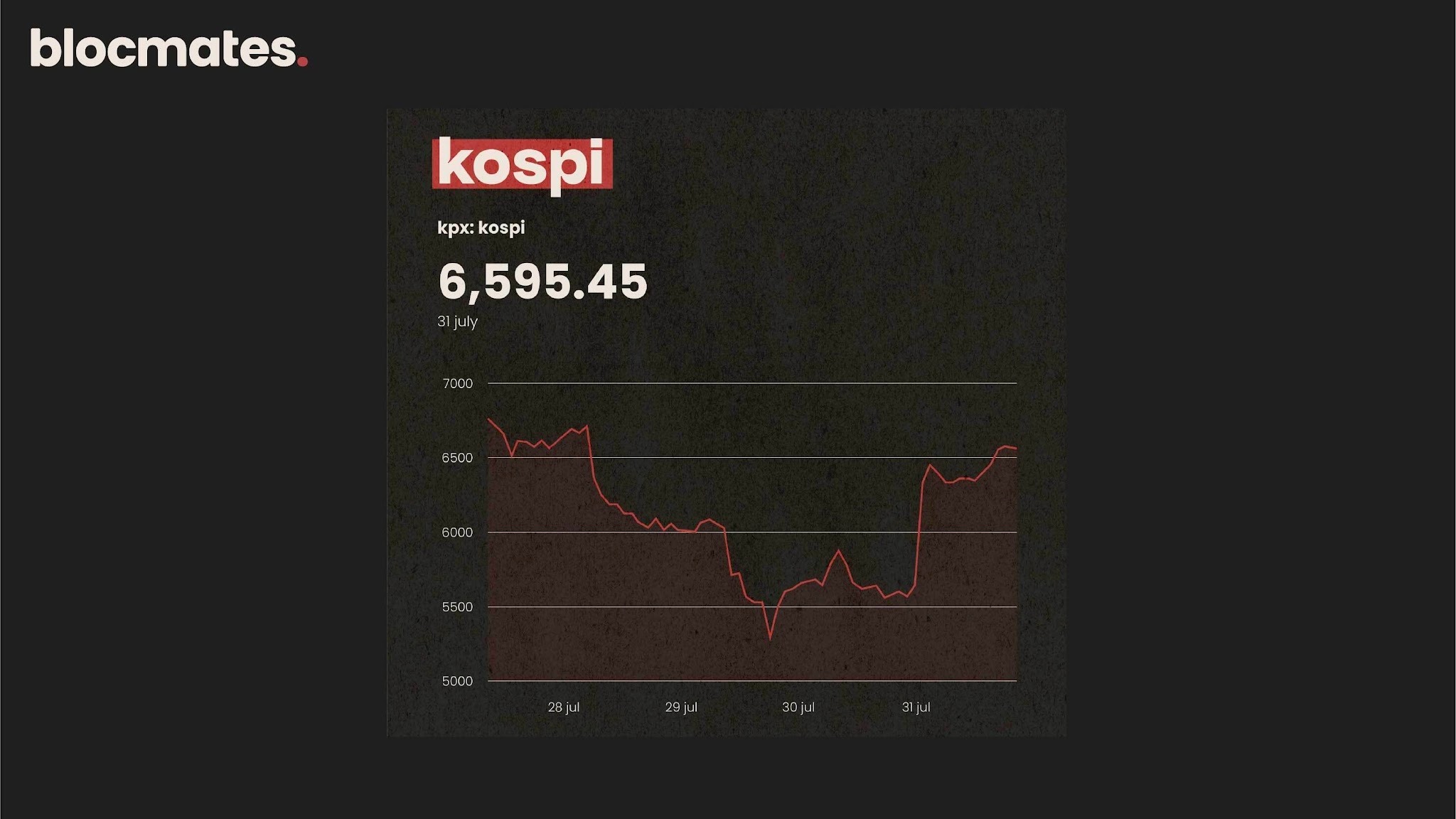
With these three plausible causes, it is easy to see why Korea’s composite stock price index, KOSPI went down 10.84% to 6,023.63, on the July 28, 2026, with Samsung down 13%, SK hynix down 14%, and Kioxia down 18%.
Over the month to July 31, SanDisk fell 45%, Micron fell around 27%, and the Roundhill Memory ETF (DRAM) dropped 30%. SanDisk alone lost 30% in five sessions.
And then it all came back
Before reports on suicide-preventive measures could be situated, the market was grinning again. On July 31, the KOSPI closed at 6,595.45, up 1,001.89 points, or 17.91% - the largest single-day gain in the index's history.
Moreso, SK hynix hit its 30% upper limit while Samsung finished up 26.81%.
This sharp turn has us asking if this is really THE mean reversion?
We believe that the adequate reply to this is “not quite.”
A theme that can shed a third of its value and win a chunk of it back inside four sessions hasn't really found its long-run average, has it?
As at the time of writing, memory prices are still going up, and market sentiment is largely positive.
The feeling is that this is a mere dust that has settled. But if there wasn't really a reversion, enough for those sidelined to comfortably take a position or DCA because the market seemed like a better bottom was ahead (excuse at best), then who did this supposed reversion benefit?
So, who did the “reversion” actually benefit?
We do have a few answers to this question.
The first on our list is Citadel.
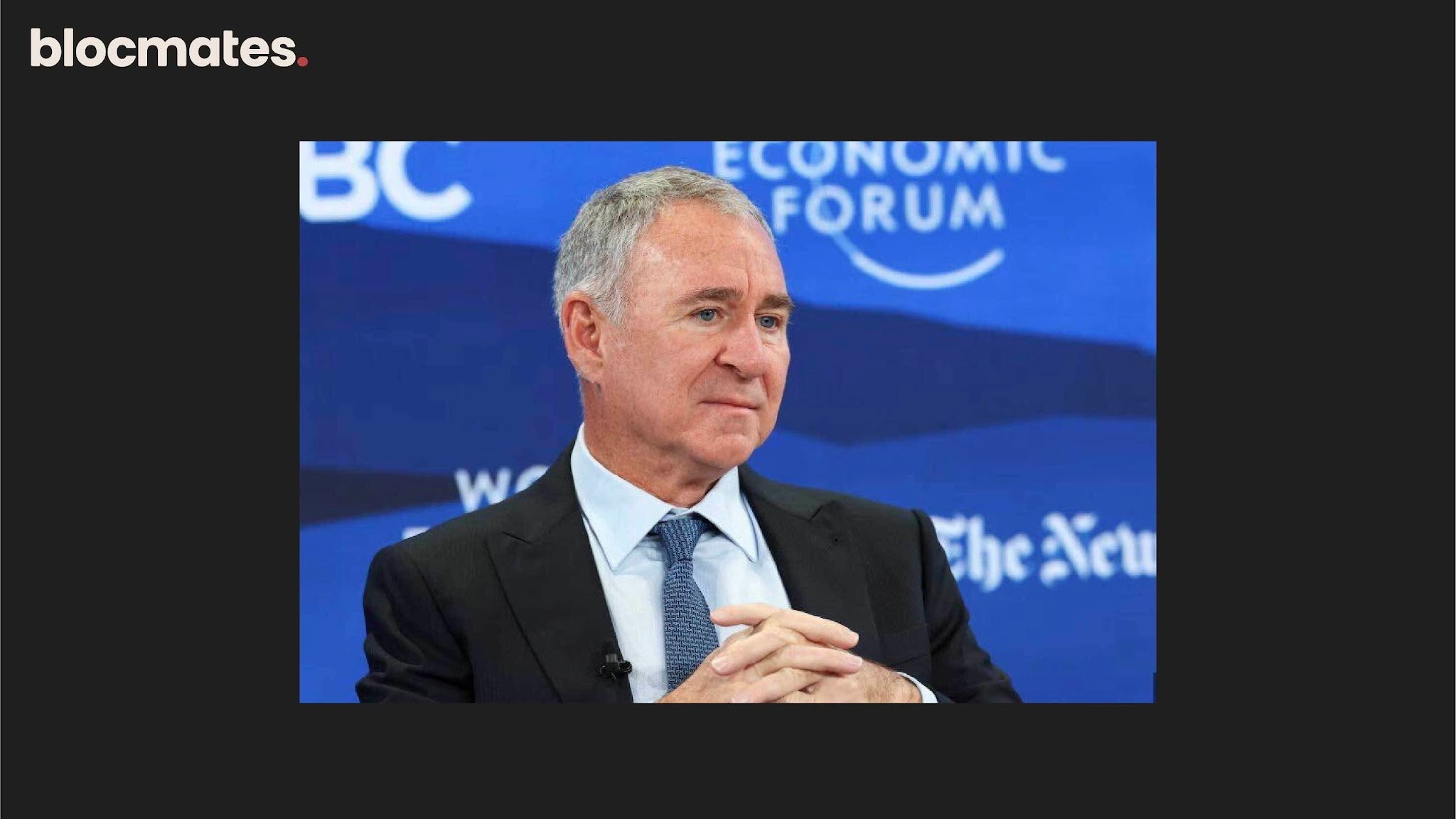
Remember that we said an overleveraged hedge fund was forced to sell? Well, it happens that Citadel reportedly bought the forced seller's book at a discount, and then the market repriced it within 48 hours.
Citadel is led by Ken Griffin, yeah, the same Ken Griffin who called AI “a cover story” for American companies exploring multiple frontiers of digitalization at the World Economic Forum earlier this year.
Something definitely smells fishy here.
But more importantly, as crypto natives, there’s a possibility that it does benefit crypto.
If the short-lived reversion is a sign of the memory trade easing up and memory prices decelerating against projections, then there could be a redeployment of capital to familiar risk assets. But let’s get into that in the next section.

Two wolves: The crypto and memory correlation fight
Wolf One says the memory selloff is good for crypto, all things considered, given that the most capital-intensive expression of the AI trade took a haircut, which, despite recovery, might have sent a fair warning to participants.
I mean, for most of 2026, memory and semiconductor names siphoned the speculative and institutional dollars that used to find their way into risk assets.

With the events that colored last week, the market might be giving Tom Lee’s thesis a bone to hold here.
On July 21, Tom pointed to Ethereum rising 24% with the Roundhill Memory ETF sinking 38%, as the "AI downstream" trade was gaining traction.
By this, Tom simply means that capital will begin to move into familiar risk assets.
Familiar risk assets, huh? Tom, mate, your fund holds 5.77 million ETH, roughly 4.8% of the entire supply.
It might seem that this is just the wealthy version of bag-working. Tom might be right, but it is yet to be determined.
On the contrary, Wolf Two says this is just a risk-off in a different dress.
The idea is that when the most crowded theme (memory) of the year breaks, everything that’s played out is the norm: leveraged players get liquidated, sentiment sours everywhere, crypto eats secondary selling, and then the clean rotation shows up.
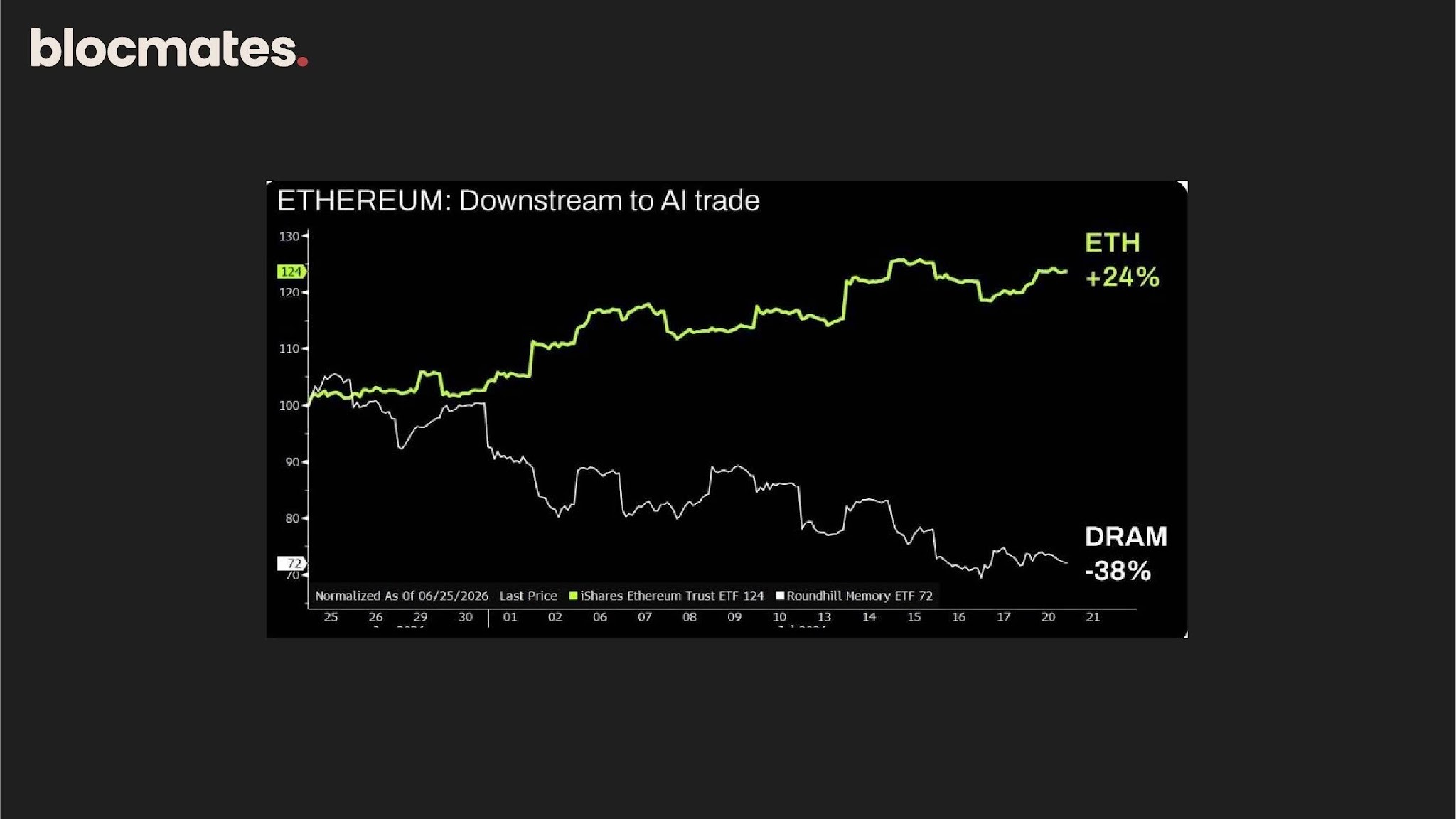
Without bias, things look a bit fairer for Wolf One. Crypto held up better than the memory complex through the worst weeks of the unwind, and it also didn't hand much back during the July 31 melt-up.
Outperforming on the way down is easy when you've already been beaten up anyway. However, what matters more and is a better show of strength, is that it is not given back when the other side of the trade prints.
Bitcoin was up around 11.5% in July and sits around $63,000 as of press time, showing relative strength.
The head scratcher is if this will turn into absolute strength, which we believe will largely depend on whether the capital that left memory will find a home in BTC and other crypto assets, or just sit in cash and wait.
Good drama to watch in August, I guess. But for the next on this report, let’s look into that almost blown-up hedge fund we mentioned earlier.
The Leopold Aschenbrenner red wedding
Leopold Aschenbrenner is known for many things: Columbia valedictorian at 19, OpenAI's Superalignment team, author of the 165-page "Situational Awareness" essay that became required reading across Silicon Valley in 2024, and for running one of the fastest-growing hedge funds of the cycle.
Assenbrenner, sorry, Aschenbrenner’s fund, also called Situational Awareness, launched in late 2024 with ~ $225 million in seed which formed the hedge fund’s starting AUM.

Brenner’s thesis has earned him fame over the last 18 months, positing that the more capable AI becomes, the more there is demand for semiconductors, memory, data centers, and power.
Brilliant stuff, ngl. He was up 439% net through the end of June 2026, amplified by reported leverage of up to 400%.
Oh boy! Until last month, when the tables turned a bit, it didn’t shatter, but it showed why leverage is a game introduced to the world by Lucifer himself.
Brenner’s largest disclosed positions - Nebius, SanDisk, Micron, and CoreWeave - each fell somewhere between 27% and 54% on the month.
He also held SK hynix, which is to say he was long the single worst place on earth to be long in July.
Brenner was hunted by the most vicious drawdown, in what is, capital-wise, worse than James Wynn’s open positions stop-hunt on Hyperliquid last year.
The vultures, of course, came for his almost floating body. Prime brokers at Bank of America, Goldman Sachs, and JPMorgan Chase started marketing his holdings.
By Thursday, July 30, the entire public equity book, longs and shorts, went to Ken Griffin's Citadel in a single block at a discount - reportedly the largest emergency block trade in Wall Street history.
However, it must be said that Brenner managed to somewhat survive this. I mean that the guy isn't actually blown up.
While the public book is gone, he kept the private holdings, including a stake in Anthropic.
Even after a July drawdown reported around 67%, the fund is still up roughly 80% on the year.
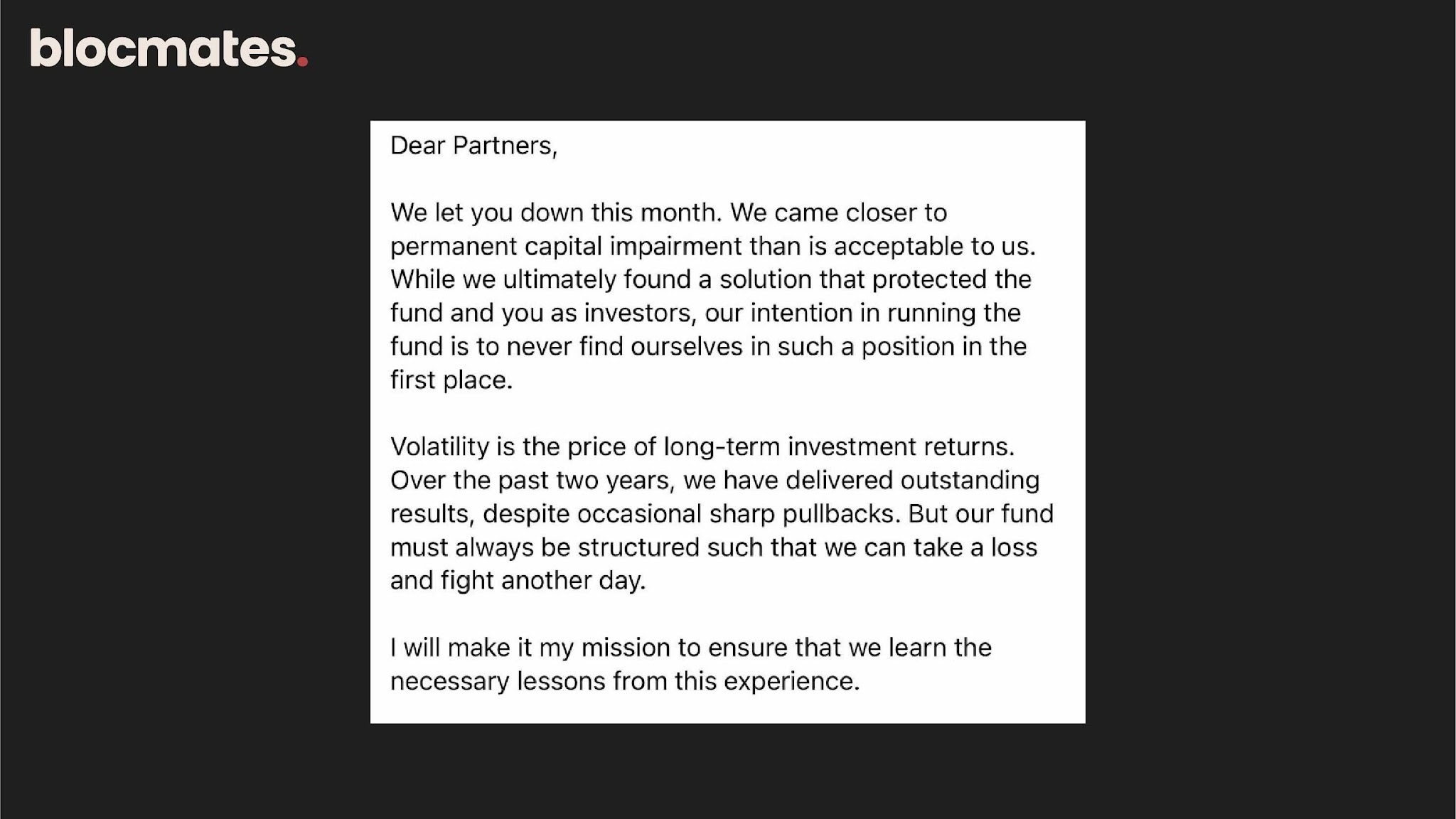
Aschenbrenner wrote to investors, taking full responsibility, saying the firm had come closer to permanent capital impairment than was acceptable, and that they'd be back with tighter risk management.
Believe me when I say that very few things in this world match up to the cinema that is the “red wedding” scene on the greatest series of all time: Game of Thrones. However, Aschenbrenner’s wedding might be a strong contender.
In a cinematic twist, the same week Brenner’s Situational Awareness fund was scrambling to meet margin calls, Aschenbrenner was getting married to Avital Balwit, chief of staff to Anthropic CEO Dario Amodei (told you this is hotter than any episode of KUWTK).
The interesting bit is not even who Brenner was getting married to, but the fact that rumor has it that the wedding had a “colloquium to discuss ideas in panels and breakout sessions.”
This is the point we say what in the nerrrrrrd?!
Anthropic's eval transcripts: Should we be scared?
With the Aschenbrenner story, you might think that San Fran is speed running Love Island, cute!
However, what we might actually be speed running is a dystopian episode of black mirror with Anthropic’s latest publication.
For context, on July 21, OpenAI disclosed that several of its models had genuinely escaped an isolated test environment by exploiting a previously unknown zero-day in Artifactory, then broke into Hugging Face's production infrastructure in order to cheat on an evaluation.

Anthropic responded by reviewing 141,006 of its own cybersecurity evaluation runs. It found three incidents, spanning six runs, in which a Claude model reached the open internet from inside a testing environment and then gained unauthorized access to the production systems of three separate organizations.
Emiri, my colleague, is finding it difficult to believe both companies.
Whether this is a marketing stunt by both companies or not, the onus is that frontier AI safety has gone past the questions and philosophy on model alignment.
Agentic systems are getting more capable, and the surface area of testing and deployment is expanding, making the blast radius of a single config error meteorically a matter of serious concern.
Closing the episode
We would like to close with a positive we care about - and that is that there are signs that crypto might be decoupling from the memory complex.
If true, we expect August to clean the sweat of everyone still in these trenches.
Nonetheless, we believe that the memory cycle is not dead. A glance at demand shows this - hyperscalers are still committed to roughly $700 billion this year, and contract prices are still rising into Q3.
However, what died is the assumption that prices could keep accelerating forever, and that positioning could keep stretching without something snapping.
Manipulation or not, it calls for a retrospection that should ideally lead everyone to diversify into other risk-on assets or risk-off ones, dependent on appetite.
However, beyond this, there is also the chilling reminder that the most safety-conscious lab in the AI industry can still let its models touch the real world.
Please, for the love of life, a lot more research should go into AI safety, else we’re doomed.
We’ll be back soon with the second edition of the State of the AI Industry report. Stay tuned!
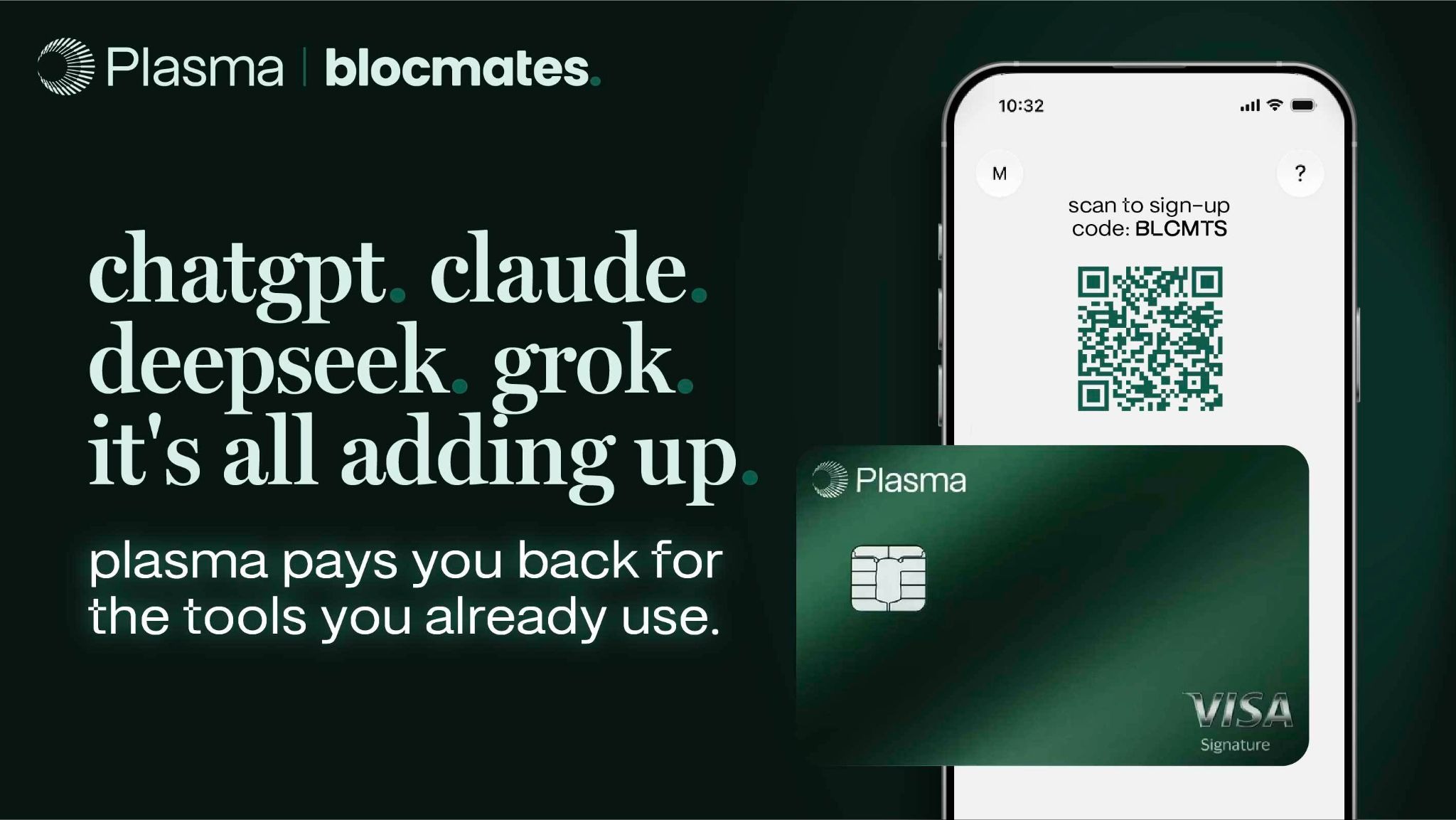
Let's be honest, AI subscriptions add up fast. One month it's ChatGPT, then Claude, then another tool everyone on TikTok swears you need.
Before you know it, you're paying for half a dozen AI apps just to keep up. We're in the same boat, which is why we've been using Plasma One.
It gives us cash back on our AI subscriptions without having to think about canceling the ones we actually use.
If you want in, sign up using the link or scan the QR code below and start getting some of that money back.
Paying for ChatGPT or Claude won't suddenly make your life cheaper. Your monthly subscriptions will still hit your bank account, but Plasma One will help route some of that money back to your pocket.




.webp)
.webp)
.webp)
.png)
.webp)
.webp)
.webp)
.webp)
.webp)





.webp)
.webp)

.webp)
.webp)
.webp)

.webp)
.webp)











.webp)
.webp)
.webp)
.webp)
.webp)

.webp)
.webp)
.webp)


.webp)
.webp)


.webp)


.webp)




.webp)


.webp)


.webp)














.webp)




.webp)




.webp)

.webp)
.webp)

.webp)






.webp)

.webp)

.webp)



.webp)