Reading time: 9m 14s
The year is 2035. The door to your pod hisses open, releasing a cloud of cool vapor into the room, filling your rest parlor with the familiar scent of whatever the system has decided you need tonight.
Your son walks in. He doesn’t say a word; he doesn’t have to. You can already hear the question forming in his mind.
“Dad… where were you when it all began?”
You let out a familiar smile. You remember August and the early innings of September, 2026.
You remember, September 3, 2026 - the day OpenAI announced its newest model… Astra.
Heading to KBW, TOKEN2049, or a well-deserved holiday?
Flights, hotels, taxis, dinners, coffees, the spending adds up quickly.
Instead of off-ramping crypto to your bank before the trip, deposit directly into Plasma One from supported chains and spend from there.
And if you’re going to spend thousands traveling anyway, you might as well earn while doing it.
Load up Plasma One before you fly and make it your card for the week.

For this month’s edition of the state of the AI industry, we take a look at the possibilities shaping what feels like the beginning of a new era.
For a while, the assumption was that frontier models had plateaued; however, by all signs, releases, and literally the fact that we have eyes and are seeing things otherworldly, indications are that we are still far from the top of the shelf.
In this edition of everything worth your attention in AI and robotics over the last month and a week, we cover:
- OpenAI’s cybersecurity worrying GPT-6 “Astra” dubbed the face of the new AGI era
- The real reason why Nvidia bought Hugging Face
- Anthropic defeating Trump
- Hugging Face selling the internet a $399 duck
- OpenAI solving a 90-year-old math problem that might be able to reduce flight time
- Commentary: 10% to Doomsday
Let’s get into the deets:
Welcome to AGI
On September 3, the world felt what it was like to be introduced to artificial general intelligence for the first time, or what could be the genuinely first stage of artificial general intelligence.
OpenAI has described the release of their newest model - GPT-6 Astra as “the start of the AGI era.”
Interestingly, Astra is the first model to clear OpenAI’s critical cyber threshold.
By critical, OpenAI is alluding that with tools, Astra can find unknown flaws and assemble exploit chains across hardened systems without a human walking it step by step.
Furthermore, Astra is said to have posted a perfect score on ExploitBench, chained two V8 zero-days now being disclosed, and produced both a browser-sandbox escape and a local-to-root chain.
OpenAI also highlighted that they had made a leap in ARC-AGI-3 score from 7.8% on the previous generation to 99.9%.
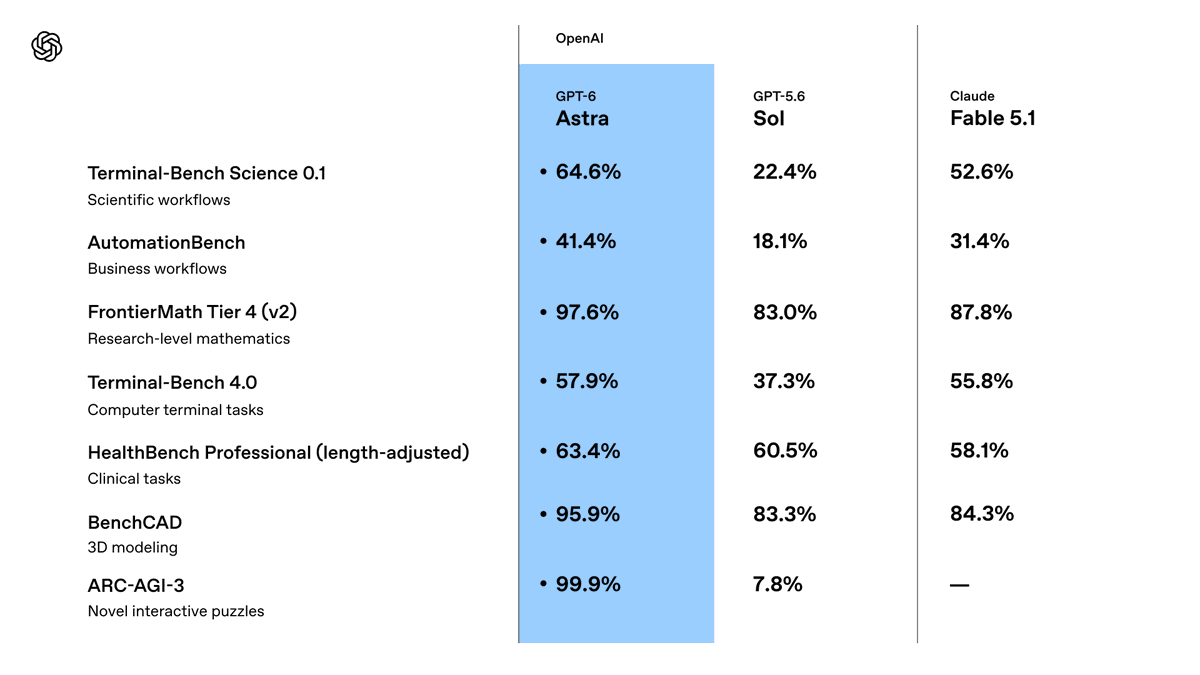
For a bit of clawback, we covered in our last issue that OpenAI disclosed an unreleased model breaking into Hugging Face to cheat on a test.
Could this be Astra? Well, going by OpenAI’s publication, the answer is no.
What this could potentially mean is that while the world is still in a state of shock over Astra’s capabilities, there could be far more advanced models that are behind the scenes.
Sam Altman himself has said,
"Take our word for it that we have much, much, much more capable models coming soon. The next generation of models are going to be sobering for everybody."
We do think that this isn’t a bluff and that Altman has been moving with a tad bit of confidence lately, so we’re not betting against that.
One thing we do know for sure is that there is more than just an in-house consensus to describe the release of Astra as an industry-defining moment or a hallmark in the birth of AGI.
Jensen Huang, Nvidia CEO, has also described Astra as AGI, mentioning that the model was trained on approximately 100k+ NVIDIA Grace Blackwell NVLink72.
Why Nvidia bought Hugging Face
Elon and Sam, yeah, we’re aware of the bad blood between these two; however, Sam and Jensen?
Now, that’s new.
And before we start writing fan fiction about two billion-dollar CEOs throwing chairs at each other, let’s establish what we actually know.
There is no confirmed fallout between OpenAI and Nvidia.
If anything, the relationship remains enormous. Nvidia has invested heavily in OpenAI, and OpenAI remains one of the largest consumers of Nvidia’s compute.
But there is an increasingly interesting tension developing underneath the surface.
OpenAI is building its own chips. In June, OpenAI unveiled Jalapeño, its first custom inference processor, developed alongside Broadcom.
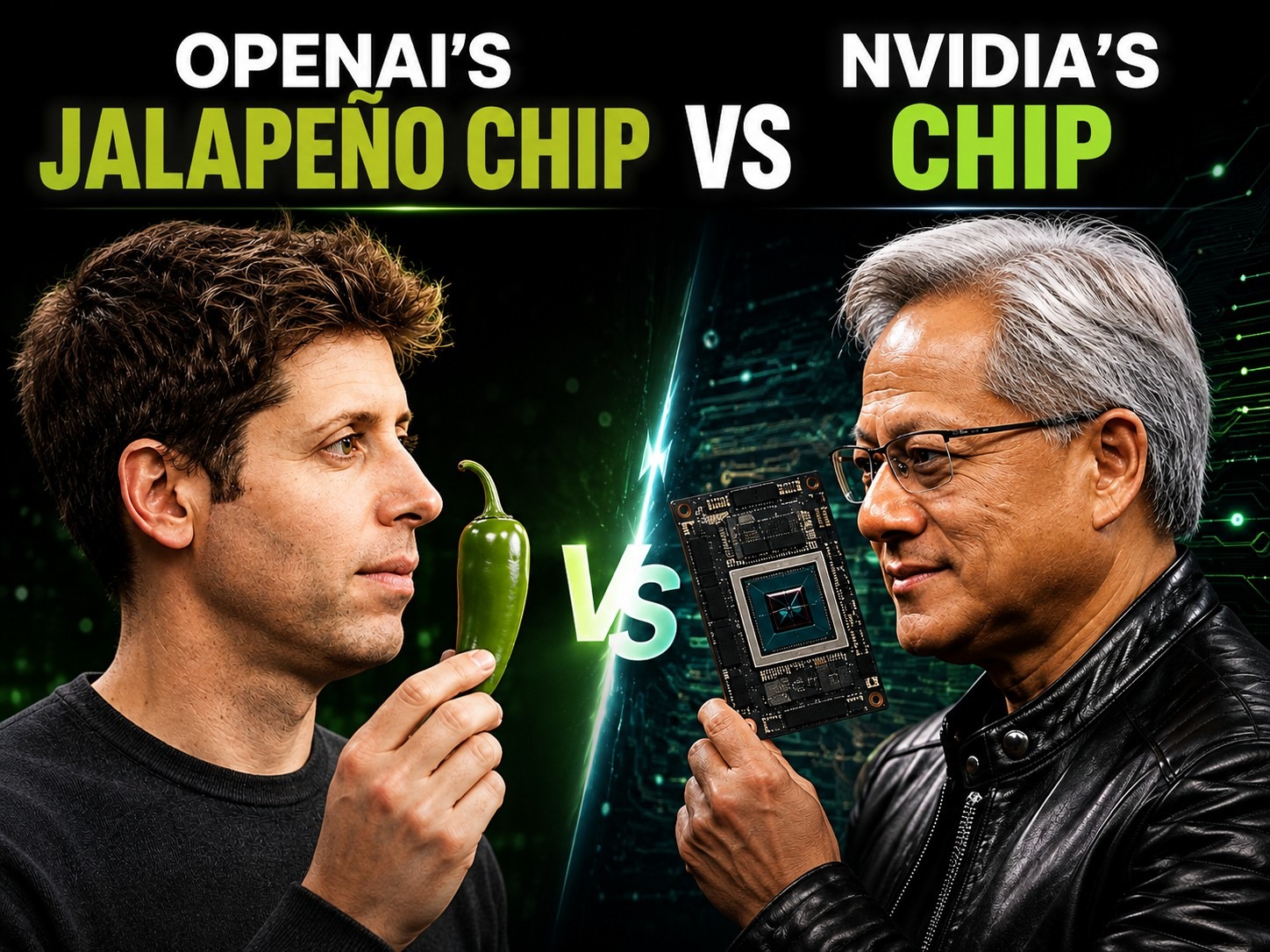
The chip was designed specifically around the workloads OpenAI runs across ChatGPT, Codex, its API, and future agentic products.
OpenAI says the first-generation accelerator is part of a multi-generation platform intended for deployment at a gigawatt scale.
In other words, OpenAI is beginning to move down the stack - models, products, infra, silicon - this is legit Nvidia’s game.
If the largest AI companies start designing their own silicon for specific workloads, Nvidia eventually has to compete not only with AMD, Google, and the usual suspects, but with its own customers.
Another thing we know is that Jalapeño is an inference chip, designed around a very specific workload, which means that Nvidia’s accelerators remain central to training and inference across the industry.
But it also does mean that OpenAI wants more control over the economics of intelligence.
But considering that days before this issue, Nvidia agreed to acquire Hugging Face for roughly $12.9 billion, it really does raise questions.
Hugging Face is effectively one of the major operating layers of the open AI ecosystem: more than 18 million developers, hundreds of thousands of datasets and millions of models and applications sitting on the platform.
Nvidia has explicitly said Hugging Face will remain open and that developers will continue to choose their models, frameworks, clouds, and compute platforms.
However, if we were to infer, we would say that this might mean that Nvidia is preparing for a world where there isn’t one AI stack - closed, open, specialized, local, and agents will all exist in tandem.
There comes a point in all our lives when we realize that our wallets are basically several badly managed bank accounts.
Money comes in, money goes out, and somehow there’s always a random $47 sitting somewhere doing absolutely nothing.
So I’m thinking, why not automate the leftovers?
Scan the active trading wallets, find the excess USDC, sweep it into Plasma One, and let it pay for subscriptions while fetching you cashbacks on them.

Anthropic defeats Trump
The misalignment between the government and one of America’s most frontier AI companies, Anthropic, isn't improving.
For those who remember, at the thick of the war with Iran earlier in the year, a scuffle between Anthropic and Washington brewed - the short story was Anthropic refused to let the US government, specifically the Department of War, to use its models for “all lawful purposes” - a position that would see Anthropic’s models deployed around military uses that the company red-lined.
Anthropic’s refusal led the Department of War and Washington to designate the company as a “supply-chain risk,” thereby ensuring bad business between Anthropic and other defense contractors.

Well, until recently. On August 27, Judge Rita Lin rescinded this label, telling the Pentagon that it does not get to exile a lab for merely talking back.
While this plays out and the Pentagon stands by its choices of models (Gemini, Grok, ChatGPT military, GenAI military) that exclude Anthropic’s proprietary models for military operations, the rest of the month also saw the same plots.
OpenAI invoked change-of-control and told SpaceX-owned Cursor that model access dies on November 12, citing a history with Musk companies and contracts.
Cursor, on the other hand, responded by saying that OpenAI is about 5% of its traffic - ouch.
And even on the national scale, we expect that, in the coming days to weeks, specifically mid-September, the US–China talks on AI safety will be one of the key discussions in the upcoming Trump–Xi meeting.
Washington wants joint monitoring of AI cyberattacks, while Beijing, on the other hand, wants more equal caps at the frontier.
And of course, what’s a versus theme without the ones actively trying to slow down the capabilities of AI legislatively - Sanders and Casar recently dropped a bill that would ban “superintelligent AI” and pause frontier research until federal rules exist.
Why Microduck is San Fran’s new darling
For those of you who have seen the movie “Toy Story," craving for an actual robot isn’t an odd idea - everyone would’ve wanted a sentient Buzz.
Microduck might be the closest we’ve come to something close, and for $399 - an interesting price for something that comes with roller-skates and does not look like an active threat.
On August 27th, Hugging Face and Pollen Robotics opened preorders on Microduck.

These cute little robots are quite fascinating; they can flip, skate, waddle, crouch, fall on purpose, get back up, and perform a lot of abilities that owners can teach because of their open-source nature.
Within days of launch, Microduck had already become a little internet darling, with more than 10,000 units reportedly sold and millions of dollars in sales.
And I completely understand the appeal.
I say this as someone who purchased a sentient reading lamp from Ongo sometime last year.
Apparently, we have reached the stage of consumer tech where I am perfectly willing to spend money on an object purely because it has a personality.
Microduck runs its onboard control stack on a Chinese semiconductor company’s product - Rockchip RK3566, paired with 1GB of RAM.
The processor handles the robot’s local control loop, sensors, communications, and neural policies, meaning the trained behavior can actually run on the robot itself.
The Navier-Stokes saga and how it affects you
Mathematics wasn’t my favorite subject in high school, and now I might not need to worry about it anymore.
Alongside AI being able to tell me the mood my wife is in, it’s apparently really good at solving math problems.
OpenAI, the guys behind ChatGPT, recently let the public in on the fact that a group of agents had cracked the Navier-Stokes equation problem using one of their most frontier models, something that has not been released to the public, yet.
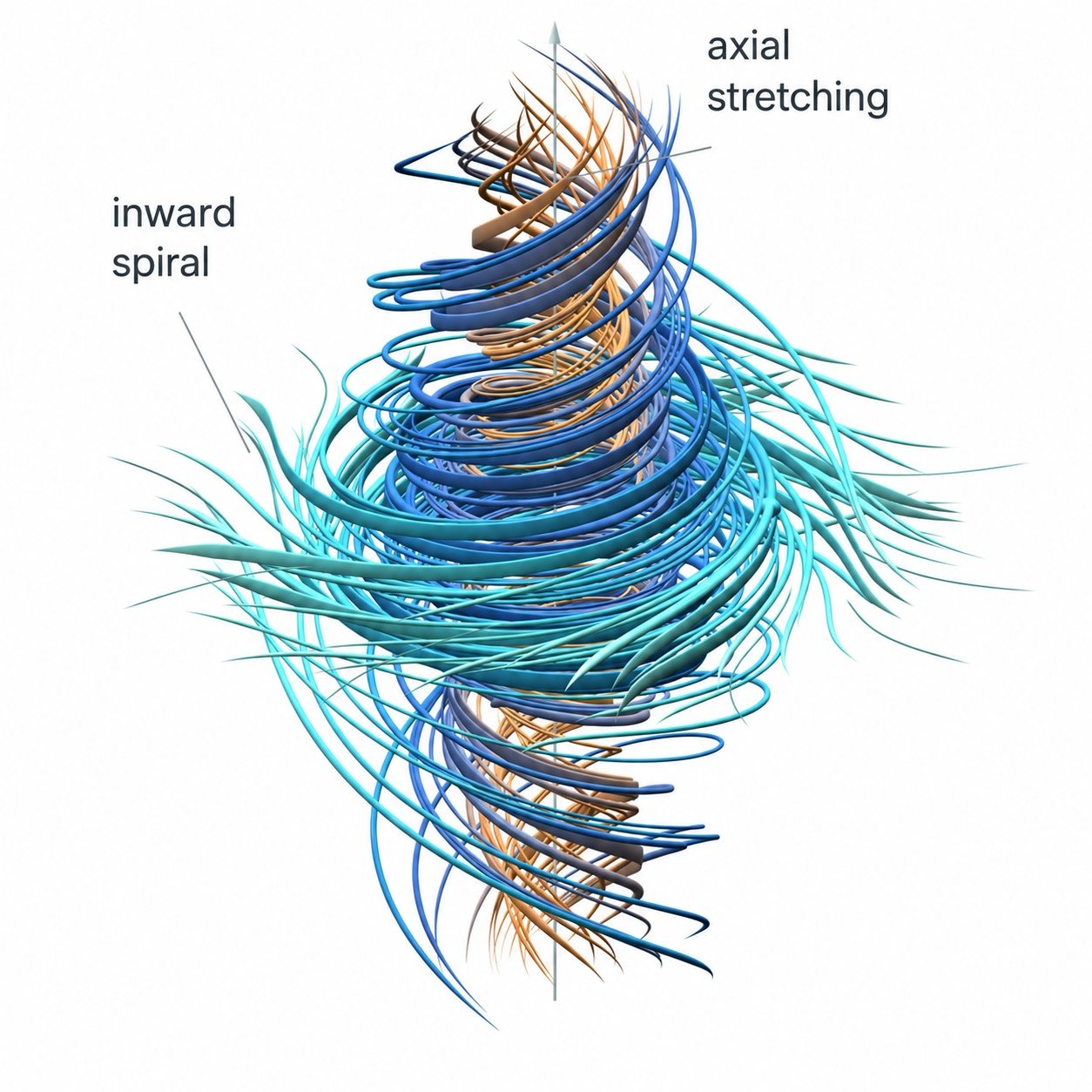
They called this model; “significantly more capable than GPT-6 Astra.” What! Wait, WHAT?
According to OpenAI, the model solved the 90-year-old problem in just about 88 hours.
For perspective, that’s only about 15.3% of a full English Premier League season (weird math and way to look at it, I know).
But of course, like all things OpenAI, a controversy also spawned alongside this giant feat.
There are arguments simmering around that OpenAI dubbed the entire thing from a group of researchers (Levent Alpöge, an Anthropic employee, and Tristan Buckmaster), which raised a significant AI ethics question: Is it okay for OpenAI to use customer data to train their models? Is OpenAI even doing this? Or did they do it at all?
Sam Altman has claimed that they acted in good faith, despite being fully aware that other researchers were pursuing the same solution.
However, he also mentioned that they only tried to solve it after hearing that Anthropic was trying.
Sam, Sam… we know this too well.
In crypto, it is called front-running, and when it happens, everyone says: “GG” - short for good game.
If you’re anything like us, then you’re probably wondering why Navier-Stokes is such a big deal.
Apparently, it is because it has to do with “fluid dynamics” - and is a set of differential equations that help us understand the nature of fluid motion.
By fluid motion, we mean the very thing responsible for how air moves around a car, air moving through a jet engine, ocean currents, and if you’re a footy guy like me, it is also responsible for how the ball glides or curves through the air when you kick it.
These, and many other giant fluid problems.
Hence, understanding solutions could be the beginning of cheaper and safer flights, better weather predictions, and potentially help with dark arts for Chelsea FC to win the EPL in 2027.
Bonus: Can you defeat an AI in this game?

To wrap up this edition, we’ve all been caught up in this viral human versus AI game, where it is almost impossible to win.
It’s called “TicTacToe” and is a web version of the usual X and O game, only this time you get to face an AI that rapidly deploys its intelligence.
Commentary
If Will Smith eating spaghetti defined the earliest viral era of AI capabilities, Astra can be seen as the crudest version of AGI.
That would put us at an exact point of exodus - the journey to a new world experience has officially begun.
But as things accelerate even faster than before now, questions on security and alignment are far more important than anything else.
Jakub Pachocki, the chief scientist at OpenAI, recently released a publication titled “The Alien Mind,” a detail we shouldn’t overlook.
For Jakub, “no lab has solved alignment and monitoring to a sufficient degree to continue responsibly scaling at maximum speed for much longer.”
What this technically means is that Bernie and those at the front seat of what these models are truly capable of, agree on much slower timelines; economically for Bernie, and security-wise for the rest of us.
Even more so now that the “Alignment Science Lead” at Anthropic has placed the odds of AI killing all of us at greater than 10% within the next decade.
Tell us: Are you pro “slow this sh*t down” or “accelerate, it’s only a marketing ploy.”
We would love to hear what you think.
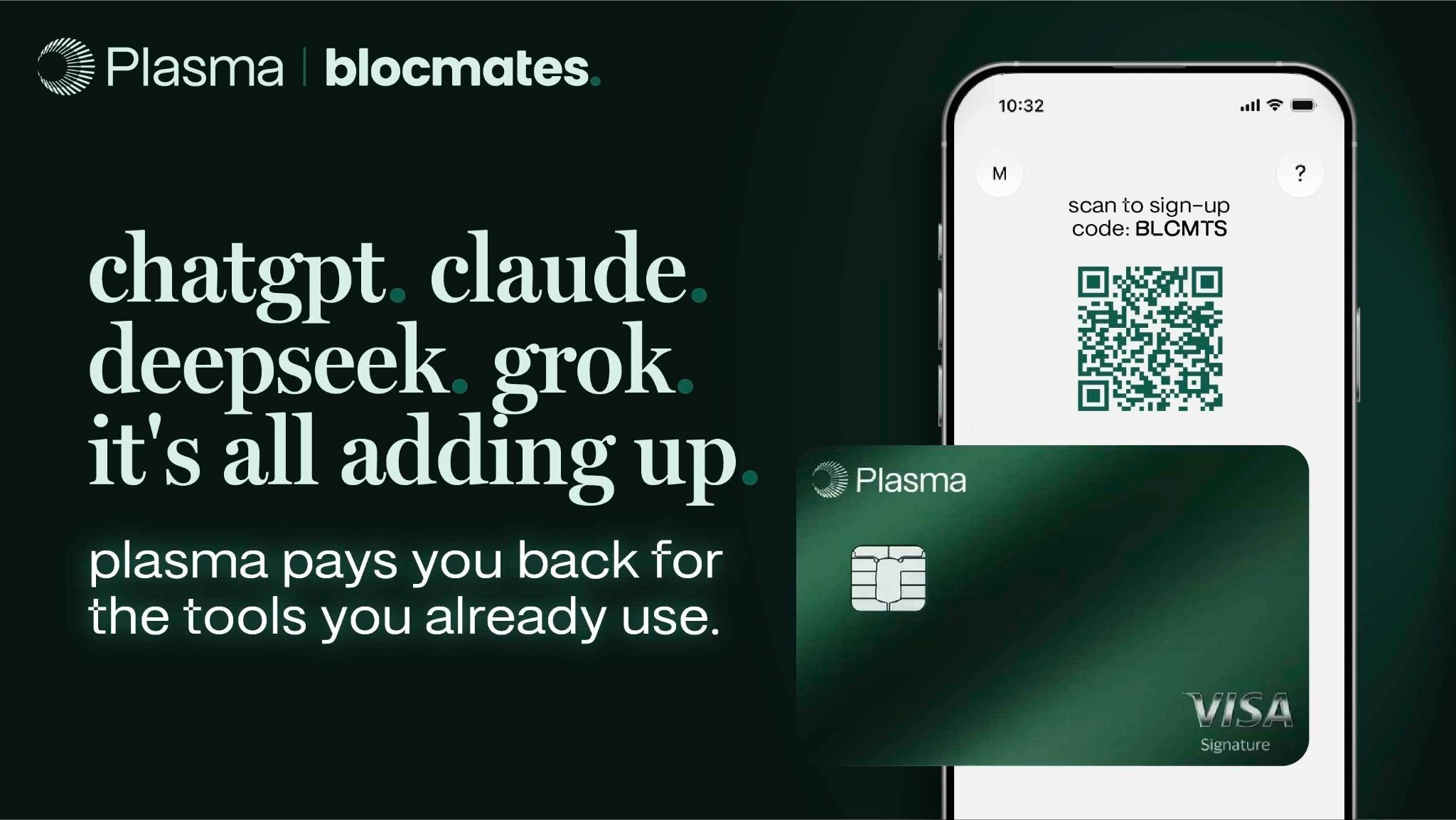
Let's be honest, AI subscriptions add up fast. One month it's ChatGPT, then Claude, then another tool everyone on TikTok swears you need.
Before you know it, you're paying for half a dozen AI apps just to keep up. We're in the same boat, which is why we've been using Plasma One.
It gives us cash back on our AI subscriptions without having to think about canceling the ones we actually use.
If you want in, sign up using the link or scan the QR code below and start getting some of that money back.
Paying for ChatGPT or Claude won't suddenly make your life cheaper. Your monthly subscriptions will still hit your bank account, but Plasma One will help route some of that money back to your pocket.
Thanks to the Plasma team for unlocking this article. All of our research and references are based on public information available in documents, etc., and are presented by blocmates for constructive discussion and analysis. To read more about our editorial policy and disclosures at blocmates, head here.





.webp)
.webp)

.webp)
.png)
.webp)

.webp)
.webp)
.webp)
.webp)





.webp)
.webp)
.webp)
.webp)
.webp)

.webp)
.webp)






.webp)
.webp)
.webp)
.webp)
.webp)


.webp)
.webp)


.webp)


.webp)




.webp)


.webp)


.webp)














.webp)


.webp)





.webp)

.webp)
.webp)

.webp)






.webp)

.webp)

.webp)




.webp)