Prediction markets and the memecoin trenches are completely different beasts, but the same hunter can tame both.
Hunters don’t just unload a hail of bullets or unleash arrows at random. I’m talking 14th-century Nordic men - they plan, watch, observe, use the right tools, and then finally make a killing.
It’s pretty much the same for both markets - Prediction markets and memecoins.
They share a few similarities:
- First, they have a common denominator, i.e., traders. Good traders are always looking for an edge, while markets have a simple job of making that difficult to find.
- Second, prediction markets are memecoins with probabilities. This means memecoins are simply markets built on narratives, attention, and speculation. Prediction markets work similarly, except that users bet on whether an event will occur.
Will Bitcoin hit $150k? Will the Fed cut rates? Will Chelsea FC win the EPL?
A market trading at $0.55 implies a 55% chance of that outcome happening, and pretty much like memecoins, those prices move on news, attention, whales, and retail panic. Basically, different markets but similar psychology.
- Third, information overload is the culprit behind sh*t traders on both fronts - When there’s always another narrative, another market, and another opportunity, it’s easy to conflate activity and progress.
The best traders have systems that help them cut out the noise, find unusual activities early, and are patient.
Today, we will show you how to trade prediction markets like memecoins using the right tools available on PolymarketScan.
How to use PolyMarketScan to trade prediction markets?
- Cut out the noise and lock in a market
The first step in trading prediction markets like memecoins is to cut out the noise.
Just like memecoin traders use fomo or Axiom to scan thousands of tokens, prediction market traders also need a way to narrow the field.
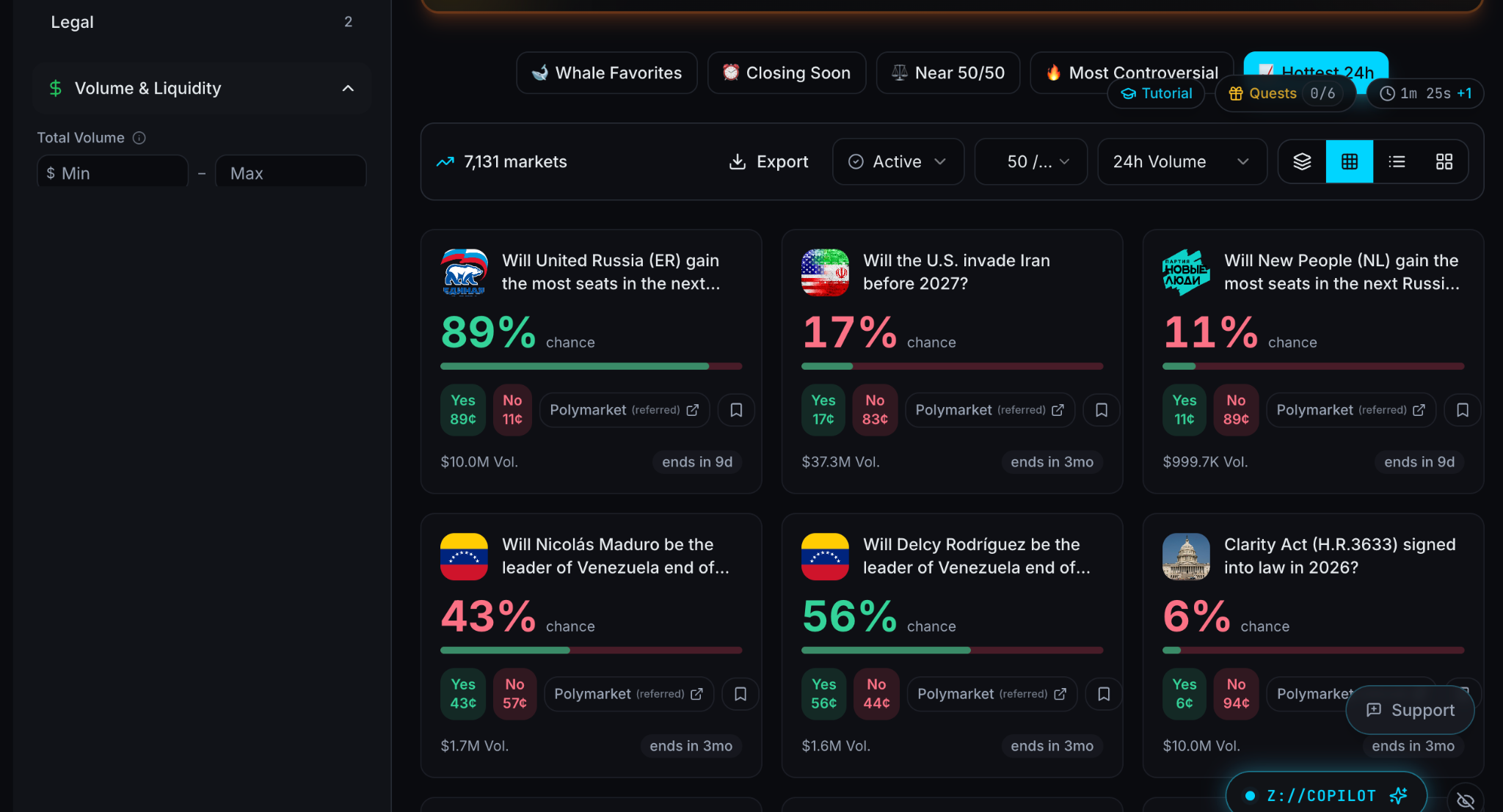
PolymarketScan gives traders a way to explore and filter markets using different data points, such as:
- trading volume
- liquidity
- smart money
- probability changes
- close date
- time to resolution
- recent activity
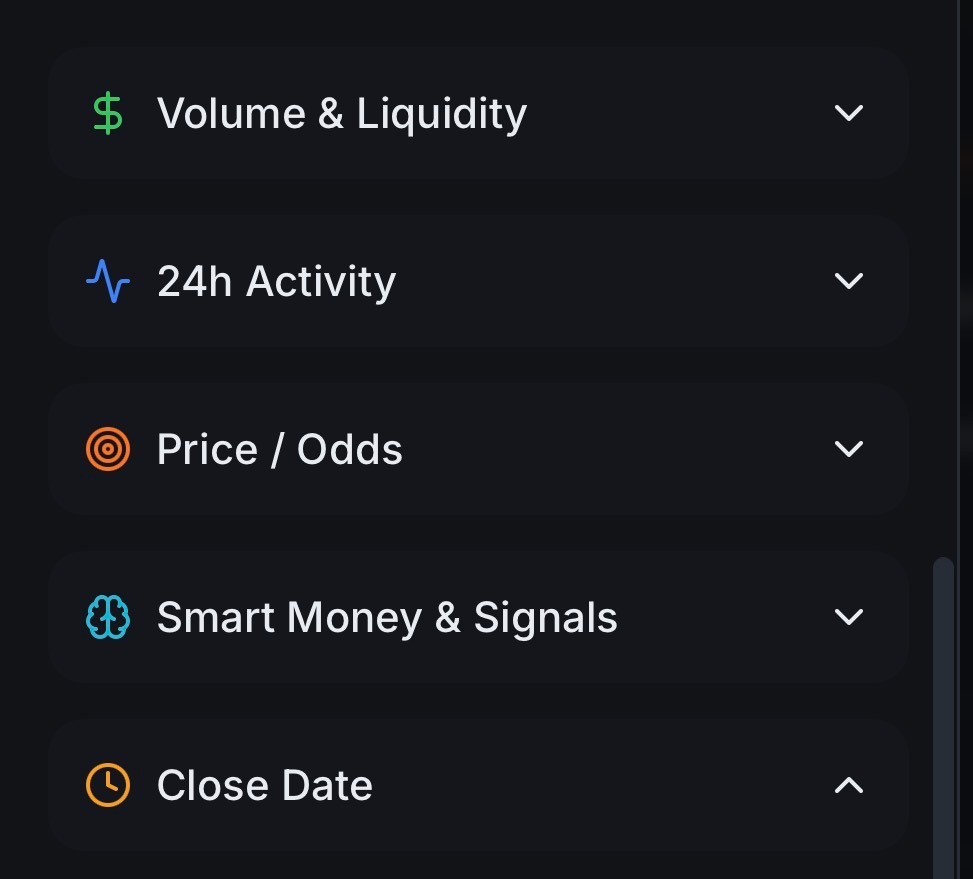
Using these filters, users can answer questions like:
Which markets are experiencing meaningful activity, have sufficient liquidity, and are worth investigating right now?
You can easily filter for markets experiencing:
- a sudden shift in probability
- unusual trading volume
- approaching the resolution date
You can also narrow the search by category, depending on the type of events that entice you, either by manually searching or using the AI mode.

Build conviction
Once a user locks in on a market, the next step is to understand the price action.
Price movements imply a change in the probability or direction of outcomes. So if a market moves upwards, traders are pricing in a different likelihood of the outcome.
To investigate this, you can track two things:
- Whale activity - Here, you’ll be able to find if the movement is supported by substantial trading activity or if large positions are entering or exiting.
As a user, you’ll also learn if the market is thin, whether it is making price changes more sensitive to individual trades or whales, and get new insights explaining the shift.
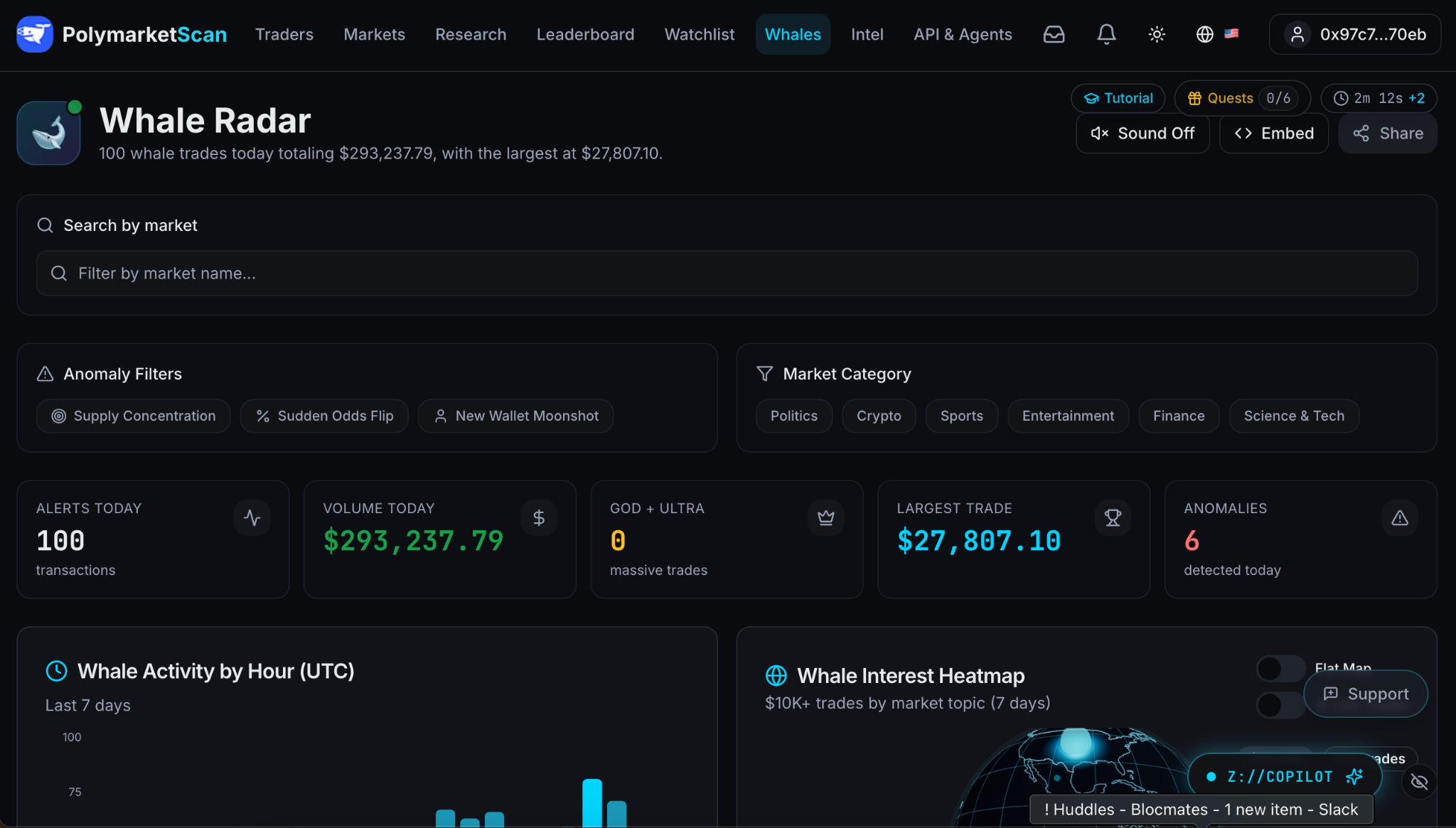
A whale transaction can be a useful starting point for research, but the size of a trade alone doesn't establish that the trader has superior information.
- Trader profile - What makes a lot more sense than just tracking whale activity is narrowing down and investigating the traders.
For example, fomo built a system around this same format for memecoins, allowing social trading to be a phenomenon.
In the same way, investigating trader profiles can help you examine wallet history, market participation, and performance data where available.
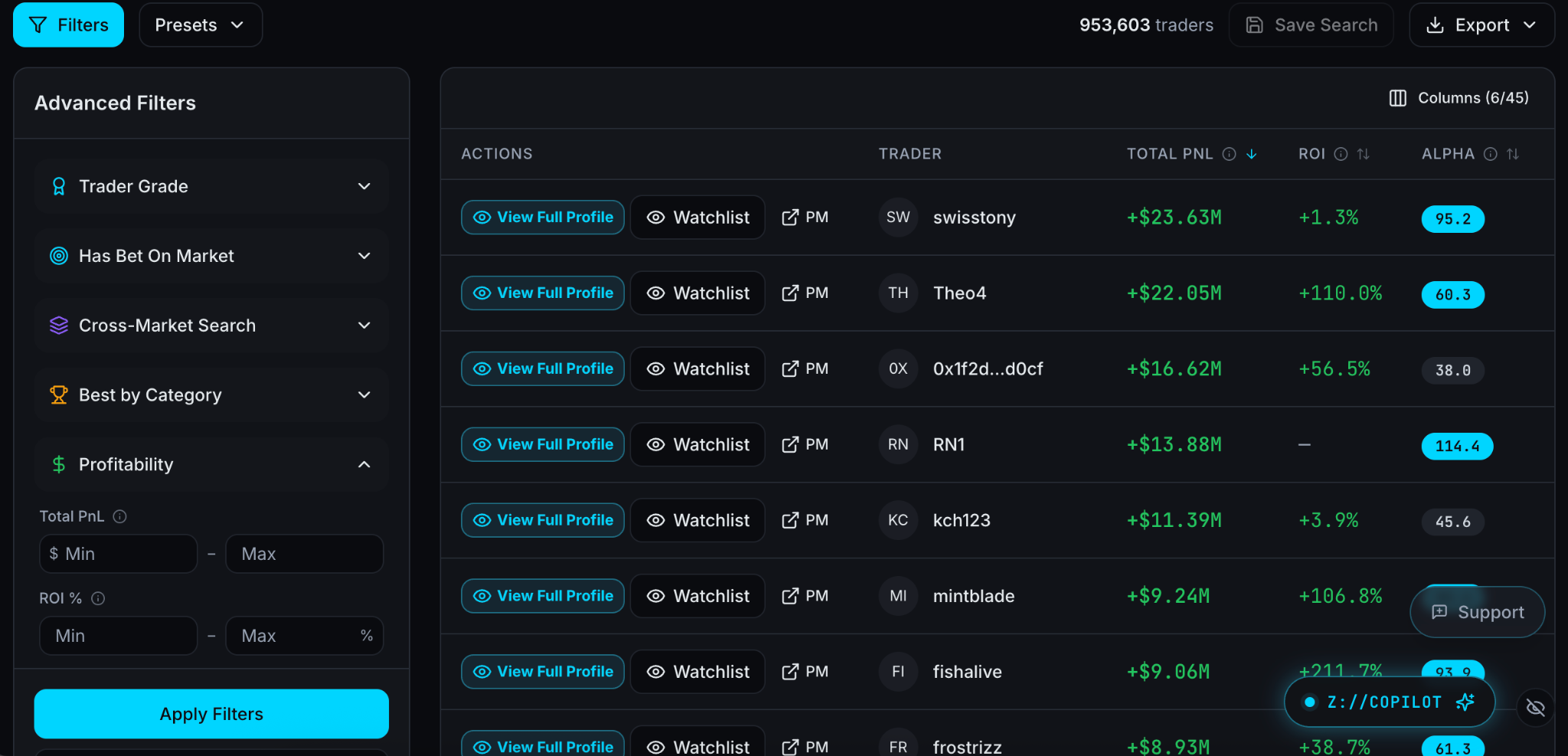
If you notice a wallet taking a significant position, investigate its history and try to find answers to:
- What markets does it trade?
- Has it participated in similar events before?
- How has it performed on resolved positions?
- Is this position part of a broader strategy?
Follow the smart money
Anyone trading the memecoin trenches understands the importance of following smart money.
By following the smart money, we mean traders monitor wallets for early entries, recurring activity, and capital movements.
Prediction markets have a similar research angle. PolymarketScan's Whale Radar and leaderboards can help you discover wallets and traders worth investigating.
But to actually narrow it down, you need to curate your own watchlist and set up alerts.
You can either handpick them yourself, or, if you’re lazy like me, you can use curated watchlists that have been made public.
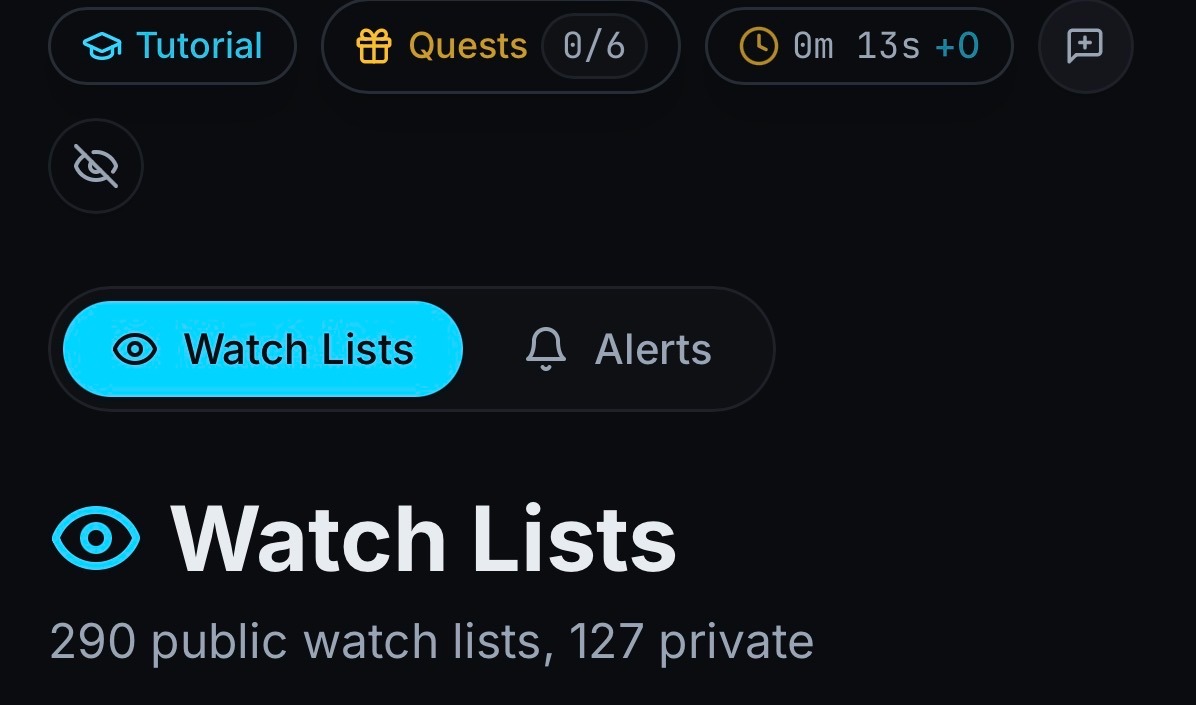
Currently, there are over 290 public watchlists available to users to take advantage of - even though we will recommend curating yours per specific market categories.
To create yours, simply:
- Identify an active wallet or trader.
- Open the profile and investigate their history.
- Examine the markets they're participating in.
- Compare their activity with your own market research.
- Decide whether the information adds anything meaningful to your analysis.
- Add to your list.
Don’t ignore markets that have already settled
Good traders don’t just learn from open markets, they also look at historical data from markets that have already closed.
If you’ve heard a memecoin trader make an analysis, then you know it’s a common thing to say <coin name> ran to $x million market cap earlier, so the ceiling for this should be $z.
It is easier to draw inferences from historical data on past scenarios. For prediction markets, past markets can help review price movements, trading activity, and trader performance, where the platform provides those records.
Look for patterns around:
- How probabilities changed as the event approached.
- The timing of major price movements.
- Trading volume before resolution.
- Wallet behavior across different market categories.
- The difference between early market pricing and the eventual outcome.
PolymarketScan’s research feature is built for this type of pattern research.
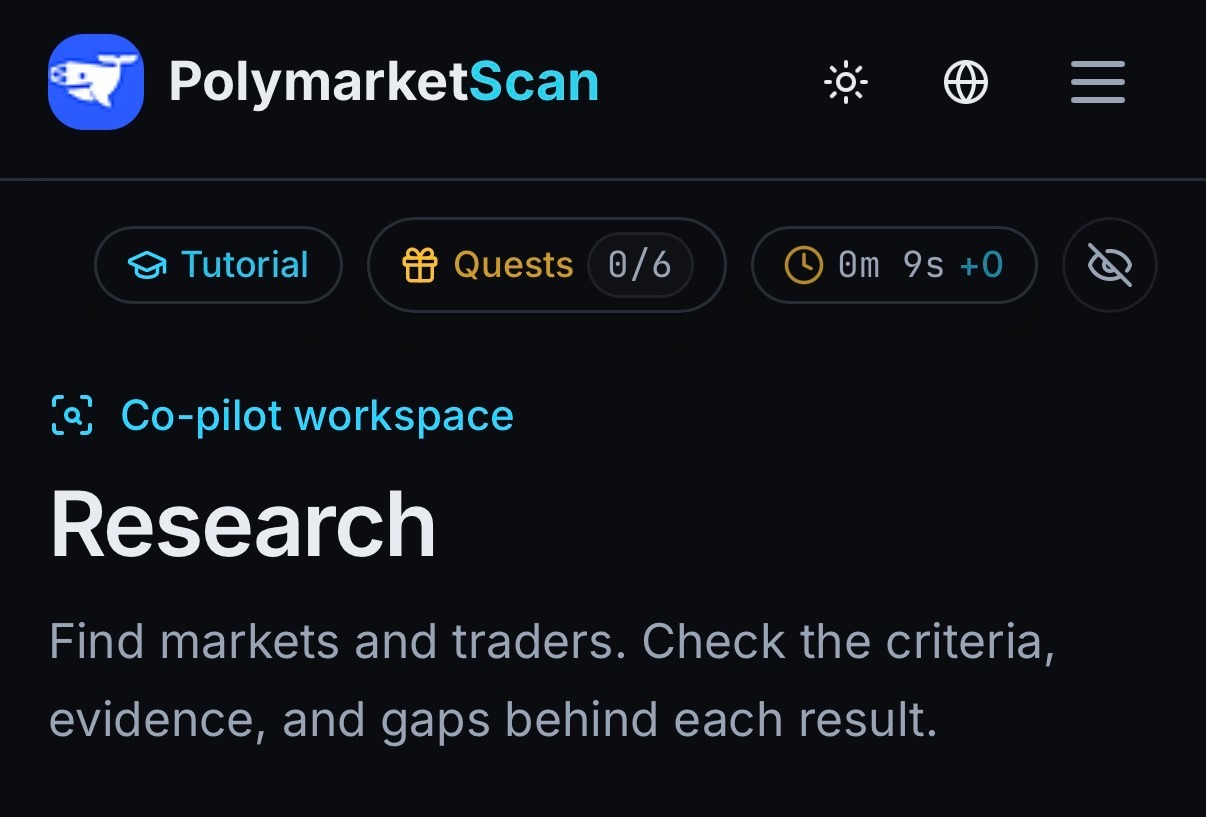
You can look for keywords directly or market-phrase search data from resolved markets to understand the dynamics and learn from it.
If you don’t want to do that yourself, you can ask the AI bot to assist you.
Concluding thoughts
Prediction markets might look different from memecoins, but the mindset behind trading them shares some similarities.
You need to filter the noise, recognize meaningful activity, understand the narrative, develop a reason (thesis) for entering a position, and then proceed to take action.
Tools like PolymarketScan can make the research process more structured. But that doesn't eliminate uncertainty from the equation.
Alongside, you also have to execute the trade yourself, either through an automated deployment of your funds or manually if you’re still old-school.
It is important to keep in mind that strategies will always trump sporadic spraying.
And of course, it’s not feasible to trade all markets. The goal should be to build a repeatable process to be able to hit a success rate you’re comfortable with. It’s that simple, yeah!









.webp)

.webp)
.webp)

.png)


.webp)



.webp)
.webp)

.webp)
.webp)















.webp)
.webp)


.webp)




.webp)
.webp)




.webp)

.webp)













.webp)
.webp)
.webp)
.webp)
.webp)
.webp)


.webp)
.webp)


.webp)


.webp)




.webp)


.webp)


.webp)




















.webp)







.webp)











.webp)

.webp)
.webp)

.webp)












.webp)

.webp)


.webp)





.webp)