Reading time: 8m 21s
If you’re over the age of 23, you’ve probably seen this little thing.
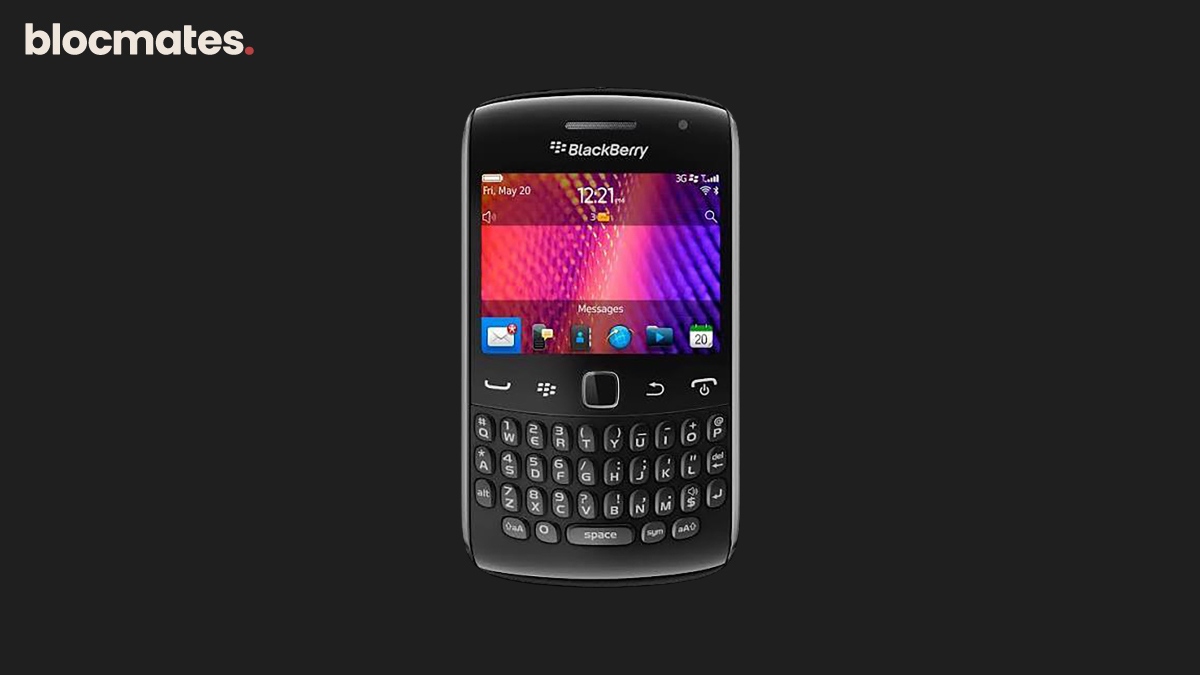
Ahh, the good ol’ days before touchscreens and doomscrolling took over our lives.
For those of you who don’t know what this is, every single person who owned a phone between the years 2008 and 2011 probably owned a BlackBerry. It was THE phone at the time.
However, Apple and Samsung came to market with their smartphones and absolutely crushed BlackBerry, and crushed it swiftly.
A lot of people, myself included, thought they were dead in the water, lost to time, completely forgotten about.
Well, how wrong we were.
BlackBerry pivoted away from phones a long time ago and now runs a business spanning some of the biggest verticals in the world, including automotive/vehicles, military/defense, and physical AI/robotics.
I know a lot of you just rubbed your eyes and re-read that sentence. Don’t worry, you aren’t hallucinating. I had the same reaction too, when I first found out.
They really have made one of the most insane pivots ever.
However, for the sake of this article, we’re only going to be focusing on the AI robotics aspect of the pivot, but I do recommend reading up on the business as a whole.
So let’s break this thing down.
QNX: BlackBerry’s crown jewel
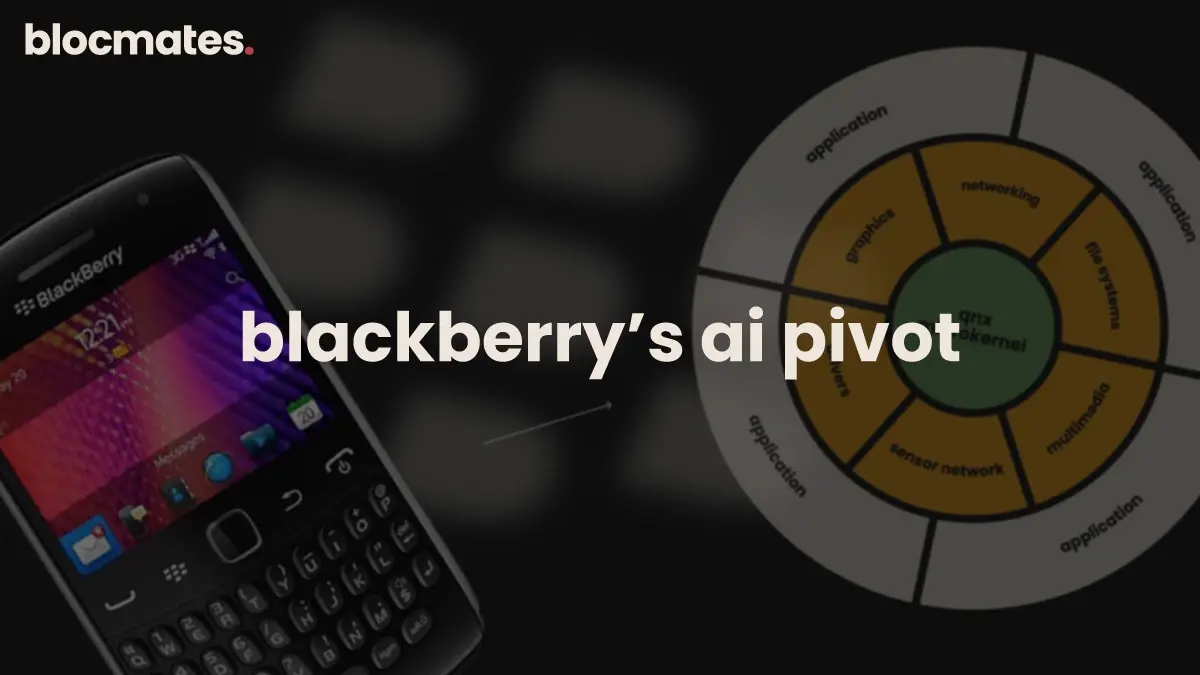
The overarching one-line to define this pivot is from “phone company” to a “real-time operating system” (RTOS) company. That operating system is called QNX. So what the hell is it?
A RTOS is a specialized software designed to execute time-sensitive tasks with strict, predictable deadlines.
It’s a system based on determinism. That means it can identify the different types of tasks, analyze exactly how long a task will take, assign a priority status, and consistently produce the same result.
One of the main benefits of an RTOS like QNX is that it has a “never crashes” property, making it imperative for real-time systems like vehicle software, defense, medical products, and, in the case of this article, Physical AI.
To better understand what an RTOS is, let’s compare it to legacy operating systems.
Think of legacy operating systems (Windows, MacOS, Android, etc.) like a walk-in medical clinic, and think of a RTOS like QNX as an emergency room.
A walk-in clinic is built to serve as many patients as possible in the most pleasant way possible.
There’s usually no impending emergency given utmost priority. If the waiting room is full, you wait and slip through a magazine. If you get rescheduled, so be it; you come later. So long as nobody dies, the system has operated successfully.
This is very similar to your legacy operating systems. When you open 10 windows with 20 browsers each on your laptop, your system might lag, it might stutter for a second, or it might freeze. But you shrug and say, “Eh, whatever,” give it a second, and things start working again.
These operating systems are optimized for average speed and overall throughput, ensuring multiple apps can operate at a time. It’s not designed to guarantee a single task happens at any given moment.
An emergency room, on the other hand, is completely based on timing and priority.
If a patient comes in with a gunshot wound and is in critical condition, there’s no waiting around or sorry we got busy. They must be seen within a guaranteed window, every single time, to ensure the task of saving their life can be performed.
This is the best way to define RTOS: predictably on time, every time. This is the determinism aspect.
But there are also two other design choices that set QNX apart from legacy operating systems.
- The Microkernel
- Priority scheduling
Continuing with the hospital example. Think of the Microkernel as an ER with multiple isolated rooms rather than one big shared ward.
Traditional operating systems operate in one big shared space (the ward). One part crashes, and it could potentially take down the whole ward.
What QNX does is divide its functions (drivers, file systems, networking) into isolated rooms. If one crashes, just that room is shut temporarily, the system is still functioning the same, and the patient remains unaffected.
This isolation is what gives QNX its “never crashes” or “fault-tolerant” properties.
Imagine an industrial AI robot arm with QNX; it simply cannot afford to glitch, stutter, or freeze for even a couple of seconds, as it could damage the entire supply line.
Then we have priority scheduling.
Based on the product/use case, QNX allows developers to assign hard priorities and guarantees the highest-priority task gets the processor when it needs it.
So, for an industrial AI robot arm, the “pickup/drop” function is probably given a higher priority than, say, an “internal temperature” function.
BlackBerry as the next pick-and-shovel play in AI
So, how does this tie into AI?
AI as a sector is vast; you have the models, video creation, LLMs, prediction tools, agents, and so on. But another major aspect of AI is the shift from cloud to physical machines for robots, humanoids, and whatever other cypherpunk dystopian invention our tech overlords have in store for us.
In this pivot, a real-time fault-tolerant operating system like QNX is a non-negotiable.
In fact, the wheels are already in motion. QNX has silently been integrating and partnering with some of the biggest companies, already making it an instrumental element of physical AI infrastructure.
So let’s go through some of these integrations:
- NVIDIA - On June 22, 2026, BlackBerry and NVIDIA announced a partnership where NVIDIA will be integrating QNX into NVIDIA’s IGX Thor, which is basically a platform for real-time sensor processing and AI reasoning for physical AI.
It has specifically been implemented for the Safety 8.0 system, and NVIDIA has dubbed this the world's first full-stack physical AI safety system. At the time of writing, no competition to QNX exists.
This is not just an in-the-air partnership. Developers are already applying to start building on this, and full products could be 12-18 months out.
Additionally, there’s a conference at a BMW plant in Leipzig coming up soon where a humanoid robot called AEON (using this software) is set to perform actions live.
- AMD - As if one giant wasn’t enough, BlackBerry also has a long-standing partnership with the semiconductor giant AMD.
AMD announced that QNX will be an instrumental foundational element of its latest high-performance embedded processor platforms. Once again, extending QNX’s reach to edge AI and physical AI sectors.
- Arm - Another major partner for BlackBerry is Arm.
Arm recently announced its latest development, the Arm AGI CPU for physical AI, and it identified QNX as one of its foundational software ecosystem partners, putting it at the heart of this technology.
This is not all just marketing and hype; there’s no story trying to be sold here, everything is already in motion, and most of us are playing catch-up.
BlackBerry has been building this QNX operating system for years in silence and is now the only available RTOS in the market that’s functioning, safe, fault-tolerant, and most importantly, trusted by all the major players to embed into their technology.
They have recently been absolutely smashing their earnings reports, and that’s for a good reason. Their technology is already everywhere; we just didn’t know it.
Now, as products begin launching and the usage of QNX proliferates everywhere, revenue is only going to skyrocket.
With physical AI and a shift away from cloud infrastructure on the rise, BlackBerry might be the biggest pick-and-shovel play that currently exists in the market when it comes to AI and robotics.
They have all the licenses and all the patents with no real competition in sight.
The regulatory moat
In terms of compliance and regulatory capture, BlackBerry already holds all the aces with QNX.
There’s this thing called ISO compliance. It’s basically where a company needs to get safety certificates from the International Organization for Standardization.
These are certificates that essentially say, “yes, your software is safe to use.” But obtaining these certifications can be difficult and time-consuming.
To get this certificate, a company must first architect a software for safety, generate every artifact, qualify the compiler toolchains, run multiple tests, and then have different independent assessors audit all of it.
Doing this can take multiple years in some cases, but BlackBerry has already secured over seven of these a couple of years back.
With regards to physical AI, there are two certificates that particularly set QNX apart from the rest. Those are IEC 61508 and IEC 62304. What these do is secure QNX’s use in industrial machinery and medical devices, respectively.
This effectively covers the majority of physical AI because most robots/humaoids that use AI could technically come under the industrial machinery definition. With medical devices, say there comes a time when robots can autonomously perform certain medical tasks, it will be QNX that’s at the heart of that machinery.
What has further helped QNX in terms of being the safest RTOS is the Microkernel architecture, which gives it the ‘freedom from interference property’. All of this proprietary technology has already been patented by BlackBerry, with over five different patents for different elements.
Translation, competition will most likely have to license through them.
All of this perfectly comes together for BlackBerry when you take into account regional laws.
The UNECE regulations called WP.29 R155 and R156 mandate that every vehicle type sold in Europe, Japan, and Korea have cybersecurity management and over-the-air update capability. Something that QNX offers and has fully certified with the authorities.
Another mandate is the V2X mandate, a vehicle-to-vehicle communication mandate that is set to pass soon. A capability that QNX excels at.
Basically, QNX already has the technology ready with all the licenses, certifications, and patents done. The laws are now changing in their favor, so the government is effectively selling for them, and if anybody wants to catch up, it could take them years.
So, just how sweet is the BlackBerry?
If we’re talking about the company as a whole, then the TAM for BlackBerry goes into the hundreds of trillions because it spans some of the biggest sectors in the world.
QNX is already embedded in over 200 million vehicles and is likely to be a part of military drones and defense systems powering the new “Golden Dome” project.
But if we go specifically to the AI/robotics element of it, analysts are predicting it to grow to a $20 billion market in the next 2-3 years, and from there, the growth is likely to be exponential.
Then, if you add in the industrial aspect, which technically does not come under AI/robotics, that’s another $20-$30 billion market that QNX is at the heart of.
If we’re being conservative and say that QNX still somehow does not dominate this market and only controls, say, 25%-30% of it, that’s still a healthy chunk of change.
Then you add to this the potential gains from licensing. For all the companies that utilize the patented software, that’s a couple of hundred million dollars in added revenue per year.
Take things a step further, we aren’t completely sure of the inner workings of the deals made with companies like NVIDIA, AMD, and ARM. There’s potentially even more revenue-generating instances in those contracts that only propel BlackBerry further.
This is all to say that we’re staring at a sleeping giant here.
BlackBerry is a true phoenix rising from the ashes, set to have its fingers in every single pie of the most important industries of the future.
Everyone loves a good comeback story, and it looks like we just hit the motherlode.







.webp)
.webp)

.webp)
.png)

.webp)


.webp)
.webp)
.webp)
.webp)









.webp)

.webp)

.webp)


.webp)
.webp)


.webp)
.webp)
















.webp)
.webp)
.webp)
.webp)
.webp)
.webp)


.webp)
.webp)


.webp)


.webp)




.webp)


.webp)


.webp)

















.webp)







.webp)








.webp)

.webp)
.webp)

.webp)











.webp)

.webp)


.webp)






.webp)