Reading time: 5m 38s
We’ve spent the better part of two years as an industry listening to the suits talk about tokenization and RWAs as the future.
While there may be some truth to it, we also saw two devs with no VC funding grab all the headlines this week with a (somewhat) parody version.
It’s time we had a little chat about Fake World Assets ($FWA).
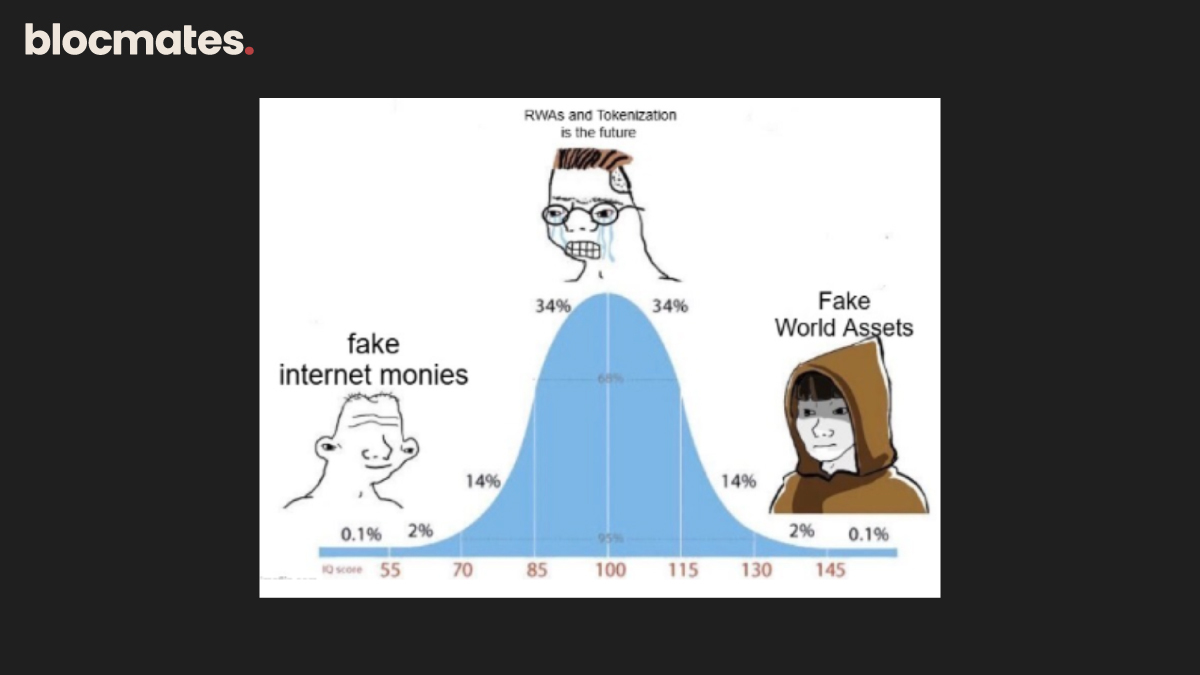
From pumping 35,000% in a week to then correcting 70%, to now potentially starting its path to recovery. It’s been a wild ride as everyone tries to make sense of this new primitive.
As always, we’re here to simplify things. We’ll break down FWA, so you’re best equipped to make a decision on what you think comes next.
Don’t worry, we’re going to keep it as short and sweet as possible.
Let's be honest, AI subscriptions add up fast. One month it's ChatGPT, then Claude, then another tool everyone on TikTok swears you need.
Before you know it, you're paying for half a dozen AI apps just to keep up. We're in the same boat, which is why we've been using Plasma One.
It gives us cash back on our AI subscriptions without having to think about canceling the ones we actually use.
If you want in, sign up using the link or scan the QR code below and start getting some of that money back.
Paying for ChatGPT or Claude won't suddenly make your life cheaper. Your monthly subscriptions will still hit your bank account, but Plasma One will help route some of that money back to your pocket.

How does FWA work?
FWA by TokenWorks combines elements of Gacha with NFTs and DeFi to create a novel protocol design that has finally got the trenches feeling alive.
Picture a claw machine with toys inside. Now, picture that every toy inside has an envelope of cash stapled to it, and the person who owns the toy gets to decide how thick that envelope is.
As a player, you pay a fixed price to play, and when you win, you have the choice to either keep the toy or keep the envelope of cash.
That, in essence, is how Fake World Assets works.
But let’s break it down further.
There are three key stakeholders in this game.
The depositor picks an NFT from their collection (has to be one of the approved collections) and deposits it into the protocol with an ETH ‘backing’ amount attached to it. The depositor themselves can choose how much they want to deposit.
So you might, for example, deposit an old Azuki of yours with a 1 ETH backing attached.
The drawer pays a flat price (most recently 0.117 ETH) for a grab. The protocol then uses Chainlink VRF to pick an NFT at random to award to the drawer.
Here’s where the drawer has a choice:
- Either keep the NFT, or
- Give it back for 85% of the ‘backing’ attached to it in either $ETH or $FWA
They can never do both.
The protocol takes a small cut in transaction fees, and also in scenarios where drawers opt for taking the 85% backing, the protocol takes the other 15% and routes it for $FWA buybacks.

The rules of the game
The most important element of the design is the backing. The higher the backing, the lower the chance of it getting pulled from the pool, the lower the price, the higher the chance of your NFT getting pulled.
Staple a 0.002 ETH backing, and you get pulled every time, but if you staple a 5 ETH backing, it’s very unlikely you get pulled.
So most of the time, as a drawer, you’re basically pulling junk. That’s the reason the flat price to play remains so low, regardless of what’s in the pool, since it’s effectively tracking the price of the junk assets.
It’s basically the same mechanism as slots, low price spins for the off-chance of a big hit.
This backing also brings a bit of novelty to the protocol in terms of NFT pricing.
What the depositor is doing is pricing rarity by putting their money where their mouth is. Their backing acts as escrow.
If they put down 2 ETH as backing, they’re saying that they’re willing to buy back that NFT for 2 ETH if the drawer chooses to take the backing.
Who’s making money?
Just like in any gambling-style game, as the drawer, you’re almost always losing.
The only way you can really win as a drawer is if you get lucky and pull a good NFT with a higher floor price than the spin cost.
However, since you’re going to pull junk most of the time by design, almost all drawers always opt for the cashback option. With the cashback option, the drawer is effectively paying 1.1x the average backing and receiving 0.85x of it.
In other words, it’s a 21% haircut per pull.
So yeah, not great. To make up for this negative scenario, drawers are incentivized by $FWA tokens. The protocol is running a 15-day incentives program where 1% of the supply is distributed to the drawer per day for 15 days.
Then you have the depositors. The depositors have much more favorable conditions to make money.
A depositor earns yield for having their NFT + backing in the pool. They’re paid from transaction activity in the pool. The longer you’re in there for, the more yield you earn, but once you get pulled, you stop earning on that position.
In addition, this 15-day incentive program also applies to depositors who are also earning 1% in $FWA emissions every day.
Although we’ve seen numerous tweets about people still losing money as a depositor, the odds are much more favorable.

The verdict
So the reason everything is working well so far is two-fold: the incentive program is juicy, and the only way to actually earn $FWA is to use the protocol and receive these emissions because users (currently) cannot buy from the Uniswap pool, it’s only open to selling.
But this is a double-edged sword.
On the positive end, people use the protocol and receive $FWA rewards. The usage generates buybacks, which increases the price of $ FWA. Higher rewards mean better LP returns (as a depositor), which means more NFTs deposited, and that translates to more activity from drawers.
A simple positive feedback loop.
But then, eventually, the incentives are going to stop, and people are going to start selling their $FWA. There is no external anchor in that loop.
In this scenario, the $FWA price decreases, which means drawers are no longer getting that 21% haircut back.
At the same time, depositors earn less as LPs. That means fewer attractive NFTs in pools and fewer spinners, so stifled activity across the board. That means lower fees and lower yields, which will translate into fewer buybacks as protocol revenue will take a hit, and therefore a lower $FWA price.
In this scenario, you’re likely to see $FWA go into a bit of a death spiral.
With $FWA already at 44% of the highs, you have to ask whether we’re already seeing the spiral begin or if it’s just a mini-correction.
Our in-house blocmates “terminally-online” correspondents who have been scouring through every tweet on CT over the past days have seen more disgruntled customers who have lost money both ways than happy ones.
Look, when it comes down to it, $FWA is a novel and genuinely interesting design. However, what matters most is whether it will stand the test of time.
Once the incentives stop and the Uniswap pool fully opens, will people use it as a new way to sell/price NFTs, a new Gacha game for the trenches (seeing that they recently introduced a token version), or will it simply be forgotten?
The only thing that can answer this question is time, and I guess we’ll find out if $FWA can stand the test of it over the next two weeks.

.webp)



.webp)
.webp)

.png)
.webp)

.webp)
.webp)
.webp)
.webp)










.webp)
.webp)
.webp)
.webp)
.webp)

.webp)
.webp)









.webp)

.webp)
.webp)
%20(1).webp)
.webp)
.webp)
.webp)
.webp)
.webp)


.webp)
.webp)


.webp)


.webp)




.webp)


.webp)


.webp)















.webp)





.webp)







.webp)

.webp)
.webp)

.webp)










.webp)

.webp)

.webp)




.webp)