Reading time: 13m 17s
If you've been asking questions like:
- Is AI really responsible for the wave of layoffs?
- Will AI replace my job?
- What should I do if AI has already replaced my role?
- How does AI affect Big Tech?
- How much does it actually cost to adopt AI?
- To what extent does AI affect mid-scale companies?
- How does AI affect startups?
- How do companies leverage AI without burning through their budget?
...then this article is for you.

In this first part of our AI Q&A series, we combine expert commentary with carefully curated research from credible sources to answer some of the most pressing questions about AI.
Our goal is to provide practical insights and help you make informed decisions, whether you're an employee, entrepreneur, founder, or simply AI-curious.
If your question isn't covered here, don't worry, part 2 will tackle even more of the conversations and concerns shaping the future of AI.
Foreplay
In 2000, Steve Ballmer stood on a stage, soaked through his shirt, and screamed the word “developers” multiple times until his voice gave out, punching the air to show how much he meant it.
And he was right, developers were the top commodity in the next decade and beyond.
The clip is undoubtedly one of the most-watched in tech history. However, watching Ballmer’s speech in 2026 feels a bit different.
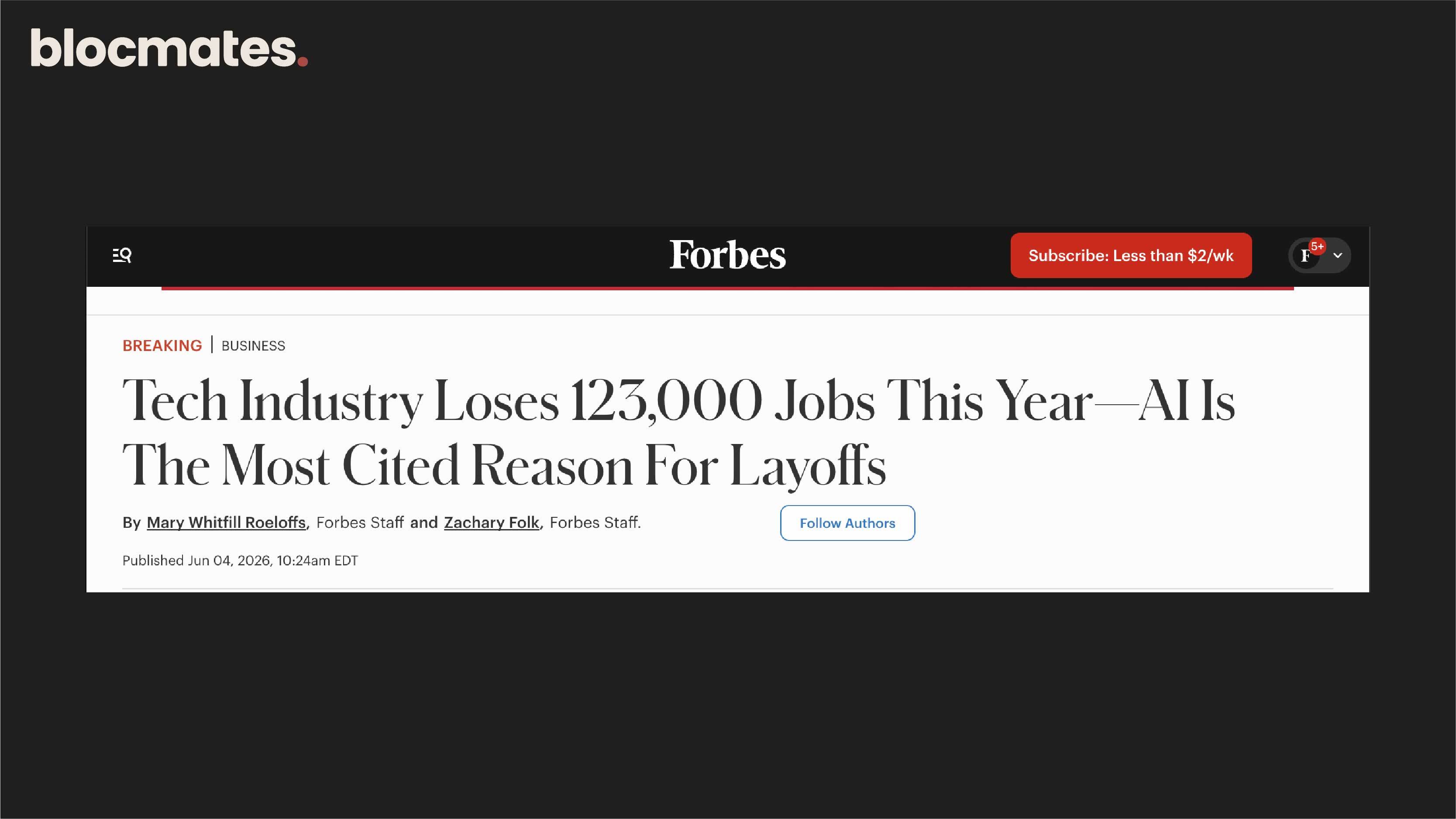
While there are more developers being spun, the other side of Ballmer’s idea - jobs, jobs, jobs… is not quite the story in 2026, especially with headlines like these:
Is AI the reason for these viral layoffs?
The reasons for multiple job cuts across America and most of Europe’s tech industries were initially explained away as a correction for “Covid over-hiring.”
Companies had expanded aggressively during the pandemic, demand eventually cooled, and layoffs seemed inevitable.
Until Jack Dorsey ripped the band aid, explicitly stating that the company’s recent decision to cut 4,000 roles wasn't driven by financial trouble or Covid, but by the growing capability of AI to do the work.
Jack’s explanation also appears to align with a broader industry pattern. Microsoft cut 9,000 roles in mid-2025, then later offered buyouts to more than 8,000 longtime staff this year.
And why Amazon trimmed 14,000 corporate jobs late in 2025 and lopped off another 16,000 to start 2026. Oracle also let go of 30,000 in a single swing, the biggest one-shot cut of the year.
As of the time of writing, the Forbes count had crossed 123,000 tech roles.
However, despite Jack’s claim and other headlines about layoffs, a new study by Ramp & Revelio suggests that AI is not the primary cause of these layoffs - at least, not at the moment.
In fact, based on adoption data, high-adopters or those implementing AI with the highest intensity increased hiring by 12%. As a matter of fact, certain companies that let go of staff due to AI adoption are reportedly re-hiring.
The conclusion is that current layoffs are driven by a mix of factors, as shown in the table below, which breaks down the current combination and its impact, as well as what it could look like in the next five years.
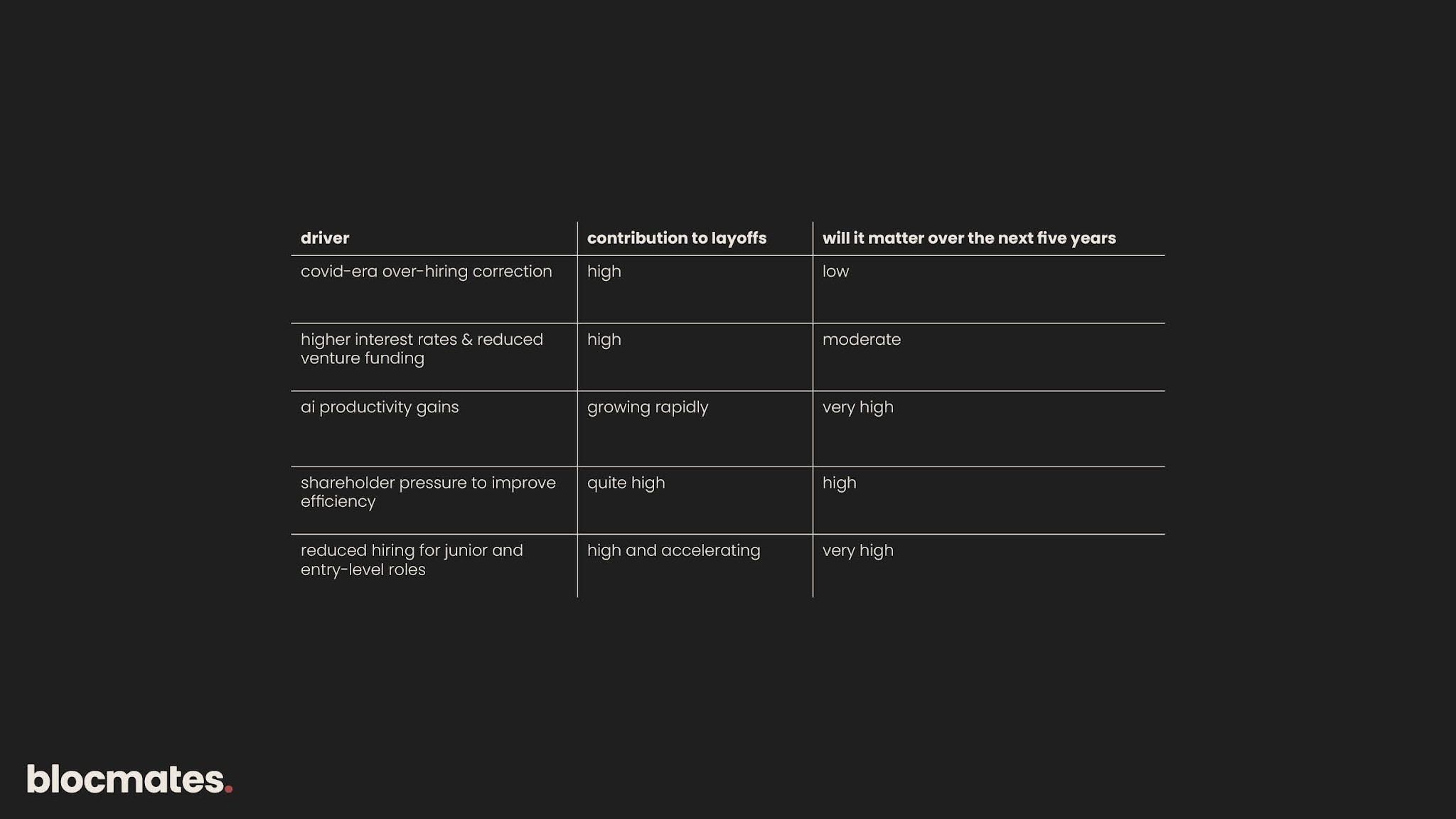
In other words, while AI may not be the single biggest force behind today's wave of layoffs, it is increasingly positioned to become the dominant force reshaping the labor market over the next few years.
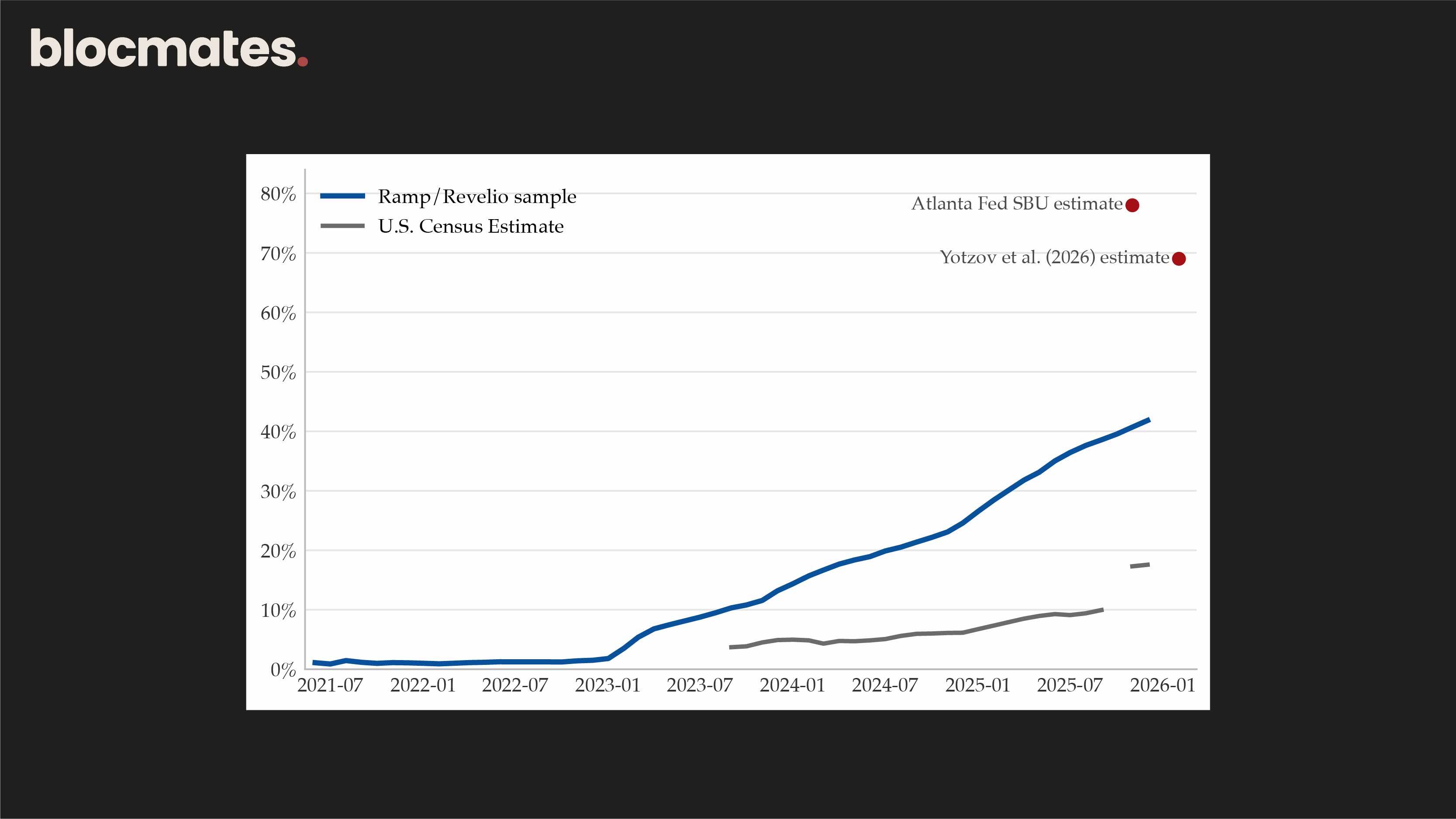
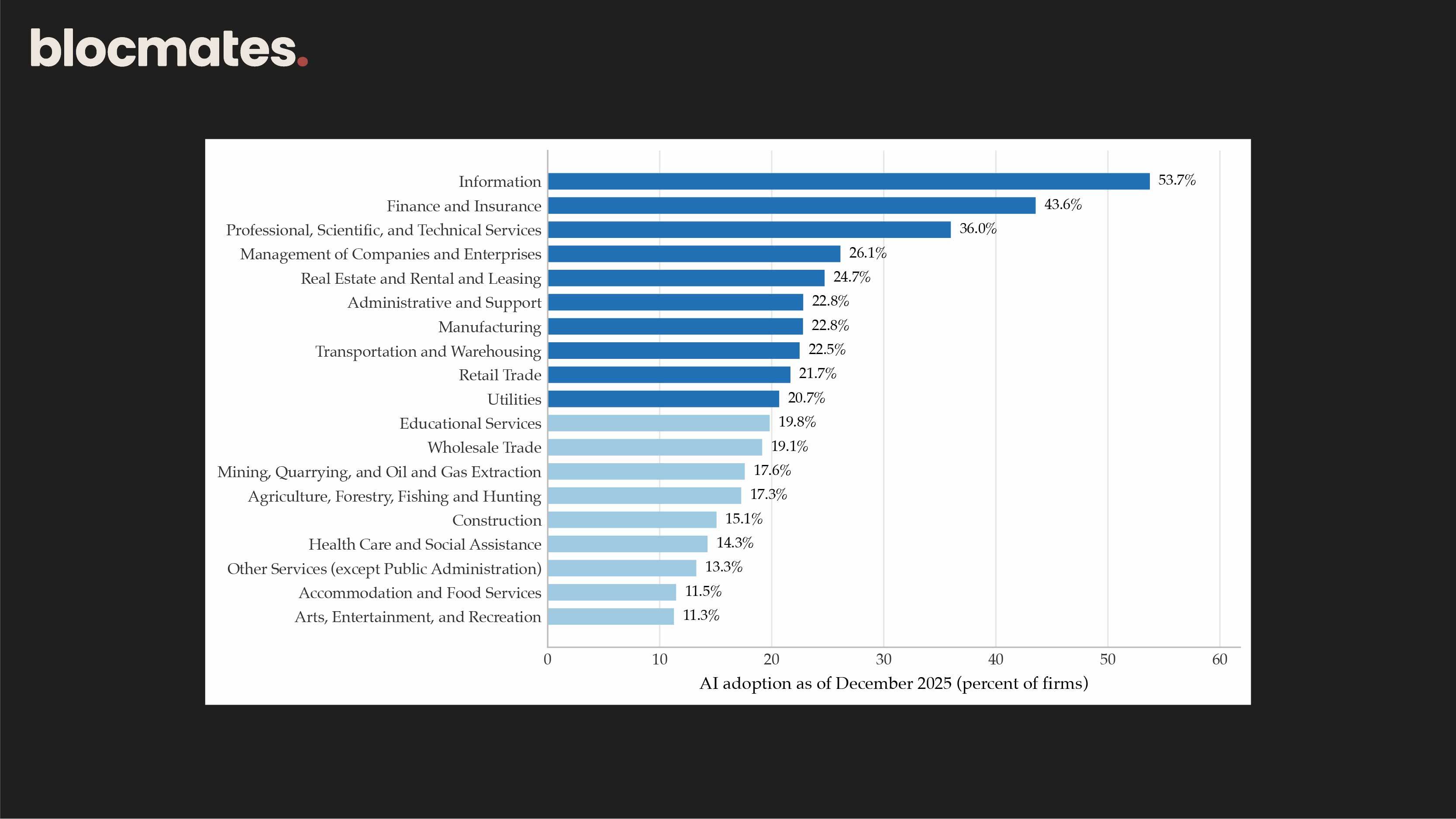
As adoption accelerates across industries, businesses are expected to redesign workflows, automate routine tasks, and rethink the size and composition of their teams.
Current projections already show AI adoption rising across nearly every sector of the economy, with the information and technology industries leading the way. This leads to the next pertinent question: Will AI replace my role?
Will AI replace my role?
One of the biggest misconceptions about AI is that it replaces professions. In reality, AI replaces tasks first, and jobs built around those tasks become the most vulnerable.
Research consistently shows that roles built around repetitive, predictable, and highly codified work are already experiencing the greatest disruption.
These roles are referred to as task-heavy or connector roles: jobs that primarily move information from one place to another, follow established processes, or produce standardized outputs.
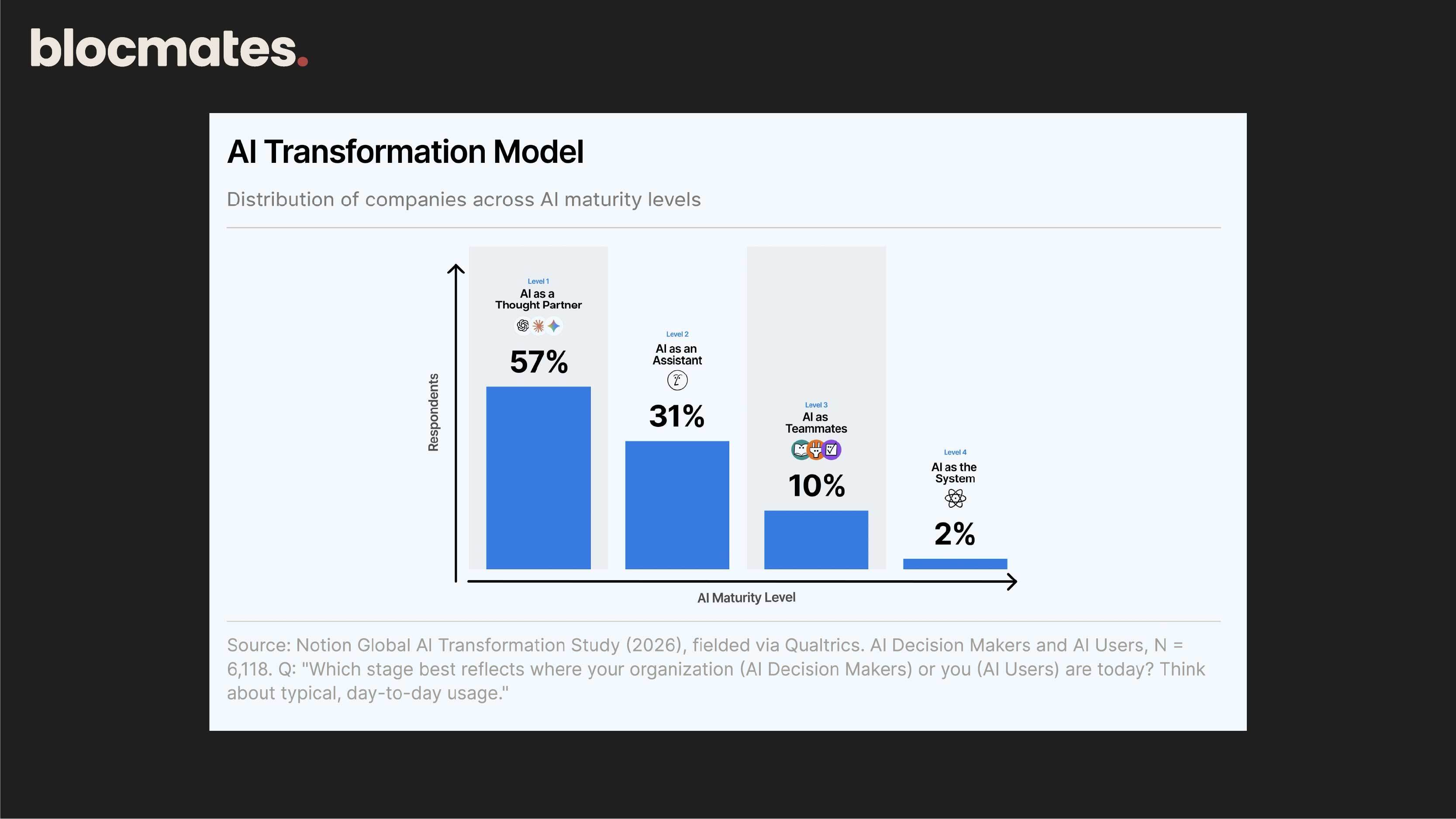
According to a report by Notion, AI in work sits across a value-automation chart in four distinct levels:
- Level 1: AI as a thought partner helping people explore ideas and improve decisions.
- Level 2: AI as an assistant, completing individual tasks faster, thereby saving time.
- Level 3: AI as a teammate, automating repetitive work and increasing productivity and efficiency.
- Level 4: And AI as the system that runs critical workflows and scales organizational capacity.
Considering that the first level can apply to someone basically asking AI why their boss is in a poor mood all the time, what matters more is the second level, which describes a significant adoption (up to 31%) with workers using AI to complete or do the low-hanging fruit work; the repetitive stuff they don’t like to do.
What this simply means is that if your job is repetitive, where you spend your day sitting at a desk, in front of a screen, or using a digital device to perform the same tasks that keep a workflow running, and then come back the next day to do those exact tasks again, you’re at greater risk.
The people who are relatively safer are those at the end of that workflow, whose value comes less from execution and more from their ability to exercise judgment, make decisions, and evaluate outcomes.
This is backed by PwC's research, which found that entry-level roles most exposed to AI are now roughly 7x more likely to require traditionally senior-level skills like leadership, creativity, or face-to-face interactions, and that those "seniorized" roles grew by 35% since 2019, while other entry-level roles shrank by 10%.
A bold claim would be that, for many junior and connector roles, upskilling to reach senior levels where work is more about TASTE and judgment can be beneficial in the long term, in a world where the word 'long-term' is a luxury.
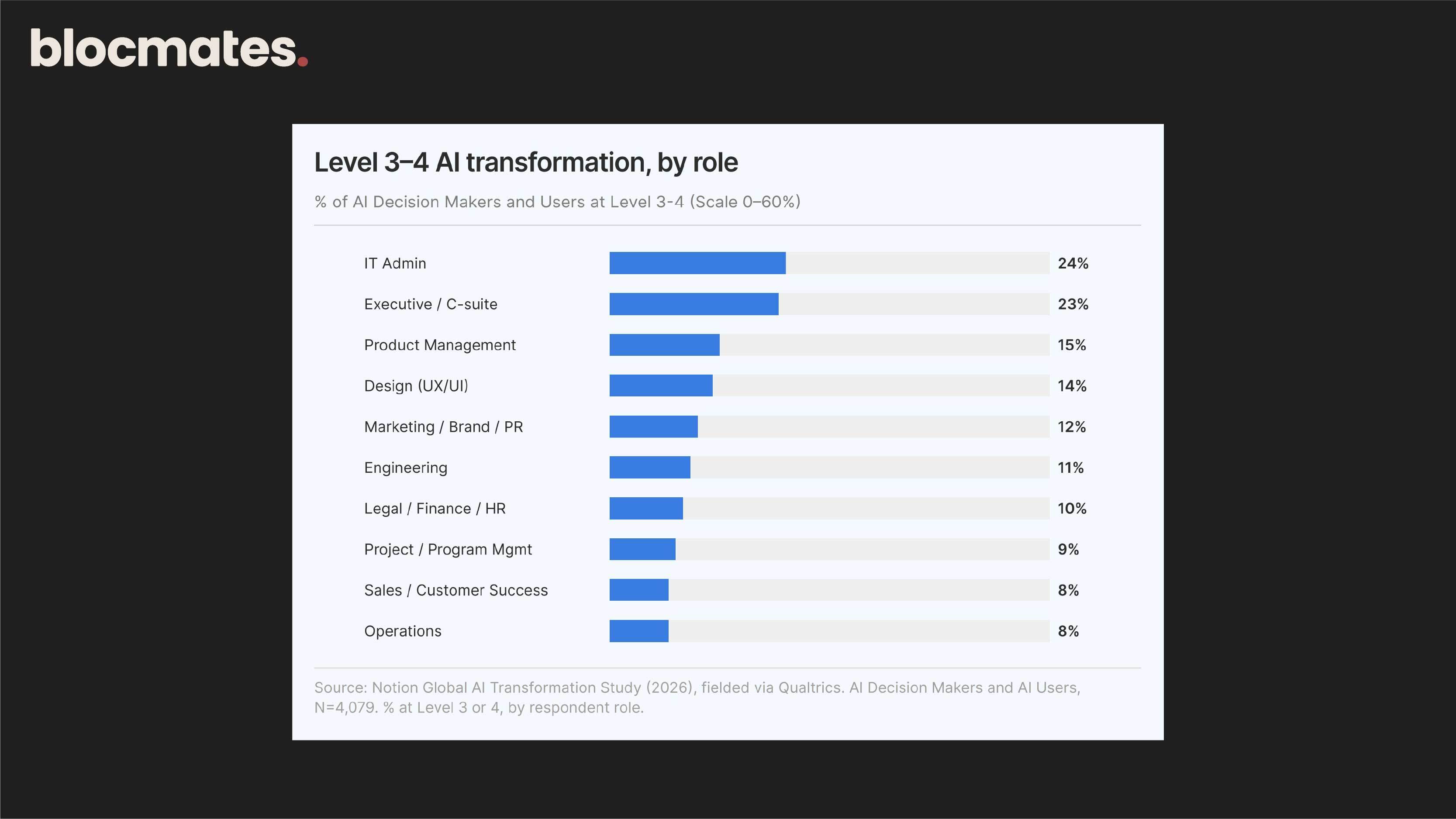
So far, only 2% of businesses are at the 4th level, having systematically integrated AI at a significant scale.
The gray area is that it depends on the level and type of systems being run, but studies show that at the 4th level, these companies are currently hiring rather than firing, meaning jobs are still safe.
What to do if you’ve been replaced by AI, but still want to work?
With evidence showing that companies making the deepest investments in AI are also expanding their workforces, it's becoming increasingly clear that employers aren't simply looking for fewer people; they're looking for different kinds of people.
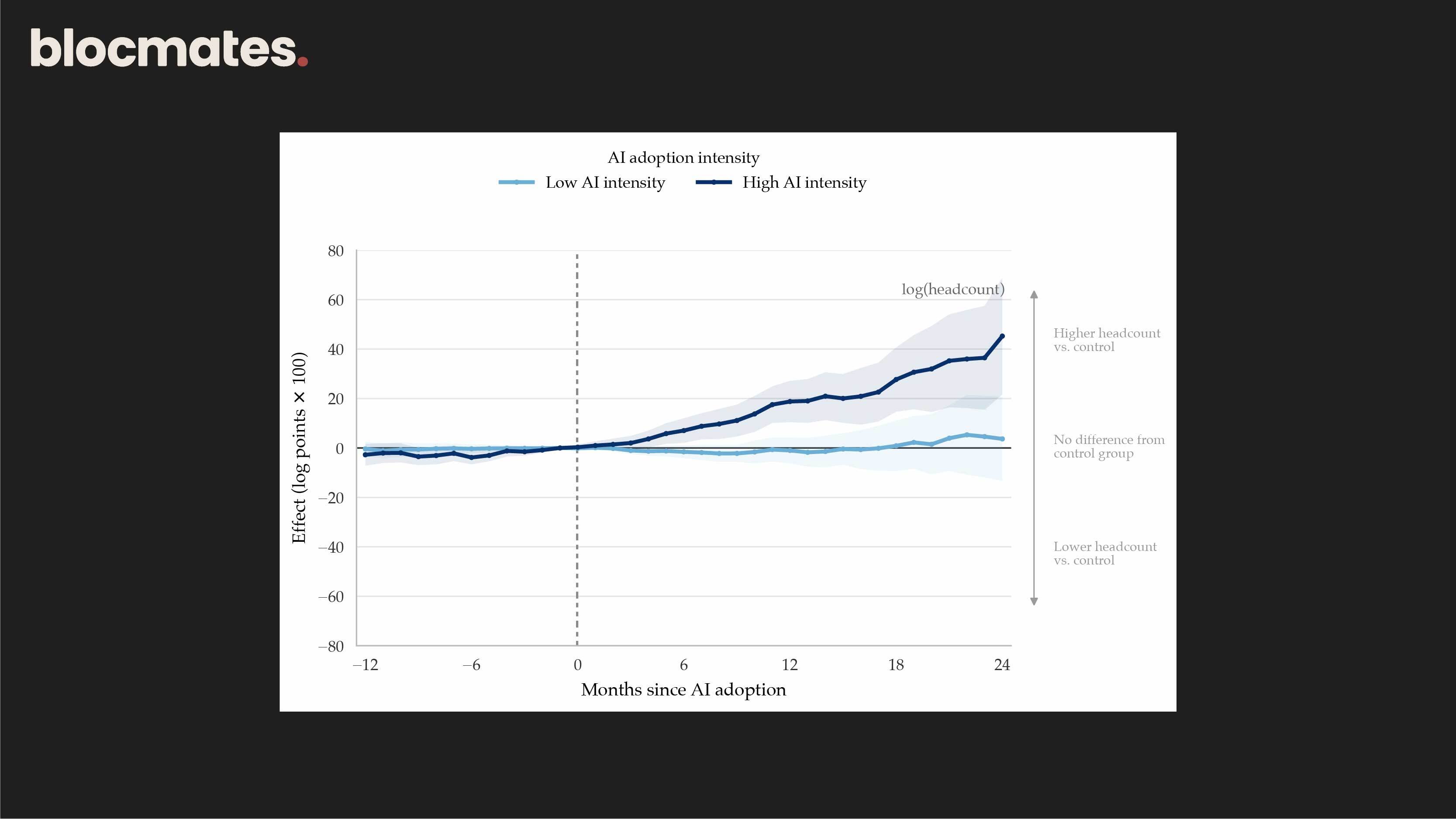
For those whose roles have been displaced by AI-driven productivity gains, this is more of a “light at the end of the tunnel” kinda situation.
It is evidence that there is still a pathway to meaningful work. Success, however, will depend on cultivating the right mix of skills, judgment, and capabilities that AI can amplify rather than replace.
Those skills are becoming clear.
Greg Isenberg, for example, points to AI orchestrators who can build and manage intelligent workflows, builders who can both create products and get them in front of customers, creators who know how to communicate and earn attention, robotics engineers who can bridge hardware, software, and AI, and community builders who cultivate trust and relationships.
So, the most practical thing to do as a job seeker is to look into these skills and add them to your stack, put out some proof of work, and then try to reach out again. A great example would be marketing professionals learning how to:
- Set up and orchestrate agents and multi-agent teams
- Build modular marketing skills libraries for harnesses
- Navigate and customize Harnesses (supporting infrastructure, code, and logic that wraps around an AI model to turn it into a functional, reliable agent, e.g., Hermes, OpenClaw)
- Learn how to use AI media tools, integrating them into pipelines - Higgsfield (and component tooling, including Seedance), Eleven Labs, Plot Party, Vizard, and Pollo AI
- Understanding how to save costs using:
- Open weight models + fine-tuning:
- Context-switching
- Subscription deals like Plasma’s 10% rebates on frontier models
- Platforms with flexible discount tiers
- Being able to create a marketing brain using Obsidian + Claude and agent integration.
How AI affects big tech?
An obvious aspect of San Francisco HQ companies, or Big Tech, is that they can’t be retrofitted for startup agility because of the scale layered on things like coordination costs, approvals, and middle management.
AI compresses exactly those routines at machine speed, and the result is basically surgical, as humans, mostly entry-level employees, become collateral damage.
Big tech is using layoffs to free up capital amid pressure on high margins. We believe this trend is rational in the short term: reduce CapEx and bet the freed capital on the intelligence arms race.
Interestingly, AI adoption in Big Tech is not nearly as far along as it should be. Large enterprises talk about AI but sit mostly in pilots, seminars, and experiments.
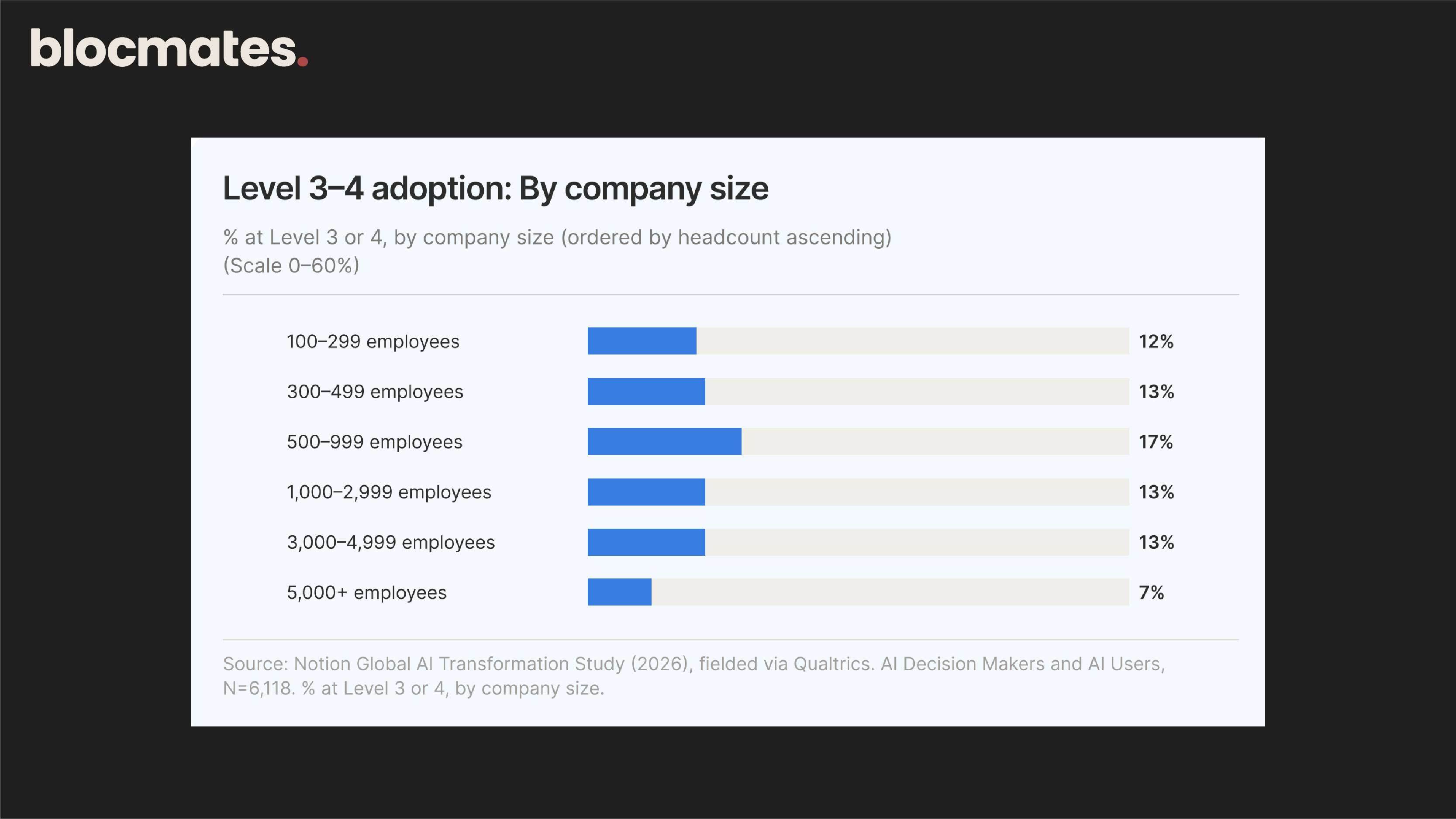
The above data suggests that enterprises with 5,000+ employees reach the top shelf of AI maturity, where AI actually runs critical workflows, at only 7% on a scale of 0-60%. Mid-market companies of 500–999 people hit 17%, more than double the previous level.
Our conclusion here is that so far, the big guys are spending the most, cutting the most, and transforming the least.
For anyone sitting inside one of these companies, it is clear that the job cuts are optimized for cost, and not to increase capability, which means the safest seats aren't the "efficient" ones getting trimmed, but the ones closest to where AI actually gets deployed - infrastructure, platform, and the teams wiring agents into the business.
In a company cutting payroll to fund compute, you want to be on the compute side of the trade.
This means you should take the initiative to help the company spend more effectively on models, agents, tools, and automation so they can do more with fewer humans.
How AI affects mid-market companies?
Mid-market companies sort of sit in the sweet spot. They are big enough for real revenue, and small enough to move without the issues that plague the big boys.
AI finds fertile ground here because workflows can be reset from first principles rather than squeezed. The idea is that the coordination tax that drags Big Tech is reduced dramatically when decisions stay close to the customer. 
In Notion's report, mid-market companies report better performance than enterprises. They treat AI as a thinking partner that augments judgment.
This creates hybrid human-AI flywheels that learn, process by process, from real interactions. The goal for these mid-scale companies is to optimize for new capability.
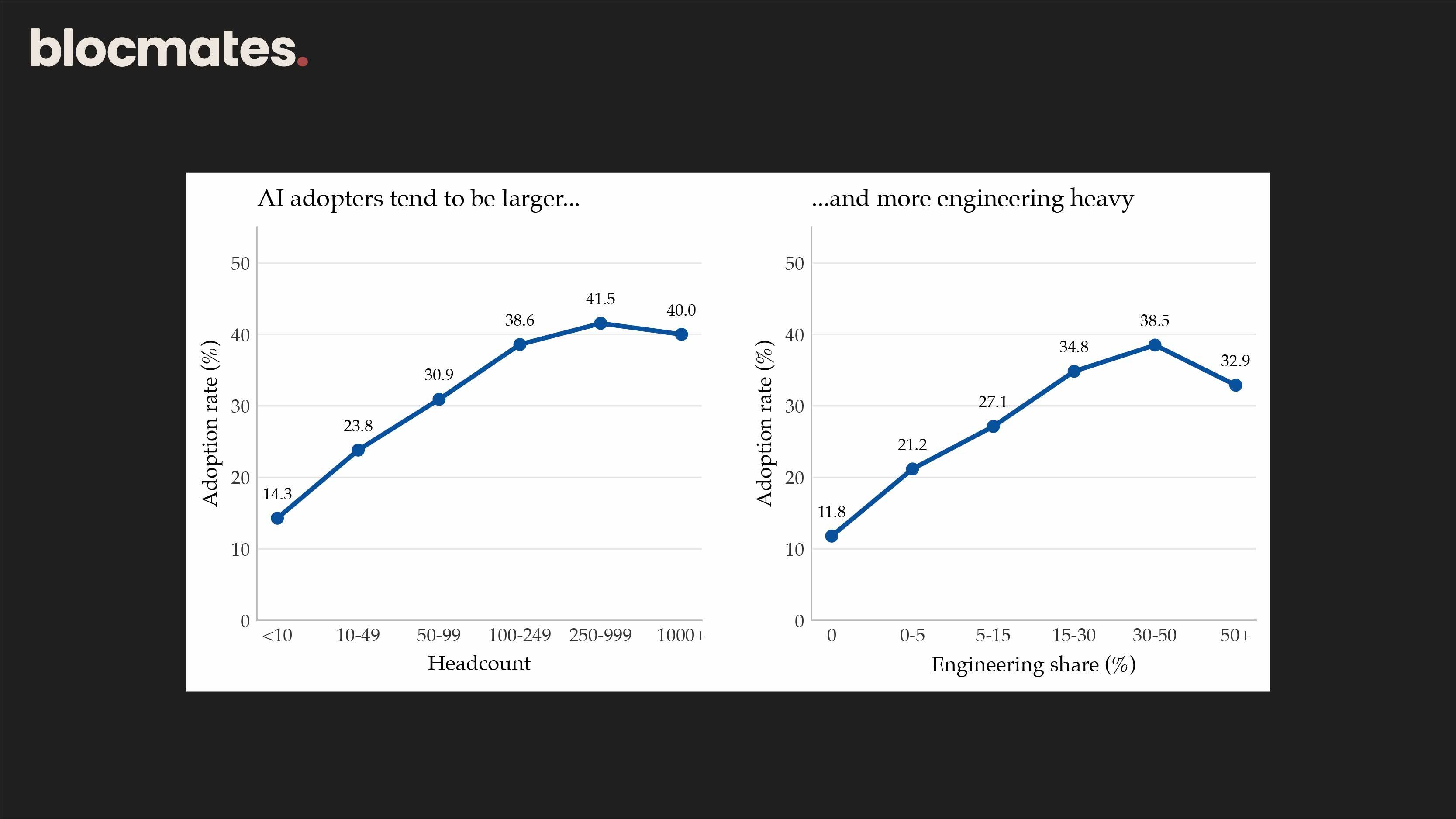
Moreso, as AI lowers the bar for building agents, automating operations, and serving niches that Big Tech often overlooks, the result is inevitably an asymmetric leverage - fewer people, higher output, and tighter feedback loops that equip these companies with enough to compete.
We are likely to see more efficient companies that could outmuscle larger businesses as a “10x engineer” becomes a Thanos worker, equipped with the right AI tools.
How AI affects startups? How can startup founders save money?
As people who’ve spent years trying to rebuild finance from the ground up, we’ve seen what happens when a new technology changes the rules.
Crypto created entirely new winners; AI is another one of those moments.
And startups are most likely to benefit the most with the right combination of AI, strategy, and tricks.
The challenges that limit ambition, such as money, hiring, and time constraints, matter a lot less when one founder can work alongside AI agents to build, test, iterate, and ship products that once needed an entire team.
This fundamentally changes how companies get built. An important inference from Ramp & Revelio’s study is that “small firms are less likely to adopt AI, but when they do, they adopt it more intensely.”
Bottom line: with AI, bootstrapping is way easier. You no longer need a huge team to launch a product.
The best AI-native companies bake AI into everything from day one, creating systems in which humans and models improve each other over time. As building software becomes easier, the real advantages become distribution, unique data, and good judgment.
The best builders will increasingly choose ownership over stability. Instead of joining large organizations, many will join small teams with high adoption, where AI lets them have a much bigger impact.
However, to be careful now is simply to understand how to navigate the AI-cost trap. It is indeed a thing to circumvent hiring by using AI, but the best models don’t come cheap - credits are expensive, and it can arguably become even more expensive to integrate AI into workflows than hiring humans.
How much does it actually cost to adopt AI?
AI adoption costs vary widely depending on where a company sits on the AI intensity curve.
Research shows that organizations with the deepest AI integration continue to increase their investment, with high-intensity adopters recording a 14% increase in AI spend per employee as they embed AI more deeply into their operations.
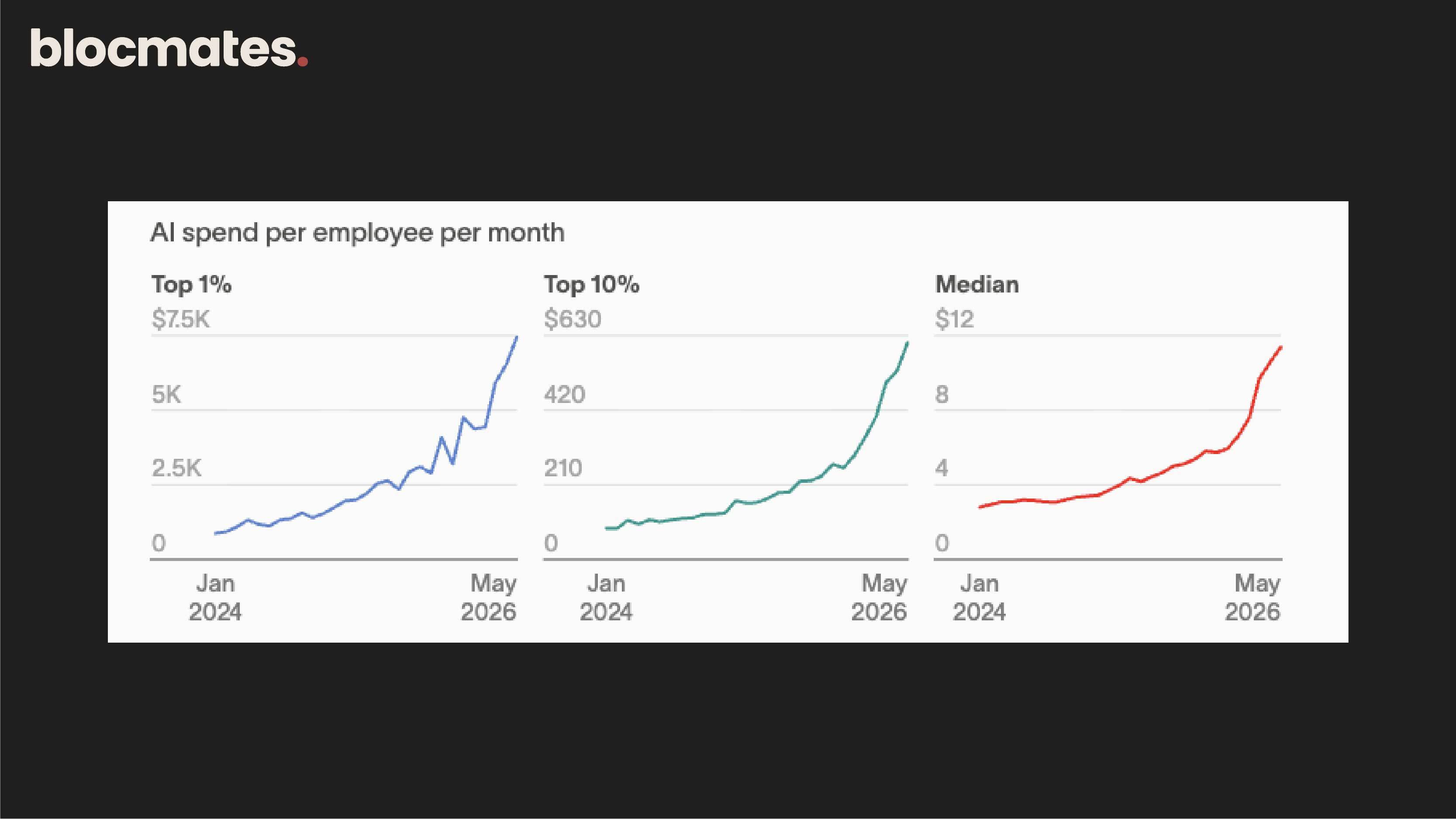
At the high end of the spectrum, these firms spend an average of $7,500 per employee per month on AI. That's nearly 12× more than companies in the top 10% of adopters and approximately 625× more than the median business.
These aren't simply higher software bills; they reflect organizations treating AI as core business infrastructure, investing in APIs, inference, AI agents, cloud compute, and custom workflows that function as digital labor.
That level of spending is also reshaping how companies think about AI infrastructure.
Rather than relying exclusively on expensive proprietary cloud models, many larger organizations are increasingly shifting suitable workloads to local AI deployments or high-performing open-source models, including those developed by Chinese AI labs.
An example is Microsoft canceling most of its direct Claude Code licenses just months after encouraging employees to embrace the tool.
And not just Microsoft, but also Uber's CTO, mentioned that the company had used up its 2026 AI coding tools budget in only four months.
In this regard, the question every bootstrapped founder should be asking in 2026: “How much longer can I extend my runway by delaying the next hire and being capital efficient with the alternative?”
This has sparked the subscription versus API debate, and we’re happy to get into it later with much more in-depth research.
However, researchers at SemiAnalysis purchased the highest-tier plans from OpenAI and Anthropic and pushed them to the limit with long-running coding workloads. What they found was that a $200-per-month subscription can deliver API-equivalent value that's many multiples higher than what you’re paying.
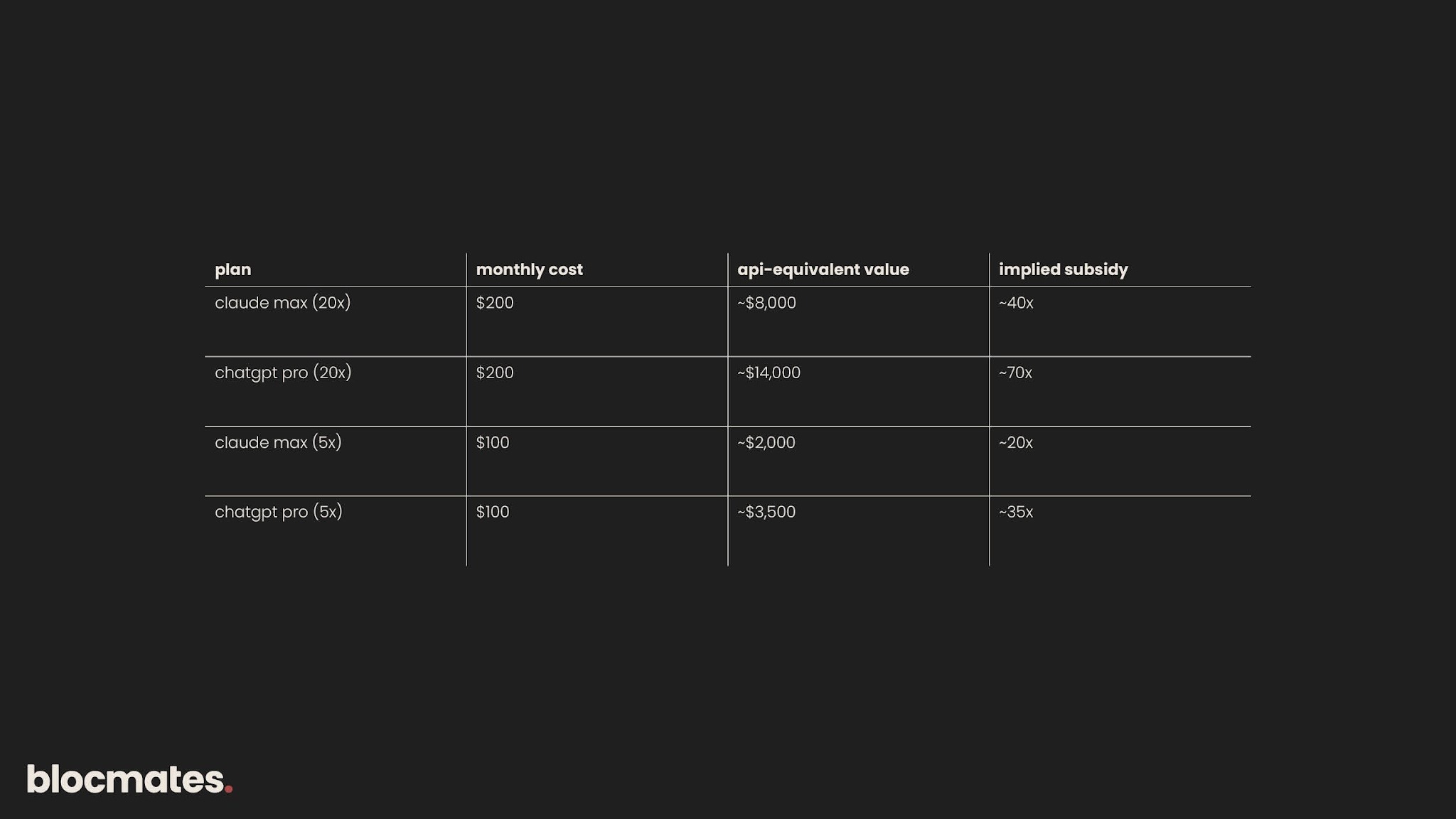
OpenAI and Anthropic are heavily subsidizing power users because they’re racing to win the platform battle.
In other words, there’s a limited-time opportunity because startups are building companies on someone else’s compute bill.
To take advantage of this, startup founders can:
- Get as much value as possible out of those subsidized subscriptions before reaching for APIs.
- Route aggressively, segmenting tasks because not every task needs the smartest or most expensive model. Many teams now send routine work to cheaper open models while reserving frontier models for the jobs that actually need them. Companies like Lindy have publicly said this approach saved them millions.
Eventually, though, successful startups outgrow subscriptions. Agentic workflows can consume hundreds, or even thousands, of times more tokens than a normal chat session, and then those API bills begin to hurt.
The solution to this is optimizing even further, shifting from avoiding spending to recovering it.
Products like Plasma One offer cashback on AI subscriptions and API usage, returning up to 10% on eligible spending (paid in the network’s native token). On a five-figure monthly AI bill, that’s another few weeks of runway reclaimed.
Seen together, there’s a new efficiency ladder emerging for AI-native startups:
- Maximize the value of subsidized subscriptions.
- Route workloads to the cheapest model that gets the job done.
- Recover part of your unavoidable AI spend.

Risks and competitive outcome of implementing AI
So far, we can see that the San Fran big bros, the mid-market businesses, and the venture-backed startups can all invest heavily in AI and arrive at completely different outcomes.
What this means is that the competitive advantage no longer comes from adopting AI alone, but mainly from understanding the role AI should play within the organization, the risks that strategy introduces, and how quickly you can adapt when those risks materialize.
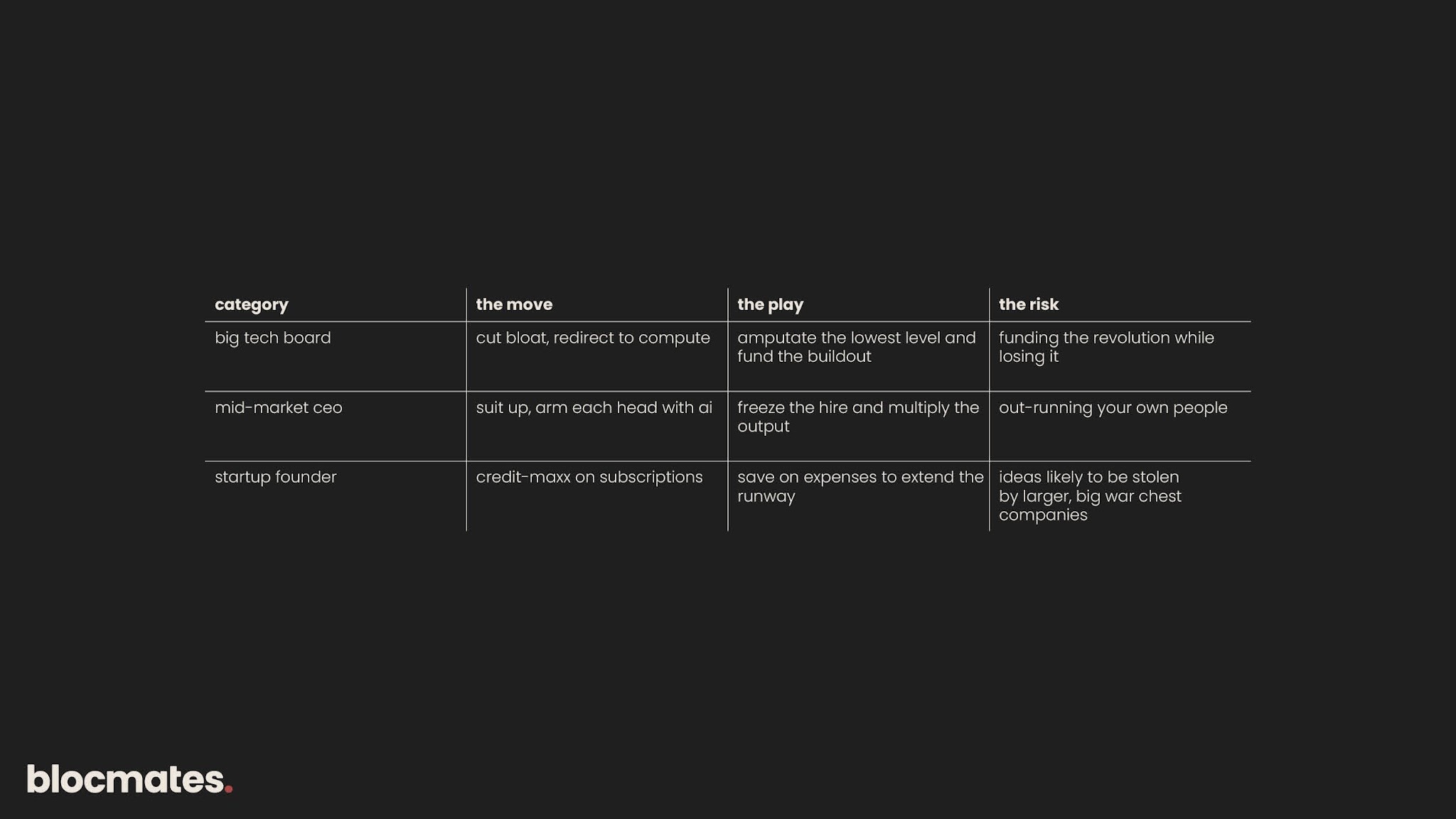
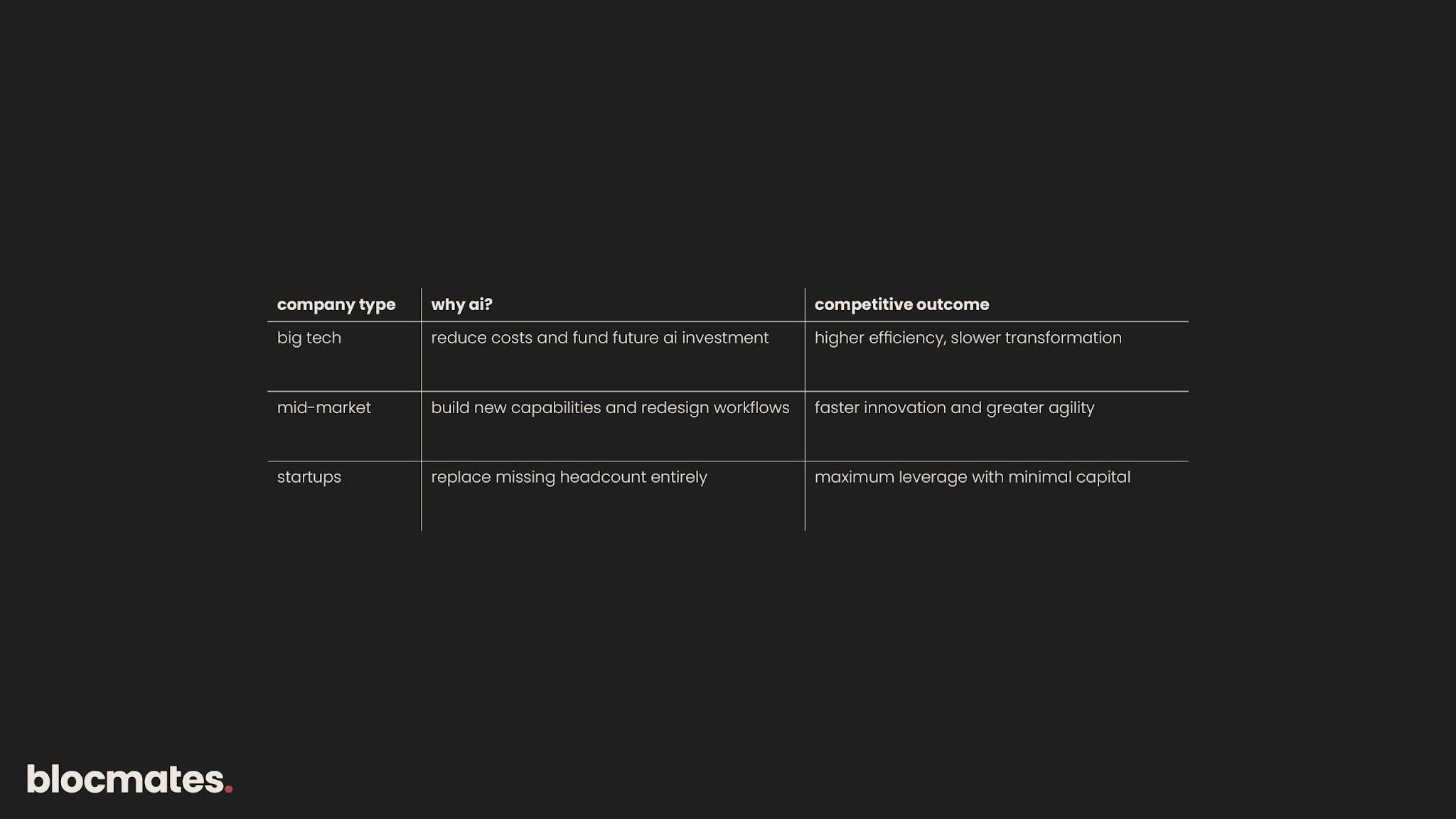
All of these point to the fact that AI is indeed reshaping the economics of entry and competition.
Concluding thoughts
The temptation is to file all of this under "the future of work" and feel prepared for something that will arrive later. However, that isn’t the purpose of writing this piece.
AI is compounding as you read this, and preparedness is basically getting acquainted with how fast things are changing and adapting in a way that produces the results you’re looking for as a person seeking job security or as a startup founder.
The data shown above is proof that we are still in the early phases of adoption.
For those out of jobs, especially juniors, there’s never been a more advantageous time in history to try new things without having to spread equity thin or break the bank by hiring, but if you’re looking to jump back into the work pool, like Iron Man, you just have to suit up with Jarvis.
AI is not going to replace everyone overnight. It’ll replace parts of jobs first: the repetitive parts, the coordination-heavy parts, the work that exists because humans have been the cheapest available option for moving information around.
That doesn’t mean the answer is just “learn AI” and call it a day. Instead, get a hang of the tools and keep experimenting to know what problems are worth solving, and where exactly AI can create leverage.
To effectively do this, individuals and businesses must intentionally build their toolkit, keeping what genuinely saves them time, dropping what doesn’t, and adopting best practices that keep the AI-spend figures reasonable.
For anyone already paying for frontier models, Al subscriptions, or API usage, that cost discipline is where products like Plasma One start to make sense, with cashback on costs you're already spending.

Thanks to the Plasma team for unlocking this article. All of our research and references are based on public information available in documents, etc., and are presented by blocmates for constructive discussion and analysis. To read more about our editorial policy and disclosures at blocmates, head here.







.webp)
.webp)

.webp)
.png)



.webp)


.webp)
.webp)
.webp)
.webp)










.webp)

.webp)

.webp)



.webp)
.webp)
.webp)

.webp)














.webp)
.webp)
.webp)
.webp)
.webp)
.webp)


.webp)
.webp)


.webp)


.webp)




.webp)


.webp)


.webp)



















.webp)






.webp)











.webp)

.webp)
.webp)

.webp)












.webp)

.webp)

.webp)





.webp)