Reading time: 6m 21s
It’s been nine months, and the collectibles market is still alive and kicking.
Out of the ten projects we mentioned in our previous analysis, seven of them are still active, while the other three seem to be withering away.
While most narratives in crypto tend to be more of a “here today, gone tomorrow” phenomenon, the collectibles projects seem to have really found some form of product-market fit.
Volumes are soaring, revenues are growing, and they’re even acquiring offchain card trading companies to integrate into their platform.
Honestly, this was inevitable. It’s the perfect blend of all the necessary elements for success.
- There’s the gambling element through the Gacha games.
- It’s the perfect use of NFTs to hold collectibles onchain
- NFTs also make them very easily tradeable onchain when compared to how much more difficult it is to use something like eBay.
- Listing/dealing is simplified
- Instant sellbacks make the market significantly more liquid and interesting for everyone involved
So here’s a little update on the projects that are still going strong.
Collector Crypt
Collector Crypt is one of the current market leaders, with its native token CARDS, pumping roughly 300% over the past month.
So what spurred this?
The platform averaged $17-$27 million in weekly spending over the past month, resulting in strong buybacks of $600k-$1 million per week (these are buybacks of cards at discount, not tokens).
At the time of writing, total Gacha spending on the platform is roughly $492 million, resulting in a total revenue (after fees and buybacks) of $41.2 million.
Total transaction volume on the platform has also consistently been soaring since the turn of the year.
Starting the year with roughly $15 million in total volume transacted across all platform activities, to now averaging well over $30 million per week. There’s even been a couple of weeks of $50 million+ volume in recent weeks.
Currently, Gacha still accounts for the bulk of activity, volume, and revenue on Collector Crypt, controlling 32% market share in the onchain Gacha market.
That said, the team is not resting on its laurels. They recently announced a major marketplace update featuring things like USDC purchases, credit card purchases, bulk listings, more efficient liquidity systems, and a simplified global shipping procedure.
Buffing out the marketplace will likely see Collector Crypt continue to grow from its position of strength, especially when you consider integrations like the one done with Loopscale, where cardholders can borrow USDC using their card collection as collateral.
With more integrations and more updates, a bright future awaits Collector Crypt.
Courtyard
Courtyard is another major player in this sector. It’s a platform where users can rip packs, have the cards insured by Brinks, vault them, and freely trade them on the marketplace.
Over the past few weeks, Courtyard has seen a tremendous surge in Gacha spending.
The platform has been averaging between $12-$16 million in weekly spending. Being somewhat of an OG in this sector, having started in 2023, Courtyard has shelled out a cumulative $592 million on Gacha.
Its total gross revenue at press time was roughly $142 million, and they’ve been averaging between $3-$4 million a week over the past few weeks.
Once you bring the marketplace into the equation, Courtyard as a platform has been averaging $20-$30 million in weekly volume in recent weeks. They have a seamless trading experience, and the marketplace's popularity is further enhanced by the platform's insurance measures.
If you go solely by secondary marketplace volume, Courtyard is absolutely dominating this sector when compared to competitors like Phygitals or Collectors Crypt.
The story with Courtyard is one of adapting to the trend and staying on top. It’s very easy for an older player to get usurped by the newer players in a sector, but Courtyard has firmly held its ground.
There are now talks of expanding into other markets, as well as improving existing marketplace features for better trading and smoother shipping. Definitely worth keeping tabs on.
Phygitals
Phygitals is another major player that has been reaping the benefits of the surge in trading card activity onchain.
The platform has a cumulative spend on Gacha of roughly $128 million, averaging between $7-$12 million in weekly volume over the past month or so.
When including marketplace activity, Phygitals has a cumulative volume transacted of $250 million.
Much like Collectors Crypt, Phygitals also receives most of its activity and revenue from Gacha, with roughly 40% market share in Gacha spending.
In terms of gross revenue, data suggests that Phygitals has been averaging $1-$2 million per week. The lower number is primarily due to the high buyback offers, with users often getting 100% buybacks on certain packs/cards.
In terms of what’s new, Phygitals is looking to expand its offerings with more card types beyond the popular ones, things like sports, music, other shows, and so on.
They also recently opened up a storefront in Fanatics Collect, marking a huge moment for the onchain collectibles sector.
Phygitals has also introduced something called pack parties. You and a group of friends can get together and open one pack. From this one pack, the rewards are distributed amongst the group at random, creating a new, fun social element to collectibles.
With one of the largest card vaults in the sector, Phygitals' growth story has likely just begun.
Ripdotfun

Ripdotfun currently focuses on Pokémon and One Piece cards and opts for a more fun, crypto-native branding style.
Users on the platform can rip open packs, which will include a video of the pack being opened. The cards are all backed 1:1 and can be shipped to the user at any time, and the NFT version of the cards is also freely tradeable on the marketplace.
Data on Ripdotfun is a little hard to find, with many sources often conflicting with each other.
However, one of the most important developments with the platform is a potential partnership between Phygitals and Ripdotfun being teased.
Both accounts have been asking their users to follow and turn on notifications for a new platform called “RipNReveal”.
What is it? I have no idea. Am I interested? Fu*k yeah.
Beezie
Beezie takes a slightly more gamified approach to the collectibles scene. Rather than regular packs, their specialty is to allow users to play a claw game and pick which box they open. It’s basically the same thing as Gacha, but with a slight twist.
Based on this, they receive their cards, which they can store, ship, or trade in the marketplace.
Beezie has done well over $100 million in volume on Base with a $142 million annualized run rate. In Q1 2026, the platform generated $70 million in volume, demonstrating strong user retention and growth.
One of the biggest recent updates on Beezie has been its expansion to Solana. Leveraging Solana’s strong, relatively degenerate user base will only see Beezie grow and eventually become one of the big dogs in the onchain collectibles sector.
Dripshop
Dripshop offers virtually any collectible on its platform, but adds a social twist with an in-app livestream feature. Users can open instant packs and freely trade any collectible on the marketplace.
When it comes to data, it’s also hard to find reliable data on Dripshop, but the platform has been around for a while and has consistently had a very active user base that seemingly continues to grow.
An interesting aspect about DripShop is that they offer more niche items, increasing their user base beyond the typical Pokémon user base. Another interesting element is their collaborations.
Most recently, Dripshop collaborated with MacFarlane Toys for a giveaway. More collaborations are expected in the future, making Dripshop another exciting venue in the collectibles space.
Zard Capital
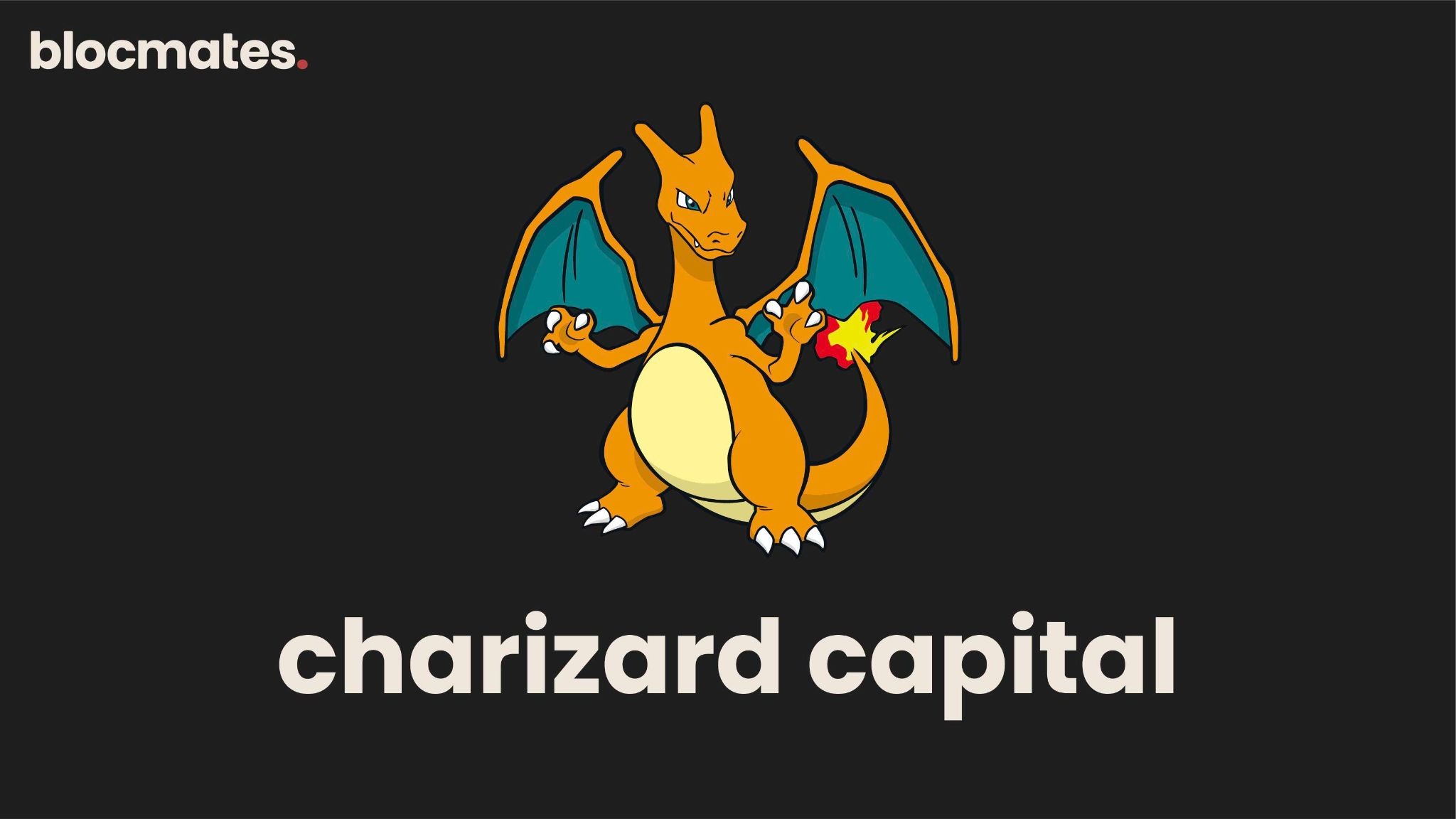
Lastly, we have Zard Capital.
Zard Capital started by leveraging the ZARD token to generate fees, then using those fees to buy a curated vault of highly graded cards, with a special focus on Charizards.
Now, Zard Capital has pivoted to utilizing its stacked vault to create curated packs. They have a vast variety of super cool packs, all sold through Phygitals. Most recently, someone pulled a $4.9k card from a $25 pack. That’s pretty insane.
There are talks about figuring out how to include the ZARD token in this curation through either rewards or points, but nothing concrete has been seen yet, given how the token continues to struggle.
But an interesting project to keep an eye on nonetheless.
Concluding thoughts
The onchain collectibles sector, which now averages well over $100 million in volume per week, has completely transformed the collectibles/trading cards scene.
It has made the industry more efficient and absolutely skyrocketed its growth.
Collectibles, as a concept, are likely not going anywhere. Sure, some games in the sector may come and go, but these onchain platforms can pivot to the next popular collectible very easily now that the infrastructure is set up.
As ‘toppish’ as you may think things are looking for collectibles at the moment, over the long run, I think this is one of the first ‘industries,’ if you will, that’s seamlessly pivoting from fully offchain to fully onchain and is better for it.







.webp)

.webp)

.webp)

.png)


.webp)



.webp)
.webp)
.webp)
.webp)












.webp)
.webp)


.webp)



.webp)
.webp)



.webp)

.webp)















.webp)
.webp)
.webp)

.webp)
.webp)
.webp)


.webp)
.webp)


.webp)


.webp)




.webp)


.webp)



.webp)


















.webp)






.webp)












.webp)

.webp)
.webp)

.webp)












.webp)

.webp)

.webp)





.webp)