Reading time: 8m 27s
Remember OpenClaw? Yes, the agent harness that somehow sparked a Mac Mini shopping frenzy.
Although the automations and cron jobs are long forgotten for most, the pain of buying an overpriced computer undoubtedly lingers.
What does not linger, however, is the AI hivemind and its appetite for new and shiny regurgitations of the same flavors.
What was the most talked-about topic in all of tech at the beginning of the year has all but disappeared from public discourse.
While the VCs, YouTubers, and tech bros have turned their gaze to other pastures, the narrative violation is that this harness is still melting icebergs and proving to be a viable tool for many.
How do I know that? All thanks to OpenRouter.
As the leading LLM aggregator offering access to hundreds of AI models, it monitors token usage for integrated apps that have opted in to participate in public tracking.
And it would be silly not to, since you get more eyeballs on your project if you manage to get ranked on OpenRouter’s App & Agent Rankings.
Based on that impeccable deduction, it’s safe to say that OpenRouter serves as a barometer for industry trends, notably token spend for specific models and, conveniently, for specific apps that have integrated OpenRouter.
Heading to KBW, TOKEN2049, or a well-deserved holiday?
Flights, hotels, taxis, dinners, coffees, the spending adds up quickly.
Instead of off-ramping crypto to your bank before the trip, deposit directly into Plasma One from supported chains and spend from there.
And if you’re going to spend thousands traveling anyway, you might as well earn while doing it.
Load up Plasma One before you fly and make it your card for the week.

What is OpenRouter?
It should be clear by now that the future is multi-model and multi-provider. OpenRouter is built for this future, giving developers the flexibility to use any model through a single API endpoint.
Actually, I digress, because this future is already here, as you shall see in the following sections.
OpenRouter is the logical choice for developers or tinkerers who want not only to test different models or assign specific models to different use cases without wiring up additional APIs, but also to consolidate billing.
For those less inclined to switch between models on their own, OpenRouter’s AutoRouter can do the work for you by dynamically selecting the best-fit model to answer a given prompt.
It works by classifying each request and routing it to the most popular choice for that task, based on aggregate spend across the OpenRouter network, filtered by your selected cost-quality trade-off.
Another particularly useful feature is Workspaces, which lets users organize projects, teams, and agents into separate environments, each with its own API keys, routing defaults, guardrails, and observability.
These and many other features have solidified its position as the most popular API aggregator and LLM gateway, with many big names in the industry using it to power their services.
In the following paragraphs, we’ll first look at the most-used apps across several categories and then look at interesting up-and-comers to see if we can find novelty.
Top apps on OpenRouter
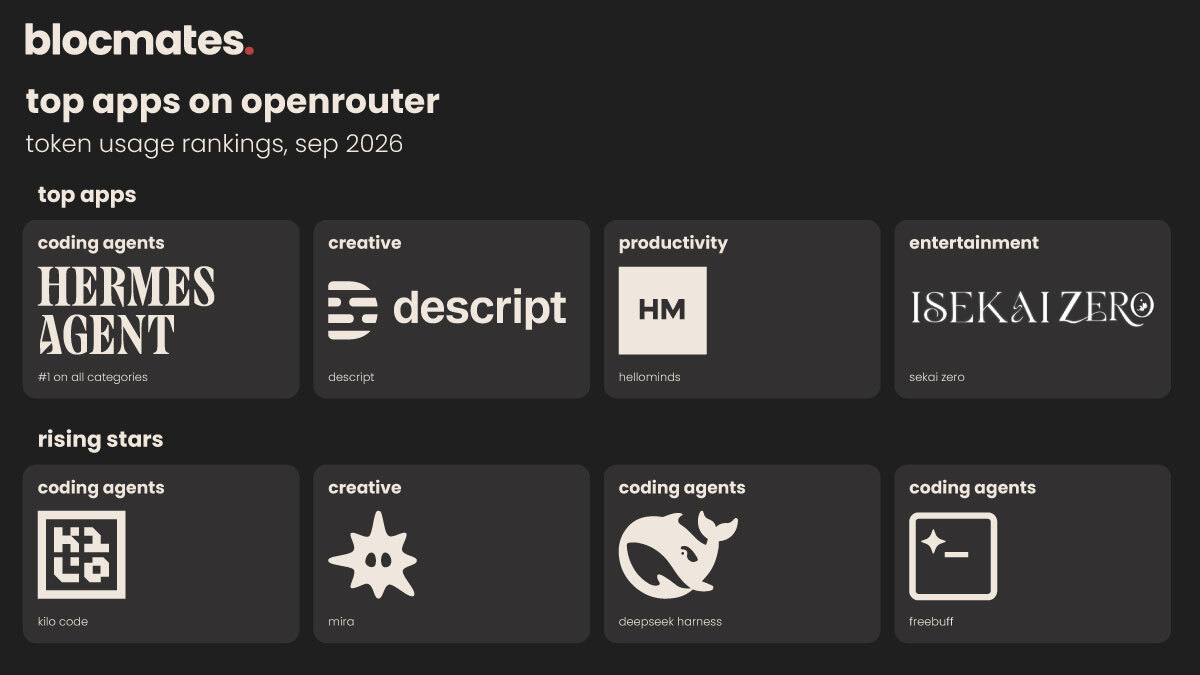
Hermes (Coding Agents)
As avid users of Hermes here at blocmates, we’ve done our fair share of coverage on it.
Since our initial explanation of Hermes in April and the recent insights on how Hermes can help avoid Big AI vendor lock-in, we have gradually incorporated this tool into our workflows and are steadily shifting our operations to this open-source platform.
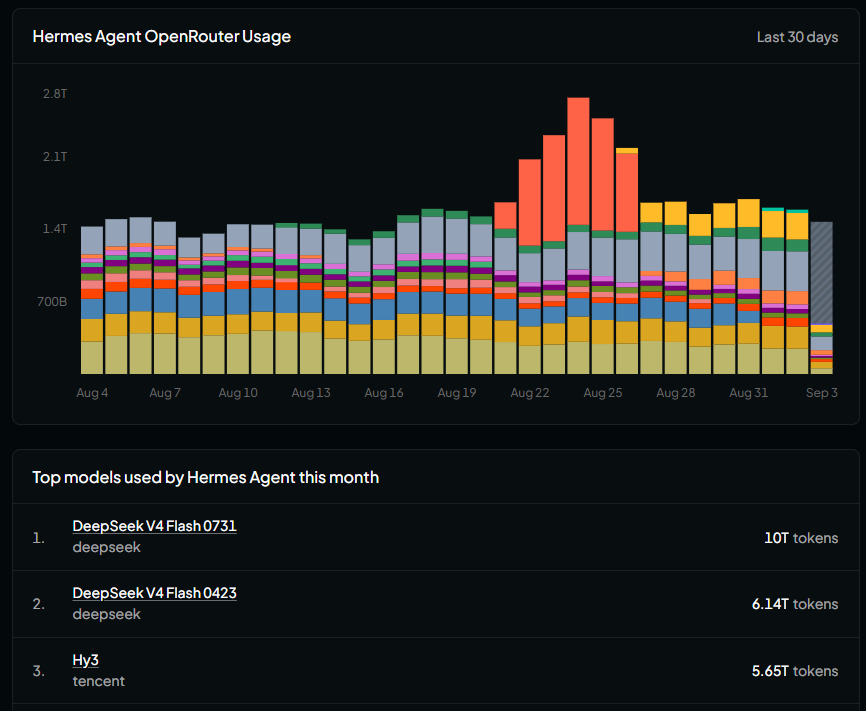
By the looks of it, others are doing the same. By "others," I mean everyone, as Hermes ranks as the top app across all categories by cumulative token usage on OpenRouter, with nearly 50 trillion tokens.
Notably, most of these tokens have accumulated over the past month, with the Top 10 models accounting for roughly 40 trillion.
When you factor in the other 443 models used over the last month, it is highly likely that 85% to 90% of the app's lifetime tokens were accrued in the last 30 days.
Descript (Creative)
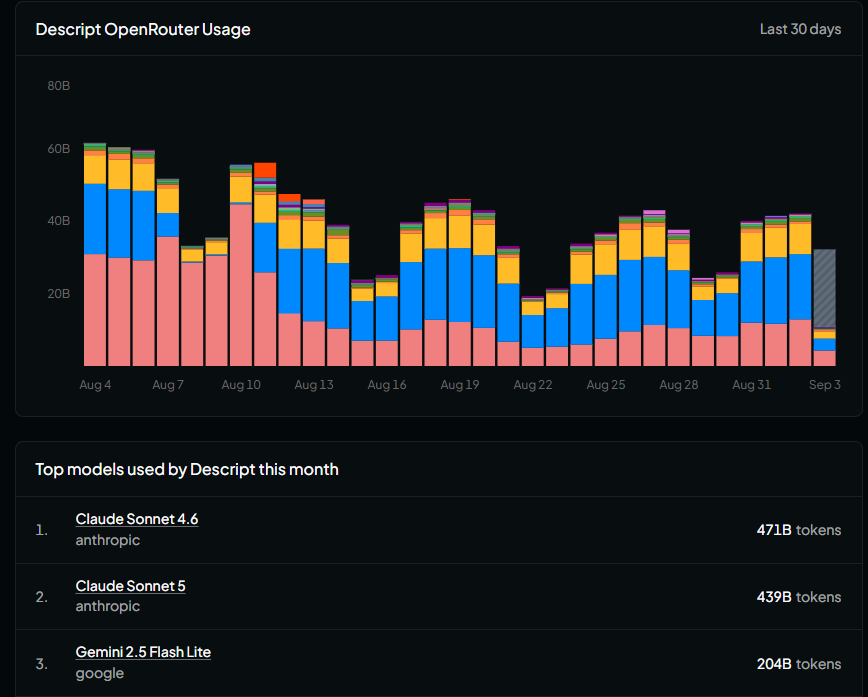
Descript offers AI-powered video editing tools and uses OpenRouter to route its internal inference requests across multiple LLMs. It consistently ranks as the top app in the Creative category.
What’s interesting is that even though, on paper, there are better models for video editing, such as seedance-2.5, minimax-h3, or even gemini-omni-flash, Descript found that Claude models do a better job converting very vague, high-level taste descriptions into concrete edits that are holistically aligned with the user's intent.
This translates to two-thirds of models manually selected in the model picker coming from Claude, namely Sonnet 4.6 and 5.
For the more technically inclined, Descript also hosts its own MCP server, which lets users interact with the full suite of Descript tooling through their preferred agentic interface.
HelloMinds (Productivity)
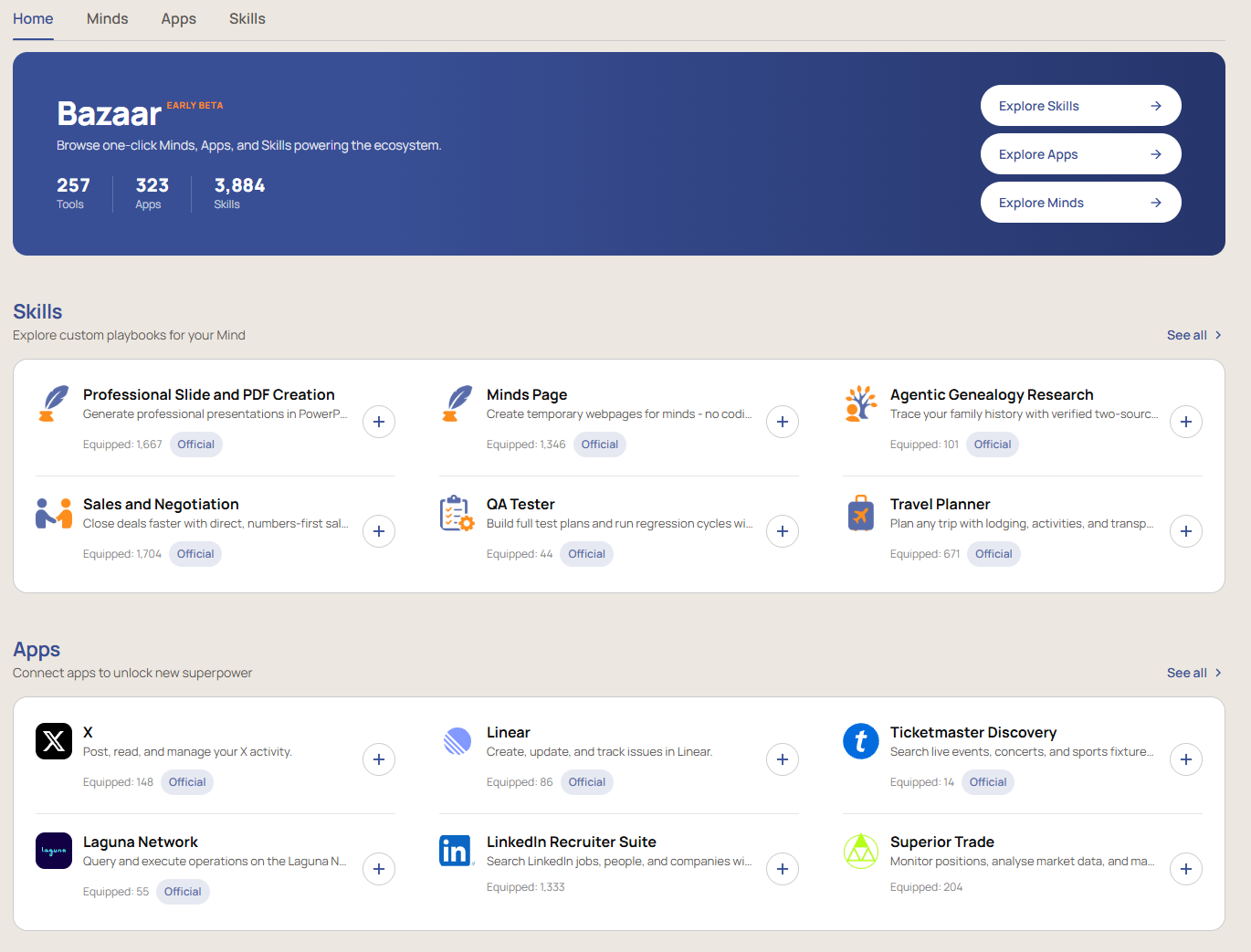
Developed as a collaborative joint venture between Animoca Brands and the decentralized network builder Ethoswarm, HelloMinds enables anyone to deploy and direct sovereign, always-on AI agents, called Minds.
Effectively, it hides the complexities of traditional agent setups, such as managing local or external servers or manually creating skills and workflows, and presents them in a more user-friendly format.
For example, users can browse the bazaar to find curated skills or connect their companion to a specific app to perform actions on a user’s behalf.
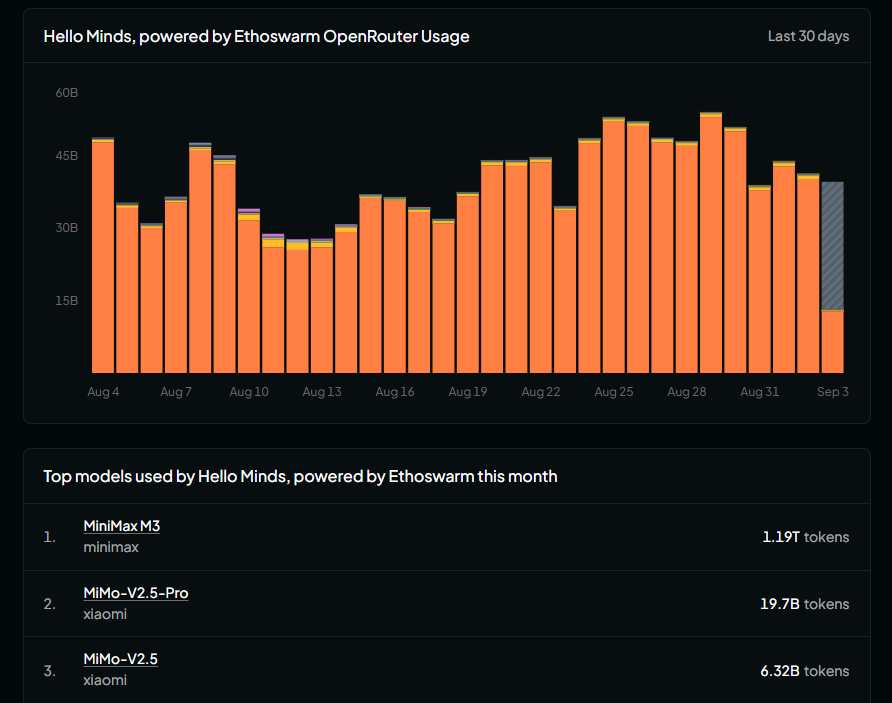
Recently, the company moved the platform’s primary cognition model to MiniMax M3, which reduced inference costs by an estimated 90–95% in an initial internal assessment without losing in quality.
ISEKAI ZERO (Entertainment)
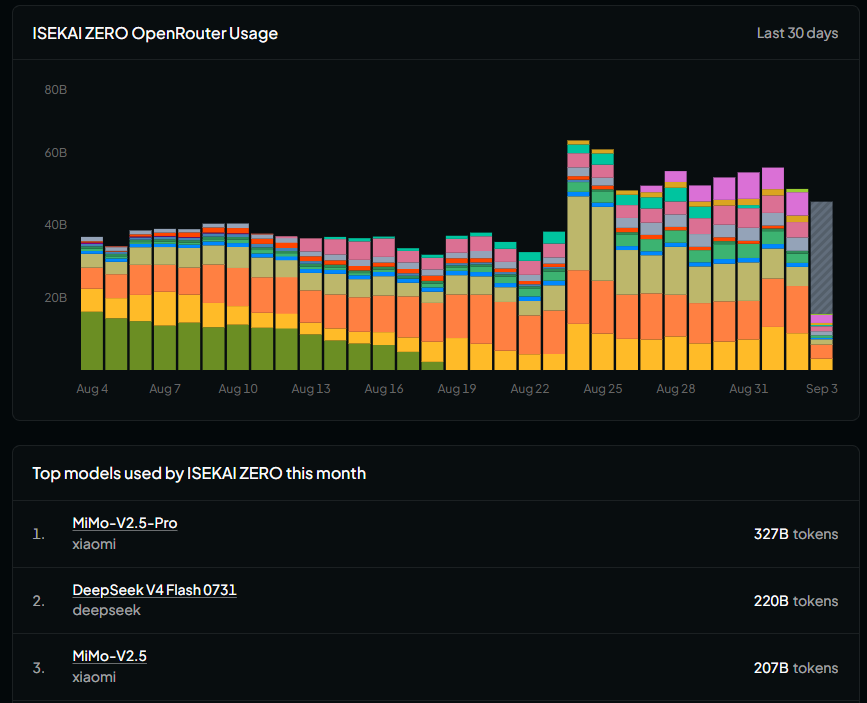
Moving to places on the World Wide Web I never thought I’d go, we have ISEKAI ZERO, an AI anime role-playing and visual novel platform that consistently ranks at the top positions within the Entertainment category.
For those asking, I did visit the site, but only for research purposes, of course. It went about as well as you’d expect. Admittedly, I might’ve lingered longer than expected.
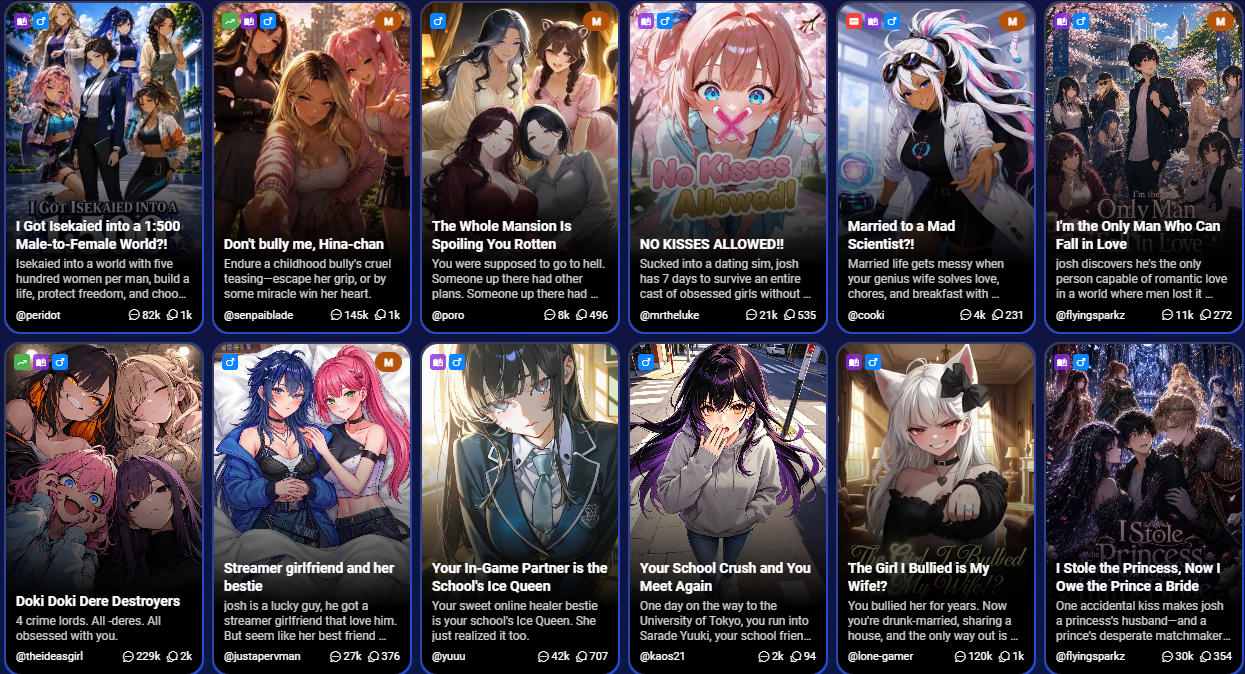
If you’re still reading, congratulations, you passed the thirst trap. Back to the topic at hand.
The platform supports a variety of models via OpenRouter, which determine how immersive and rich any given story can be. The cheap models get the job done, but users can also purchase credits (LLM tokens) to enjoy everything that 21st-century technology has to offer.
The top two preferred models for role-playing are MiMo-V2.5-Pro and DeepSeek V4 Pro, which I assume give enough juice to the stories without breaking the bank. The top review for MiMo-V2.5-Pro explains this concisely.
Rising stars
Kilo Code (IDE Extensions)
Kilo Code is an open-source AI coding agent that works across IDEs like VS Code and JetBrains, as well as the CLI.
Unlike popular options such as Cursor or Claude Code, which require subscriptions and limit you to specific AI models, Kilo Code offers a flexible alternative that gives you complete control over your data, models, and costs.
Developers on Kilo Code primarily favor models that are not the typical household names you’d expect. The most commonly used models are Poolside’s Laguna S 2.1, Tencent’s Hy3, and NVIDIA’s Nemotron 3 Ultra.
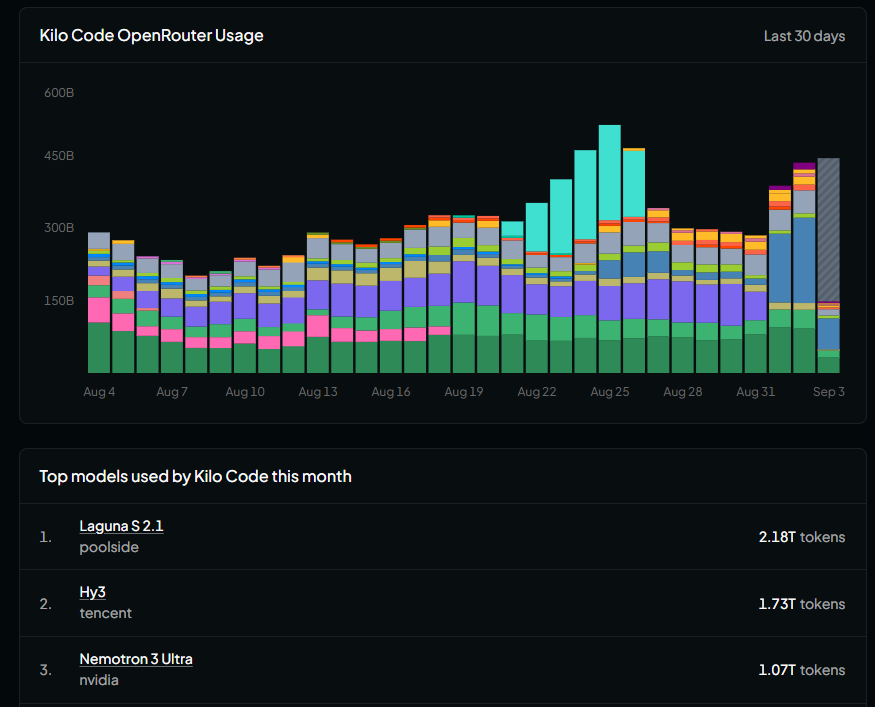
For those wondering why that’s the case, it’s because they are the most powerful, completely free, open-weight coding models available right now.
Mira (Creative)
Although powerful and versatile, it’s entirely fair to say that working with agent harnesses is not for everyone.
Certainly not for a working professional with a million other things to worry about at work, not to mention personal lives, hobbies, etc.
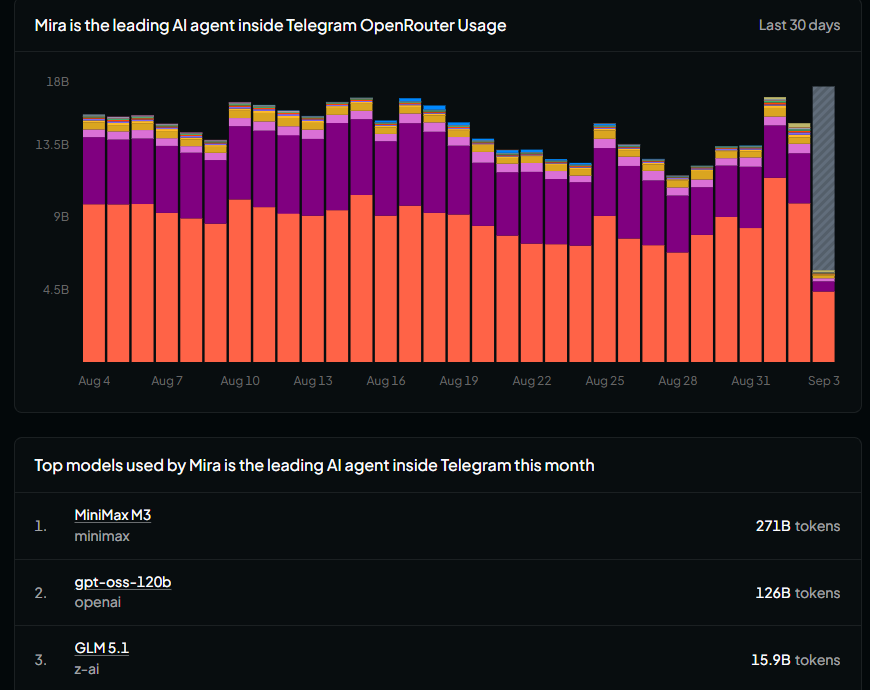
Mira is the antidote to that, functioning as a personal assistant you interact with via Telegram. No coding, CLI, cron expressions, or other nonsense required. Just use natural language to create skills, schedule tasks, and share that knowledge with your wider team if necessary.
Mira is model-agnostic and routes requests through OpenRouter, with MiniMax M3 firmly leading the pack.
DeepSeek agent harness (Coding Agents)
By now, everyone’s heard of DeepSeek and their highly competitive models.
Not everyone, myself included, knows that DeepSeek launched its own agent harness on August 13, 2026.
Upon digging a bit deeper, it turns out the company is also developing a novel framework called Cordis, which will serve as the backbone of the harness.
At a high level, Cordis tackles the ailments of modern software, which increasingly requires dynamic composition yet whose formal foundations remain underdeveloped.
The promise is that with Cordis, an agent’s capabilities can be hot-swapped, injected, or removed in a millisecond, without the loops breaking apart. How that’ll work in practice, I’ve no clue, but it sure sounds promising.
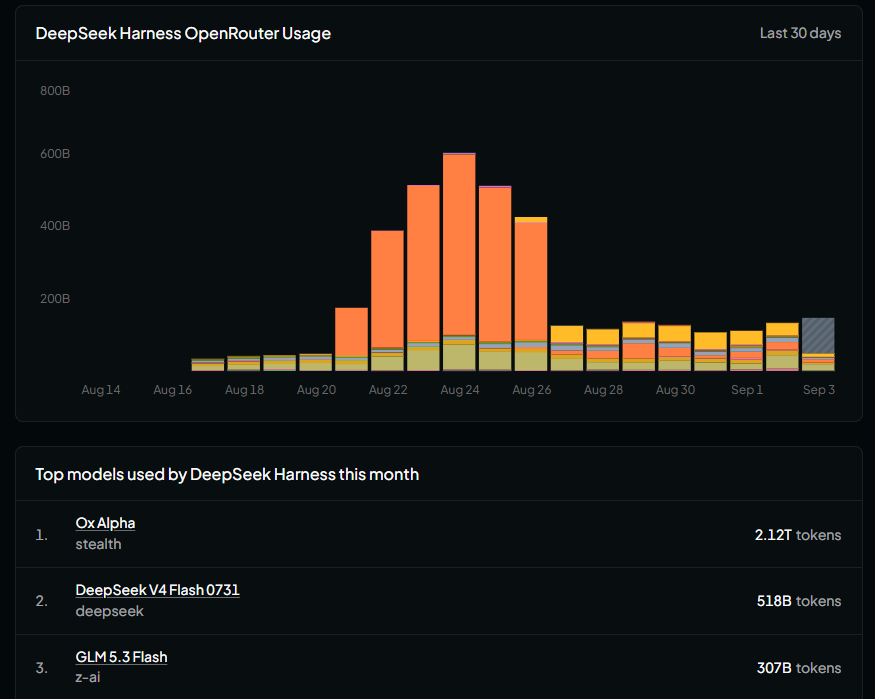
Although the harness is still in developer preview, we are already observing activity on OpenRouter. Interestingly, the most popular model isn't DeepSeek but GLM (-5.3 Flash) by zAI.
Freebuff (Coding Agents)
Even during the era of subsidized LLM use, many developers and companies still face hefty AI bills at the end of each month.
But what if you don’t want to spend on AI at all? It sounds like a pipe dream, but turns out there is a perfectly legitimate way to do it.
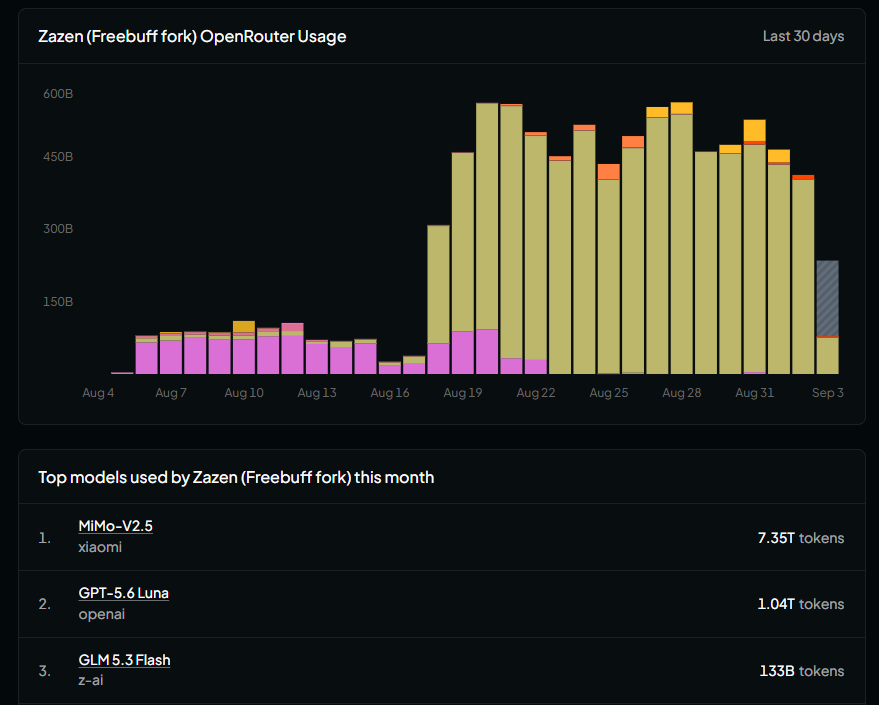
By the power of ad placements, Freebuff is able to offer these models without a subscription, credits, or an API key required:
- GPT-5.6 Luna
- DeepSeek V4 Flash 07/31
- MiMo 2.5
- GLM 5.3 Flash
The catch? Some models, like DeepSeek, may use your traces or files for training. Another caveat is that Full Mode is only available in certain jurisdictions, while the rest of the world, including VPN users, is limited to MiMo 2.5 with 3 one-hour sessions per day.
The particular deployment sitting in OpenRouter’s rankings is a fork of the protocol in question, but the underlying idea stays the same - you get free vibe coding sessions thanks to ad placements.
Conclusion
There's a version of this article that ends with me telling you to go and try every app on the list. This isn't that version, mostly because I don't think it would do you any good.
Everything above is a snapshot of what a very particular slice of the internet is spending tokens on, and it skews heavily towards people whose job is to be early.
Those YouTubers, influencers, and developers by trade have more time, skills, and knowledge to test everything out, hot-swap plugins at a whim, and, in general, move much more quickly.
That doesn’t mean everyone else can. The whole point of AI was to make our lives easier, and I won’t be the first to say that the abundance of choice is simply overwhelming and a departure from the intended purpose of this technology.
If a particular harness works for you, stick with it. Don’t like it? Find another on OpenRouter. Do whatever you want, just don't get caught in the rip current trying to keep up with the Joneses of the tech world.
The OpenClaw situation we mentioned at the beginning is a perfect example of how the AI bubble can make you think something is dead or has been replaced by something better. Although it's not at the very top of its category, it's certainly nowhere near “dead.”
The reality is often very different, and OpenRouter can shed light on what’s actually being used and what isn’t.
Yes, it’s not the perfect gauge, as not every vendor will opt in to being tracked or use the exact gateway in the first place, but given how fluid the LLM landscape is, I can’t see why a product wouldn’t use it.
So if you want to know what people are actually using, not what's being pushed through paid product placements, stop doomscrolling on X and start knowledgescrolling on OpenRouter.
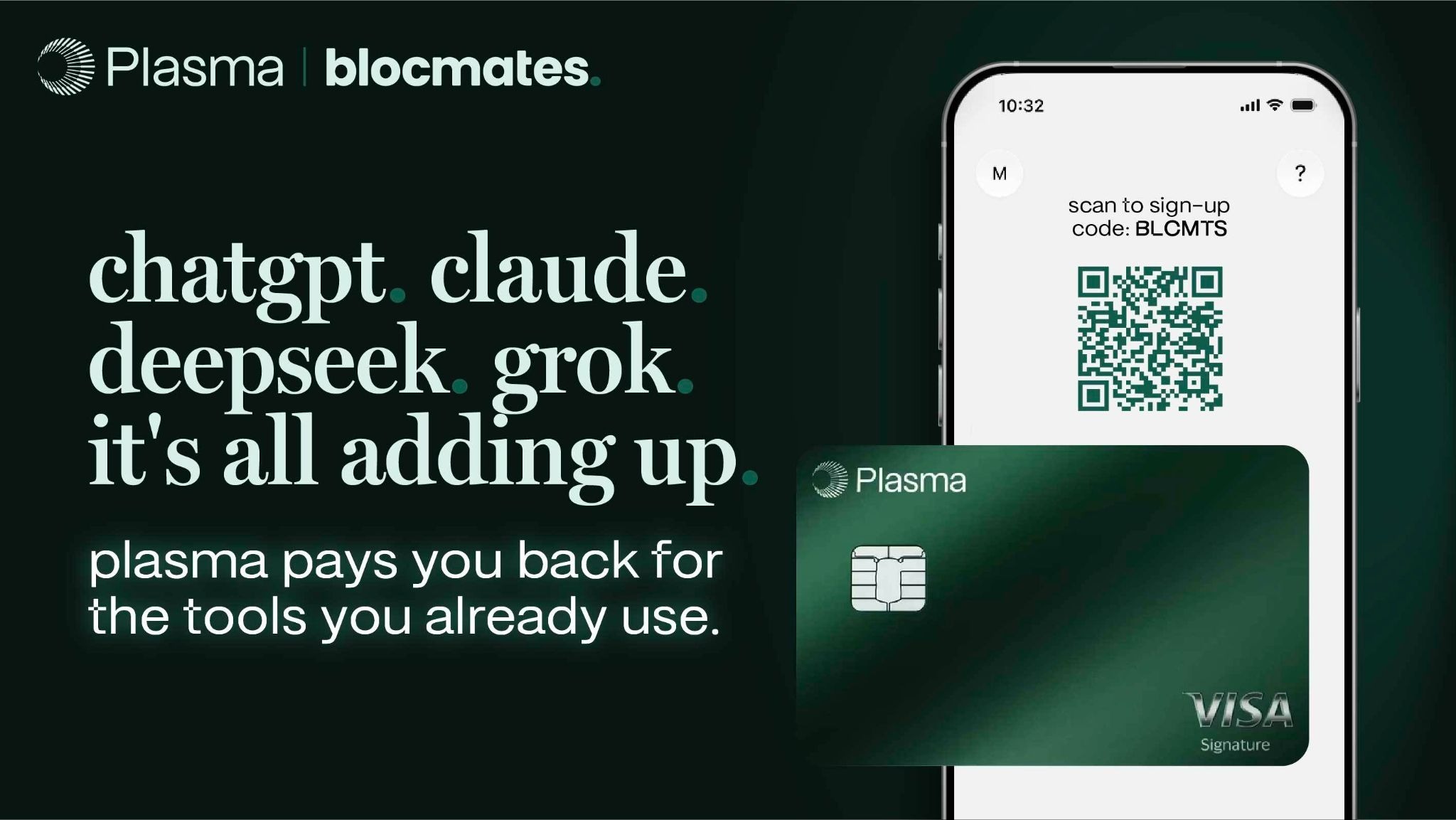
Let's be honest, AI subscriptions add up fast. One month it's ChatGPT, then Claude, then another tool everyone on TikTok swears you need.
Before you know it, you're paying for half a dozen AI apps just to keep up. We're in the same boat, which is why we've been using Plasma One.
It gives us cash back on our AI subscriptions without having to think about canceling the ones we actually use.
If you want in, sign up using the link or scan the QR code below and start getting some of that money back.
Paying for ChatGPT or Claude won't suddenly make your life cheaper. Your monthly subscriptions will still hit your bank account, but Plasma One will help route some of that money back to your pocket.






.webp)
.webp)

.webp)
.png)


.webp)


.webp)
.webp)
.webp)
.webp)









.webp)

.webp)

.webp)


.webp)
.webp)
.webp)
.webp)











.webp)
.webp)
.webp)
.webp)
.webp)


.webp)
.webp)


.webp)


.webp)




.webp)


.webp)


.webp)



















.webp)






.webp)










.webp)

.webp)
.webp)

.webp)









.webp)

.webp)

.webp)





.webp)