Reading time: 10m 17s
Not to take away from the short burst of memecoin mania that has greeted us over the past few weeks, but if you take a peek out the window, you’ll notice that it is beginning to look like party time for liquid and structured investors.
You will notice that:
- DeFi TVL climbed 3.7% in the past month to $91.9 billion, with most of that gain coming from fresh money.
- Onchain fees are up 5.2% over the last 30 days, sitting pretty at $2.41 billion.
- There are now $311 billion worth stablecoins onchain.
- Tokenized real-world asset protocols are up 1.7% to $4.79 billion.
And finally, you’ll also notice a growing appetite for thesis-driven research.
For the first time this year, it feels like our backs are no longer against the wall. The gears are turning again, and there’s finally reason to take another swing.
We might have succeeded in hammering the “everything is coming onchain” narrative so much that the numbers are beginning to speak just as loudly. The data has been encouraging and is starting to convince unbelievers.
This month’s episode of our state of series takes a closer look at an onchain industry finding its stride, covering:
- The movers and the shakers of the tokenized stocks industry
- Is the network chain business worth it?
- Micro-scoping Citrini’s list
- What is missing in your portfolio?
Let’s get into the details.
Tokenize everything
The first place to look to witness this ray of sunshine falling on the fundamentals maxis is in the tokenization industry.
In the last 30 days, holders of onchain stocks increased by 21.54%, hitting 4.38 million holders onchain.
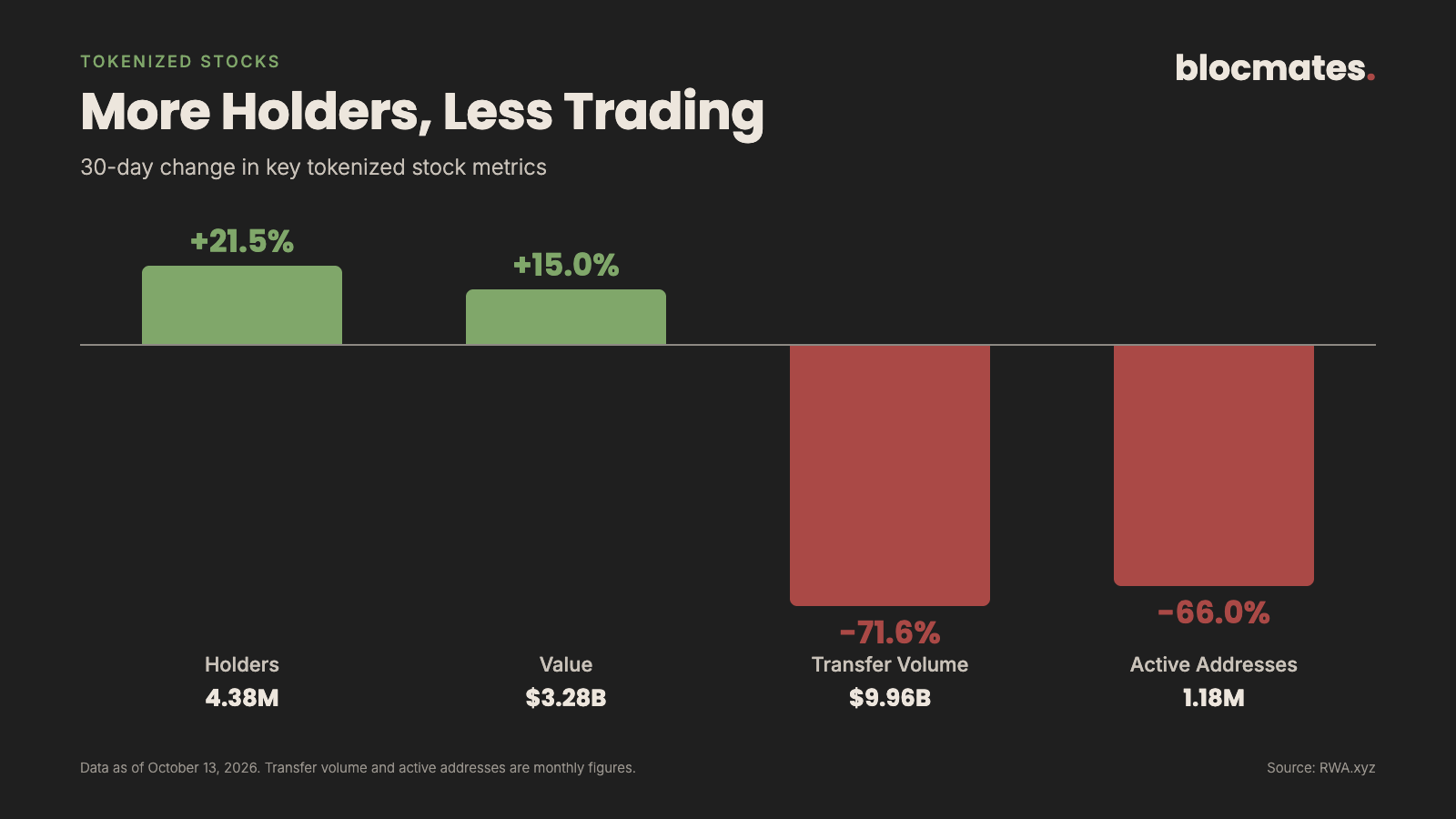
In terms of value, there was also a 15% increase over the same period, bringing the value of onchain stocks to $3.28 billion across nearly 7,800 tokens.
In the broader landscape of tokenized assets, over $39 billion in real-world assets (excluding stablecoins) currently sits onchain across a plethora of protocols.
These assets are beginning to find their way into DeFi venues, with over $283 million deployed in the last 30 days, bringing the total DeFi tokenized AUM to just over $4 billion.
Morpho, AAVE, and Kamino lead in DeFi venue capturing this flow, together controlling 37.77% of the entire pie.
On the issuer side, a race to own the category, arguably hotter than Formula 1, is beginning to entertain.
Binance launched its bStocks product in June, but has somehow leapfrogged to become the largest issuer, owning 28.4% of all tokenized stocks onchain as of October 13, 2026.
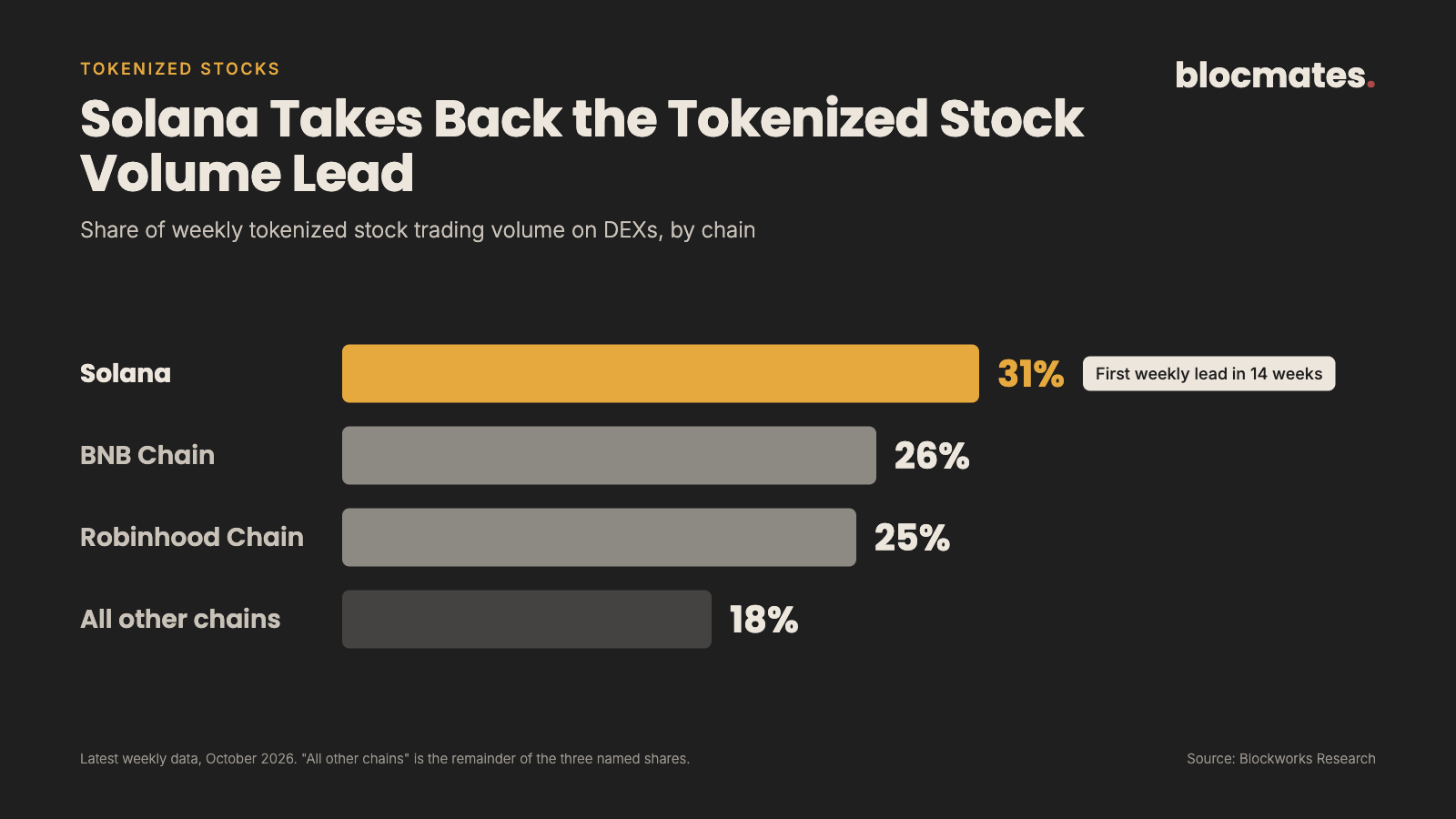
On weekly volume, Solana is back in the lead for the first time in 14 weeks, with 31% of all tokenized stock trading volume across chains, ahead of BNB Chain (26%) and Robinhood Chain (25%).
Meanwhile, Backpack, which positions its product as real security entitlements within the same framework as traditional US brokers, caught retail's attention.
Over the last few weeks, the Backpack token surged by over 200%, hitting an all-time high of $1.65 before pulling back to the low- to mid-$1 range.
In short, the sharp BP re-rating was driven by a combination of its differentiated (closer-to-real) issuer model, actual volume share, and the recent SEC exemption, which allows tokenized stock venues 5 years to run permissioned pools without necessarily registering as exchanges.
Backpack’s story points to an increase in appetite for exposure to the tokenization-of-everything trade, thanks to multiple state-backed alarm bells ringing.
So much so that as the “real issuer” narrative around Backpack strengthened and BP moved, market attention spilled to the infrastructure enabling the rails.
Wormhole and Sunrise became a secondary expression for people seeking broader exposure to the tokenized-equities pathway and Solana distribution layer, especially for those who saw limited direct ways to play the category or wanted multi-asset listing exposure beyond a single issuer’s token.
Tokenized stocks and assets remain the biggest driver of the new onchain renaissance and the reason for renewed long-term interest in the industry.
Outside of the West, especially in Asia, there have been positive developments. South Korea, for example, is setting the stage for implementing amendments that will enable distributed-ledger-registered securities to take effect in Q1 next year.
Alongside this, both Singapore and Hong Kong have also seen favorable policy shifts, allowing for more economic freedom for onchain stocks.
Africa is not left out. The continent’s largest IPO, Dangote Petroleum Refinery (DPRI), opened for subscription within the last month and was accessible onchain on Solana via NectarFi, a Nigeria-based exchange, and on Base, both facilitated by a cNGN (Naira-backed stablecoin) available through GetEquity.
On Base, the DPRI sale garnered over cNGN4 million from 77 unique buyers, purchasing a total of 8,396 units of DPRI. The figures might be mustard seeds, but it is recorded as the first African IPO available onchain.
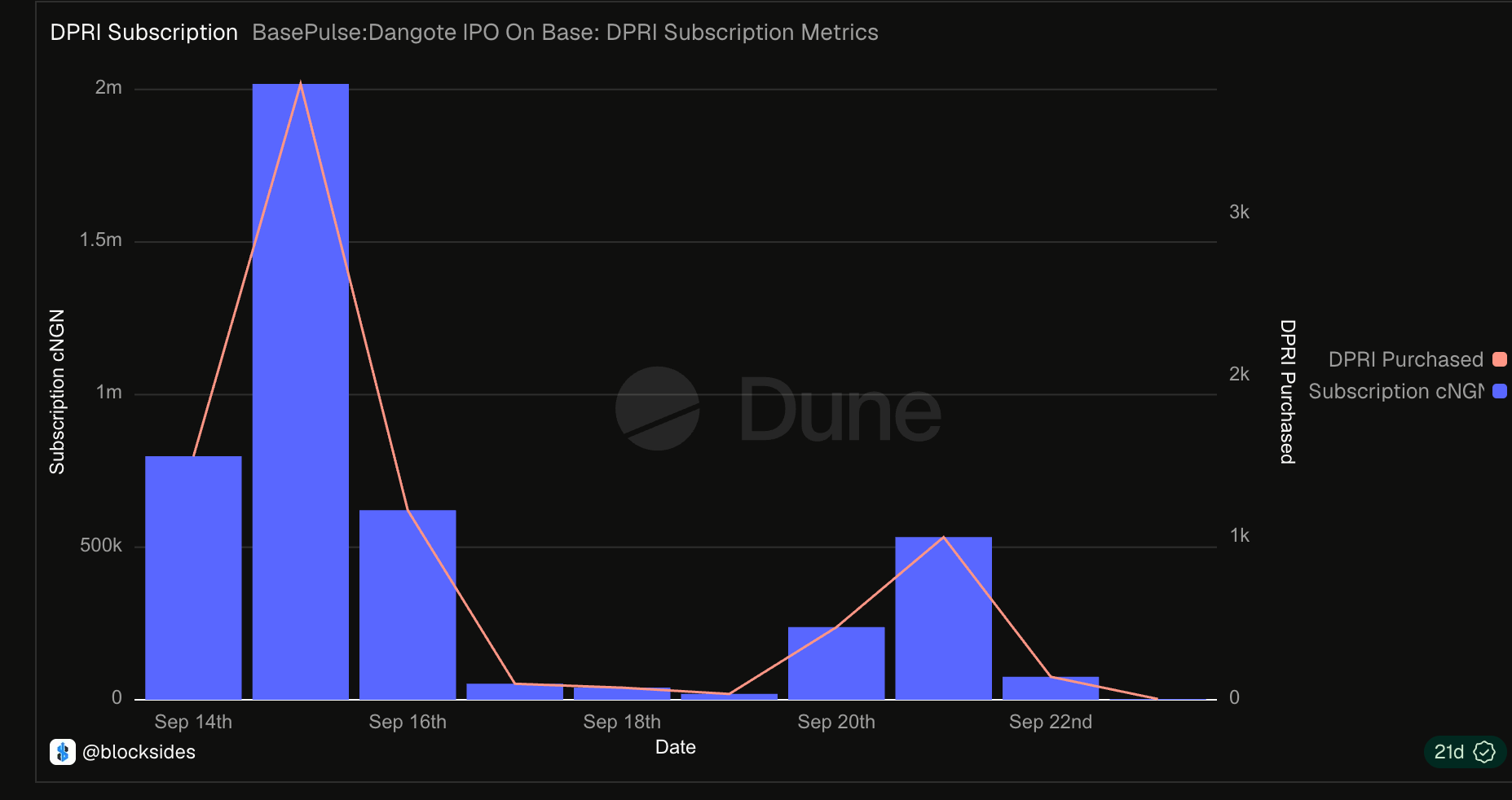
All together, the overall vibe here is that we are indeed tokenizing everything.
From where we sit, tokenization is arguably crypto’s key economic driver in 2026, with the agentic technology narrative coming in as a close second.
Chain economics
A mix of embarrassing daily revenue figures, winding-down announcements, and a noticeable lack of innovation is beginning to spark strong opinions about network chains.
We looked at the numbers so far and found a 48% drop in new network launches. Just 36 new chains came online between January and September 2026, compared to 69 over the same period in 2025.
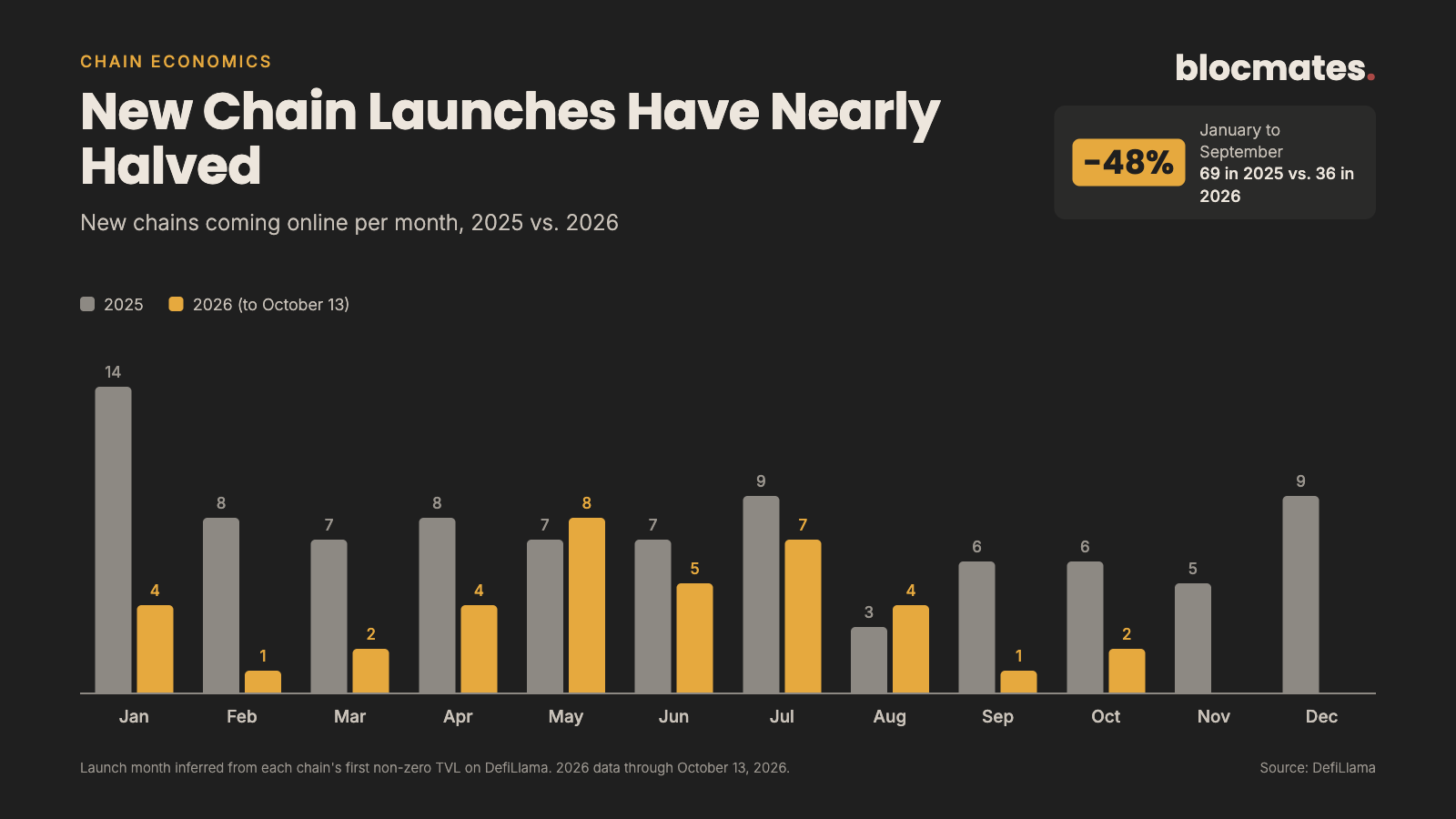
Amid that stat, Robinhood stands out as one of the biggest network launches so far.
Since its debut in July, the network has amassed over $1 billion in total value locked (TVL) while accounting for 4.1% of all tokenized stocks onchain.
The network’s strong performance reflects a broader shift toward quality, more financially efficient networks entering the market with clear, distinctive moats that extend beyond the familiar claims of being the “fastest” or “most decentralized.”
For Robinhood, the ambition is to build a thriving tokenized stock ecosystem on its own rails. Meanwhile, another significant launch, Arc, is positioning itself as infrastructure purpose-built for the stablecoin economy.
This shift toward more differentiated networks is also reflected in the numbers. Despite fewer network launches in 2026, newer entrants have generally performed better in terms of TVL than their 2025 counterparts.
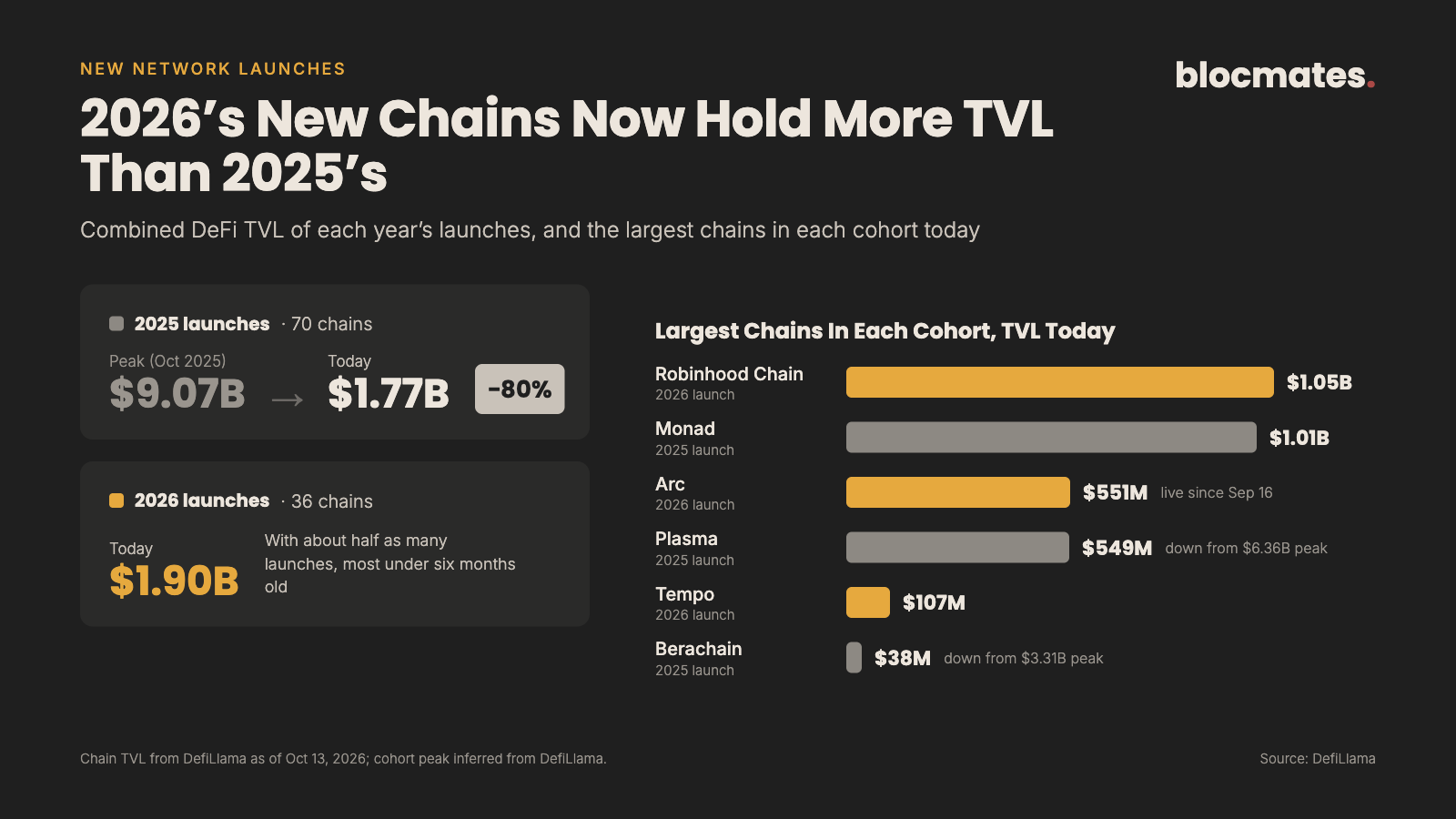
The trajectory makes it easy to infer that a network’s business or go-to-market strategy is equally as important as its network performance.
We believe that it goes beyond traditional venues coming onchain with their own rails. Nation-states are rapidly adopting the idea of a national blockchain network, owned and developed for onchain economic activity within the country.
China, for example, is marching towards developing its own national blockchain as a broader expression of a new digital economy.
Citrini’s list under a microscope
It’s been quite the year for everyone behind the curtains at Citrini. From viral, banger research to espionage and a merger, the firm’s knack for staying at the forefront of market narratives is once again bringing it to the shores of crypto.
The thematic research firm recently dropped its “Breaking the Wall” report, featuring a basket of crypto assets with some pretty familiar names.
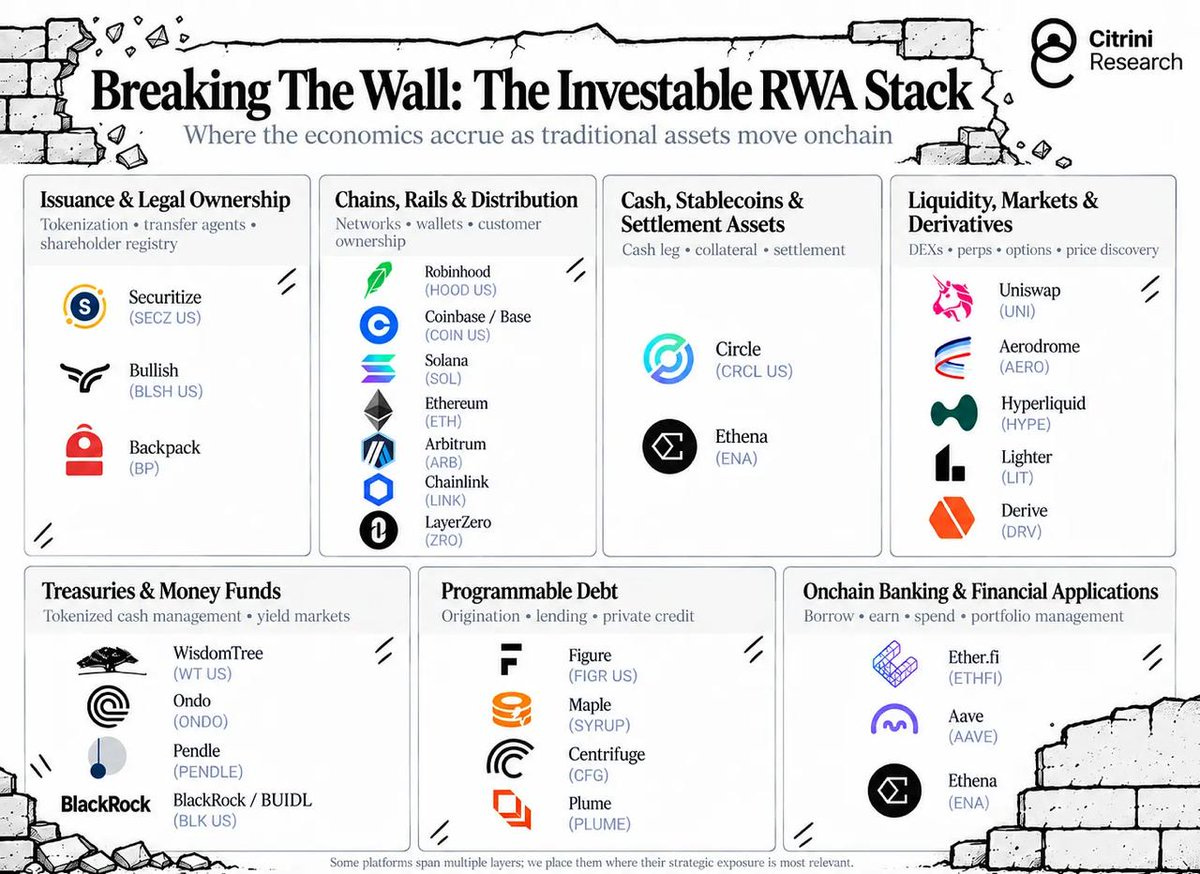
Citrini’s thesis is that crypto is finally coming of age as a serious industry, driven by the rise of tokenization and agentic finance. And the assets best positioned to capture the upside of this transition are the fee-generating infrastructure protocols powering everything from trading and lending to yield and derivatives.
However, putting Citrini’s selections under the microscope reveals a few interesting patterns that offer a useful lens for identifying other protocols operating within the same narratives, which might also be worth keeping an eye on.
For starters, Citrini appears to be making a significant bet on derivatives by including Derive and Lighter, both of which, when combined with the rest, account for 39% of the overall basket.
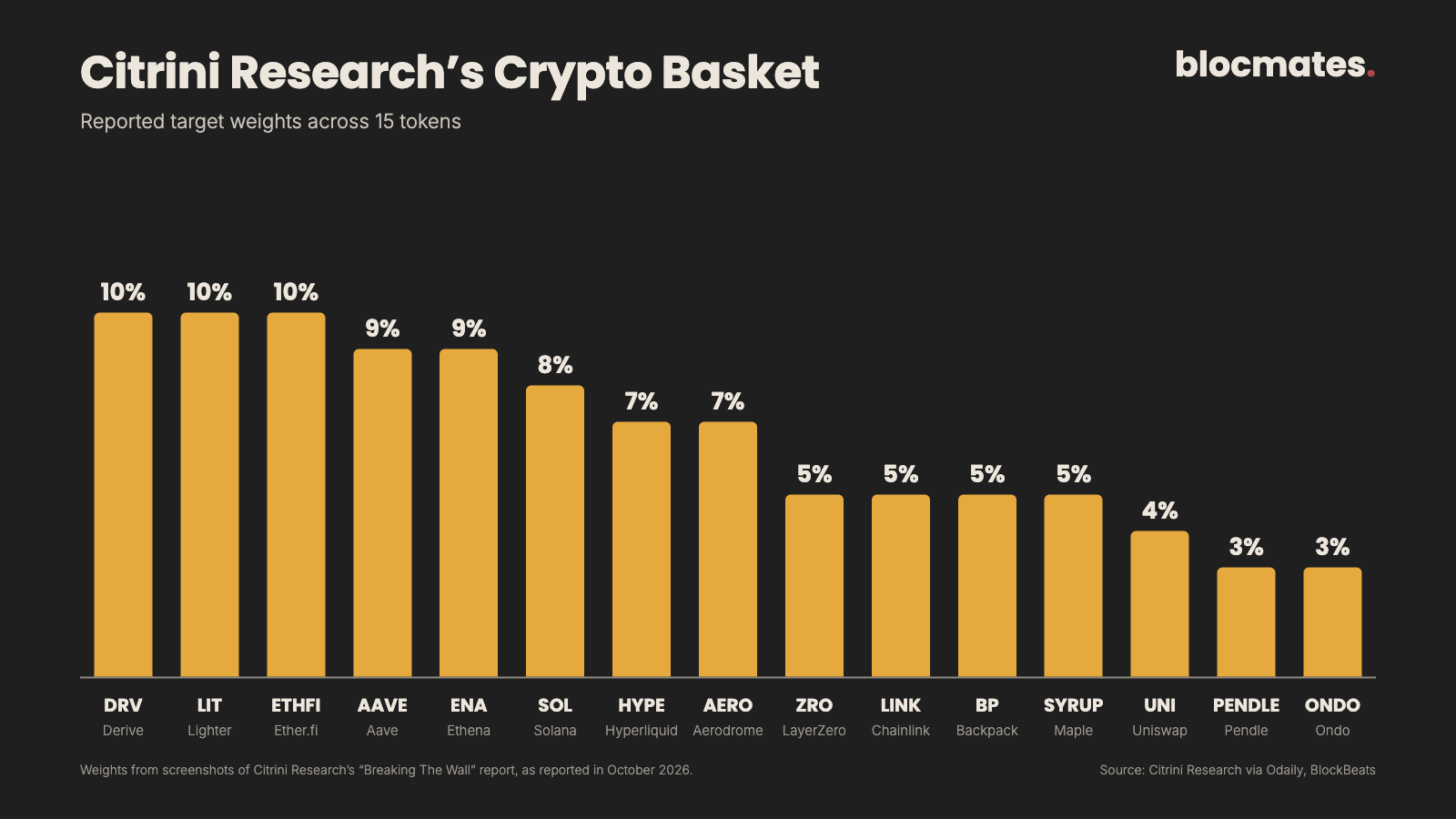
Derive and Lighter each receive a 10% weight, the highest individual allocation, with Hyperliquid sitting at 7%.
Onchain, the contrast between these names is instructive.
Hyperliquid remains the category’s scale leader, with roughly $7 billion in TVL, tens of billions in monthly perpetual volume, and a value-accrual mechanism in which the large majority of protocol revenue is directed toward HYPE buybacks.
Lighter, by comparison, has established meaningful traction with over $700 million in TVL, billions in monthly volume, and a growing presence on Robinhood Chain, while also directing a portion of fees toward LIT buybacks.
Lighter is widely viewed as the leading public beta for Hyperliquid and an alternative venue that has demonstrated its ability to attract retail activity, largely due to its frontend, which charges zero fees on orders.
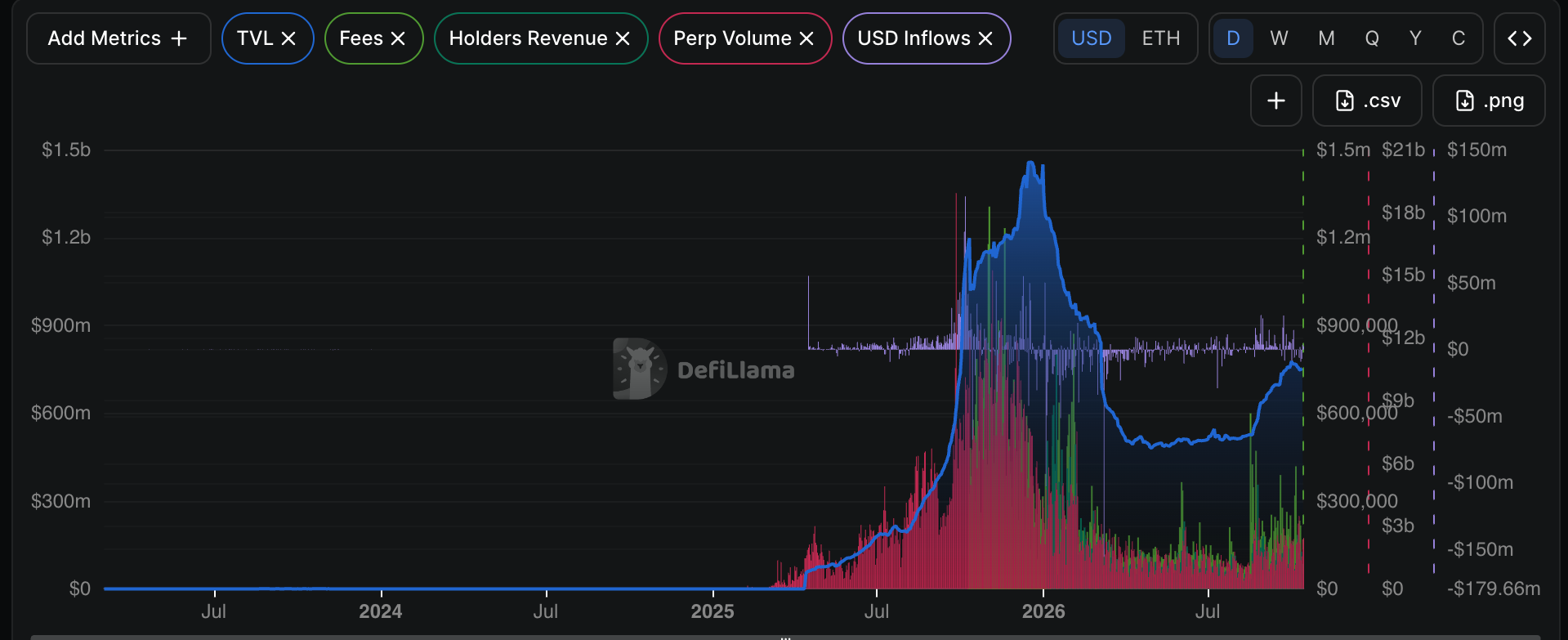
Derive, on the other hand, is the consensus bet on onchain options, having captured the majority of options premium this year, generating meaningful fees that are streamed into buybacks for its token, DRV.
This raises a natural question: if Lighter functions as a beta to Hyperliquid, what does a true alternative to Derive look like?
A credible challenger in onchain options would need to do more than replicate Derive’s model at a smaller scale.
It would need to offer a genuinely differentiated approach, primarily through a novel product design that solves the instrument-familiarity bottleneck that has plagued onchain options growth, while still demonstrating early evidence of fee generation and a mechanism for value accrual to a token, if any.
With that in mind, we’re keeping a close eye on LayerV, an onchain options platform taking what we think is an ingenious approach to bringing options products onchain.
We’re also cooking up an extensive deep dive into what the team is building, so stay tuned.
Moving beyond derivatives, our microscope highlights a consistent preference for protocols that generate real fees and provide a clear pathway for those fees to reach holders.
The obvious clean pipe in this regard remains Hyperliquid.
However, under our microscope, Aerodrome, the dominant native liquidity layer on Base, streaming 100% of its trading fees to veAERO lockers ahead of an onchain merger with Velodrome and further multichain expansion, is a more interesting specimen to observe.
Aerodrome captures a significant portion of the trading volume on Base, reaching 45-56% of total DEX volume over 30 days (~$14.5 billion) and earning over $11.5 million in fees over the last 30 days.
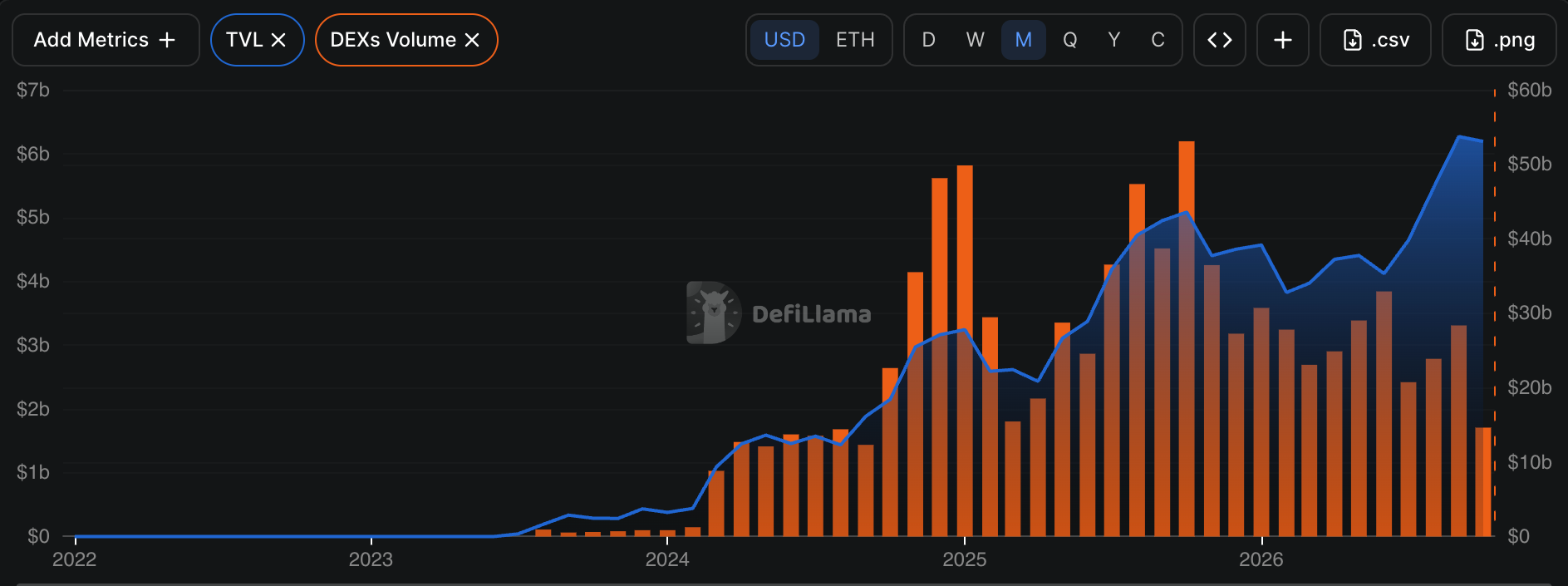
Additionally, Aerodrome continues to absorb the lion’s share of the growing activity on Base, including tokenized stock trading volume, where it frequently commands 75–90% of the market.
This points to an obvious concentration of activity despite the ecosystem’s growth, prompting us to explore alternatives that could gain enough momentum to be considered compelling beta plays.
Based on this, Hydrex, a Base-native MetaDEX and liquidity infrastructure protocol (also called an “Omni-Liquidity MetaDEX” or “Universal Liquidity Engine”) that launched in September 2025 as a bootstrapped, DUNA-governed public good, seems rather interesting with a bottomed chart.
Make no mistake, competing in this arena will require some backbreaking work, especially as Aerodrome continues its aggressive expansion. Still, we’re keen to dig deeper into Hydrex and uncover what thesis, if any, might be taking shape beneath the surface. So, stay tuned.
What’s missing in your portfolio?
As things pick up, there’s more attention to portfolio building than when the industry was 95% in stables and 5% in memecoins.
The big questions - how to do it right, what sectors to look at, and the best way to allocate to these venues are all surfacing again.
For example, Ansem’s strategy posits a 70/30 split between high-conviction plays and riskier or degenerate ones. It is not an idea we disagree with.
So, we lined up Citrini Research’s latest report against the public positions of two of the most vocal traders/researchers on the timeline, Ansem and Tulip King.
Synthesizing all three and going by Ansem’s 70% major allocation, with the exception of BTC and ETH, we expect to see high-conviction volume flock to DRV, SOL, HYPE, and ZEC.
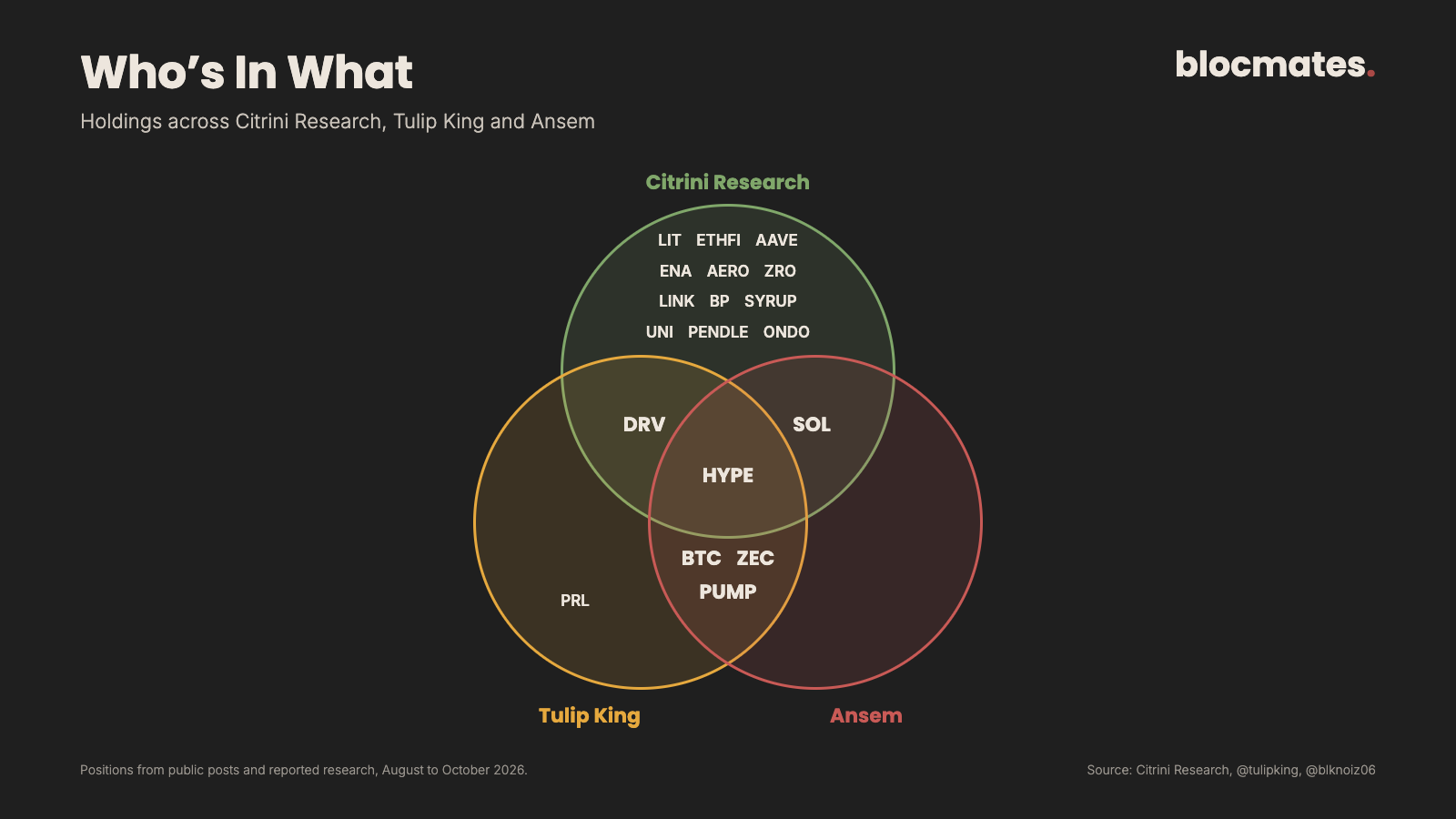
If we break that compilation down, it is a basket made up of onchain options, at least one perps venue, a network chain, a degeneracy bet, and a privacy protocol.
As such, building your own portfolio can take the same shape, but only after you’ve done a bit of research, not just by copy-pasting.
On that note, for a thousand and one reasons, we believe privacy is a sector worth exploring for anyone thinking in the medium term.
We recently put out research on Nillion, and how they are approaching privacy from a much more holistic pov, and we suggest you give it a read.
Out on the risk curve, Pearl (PRL) is flying solo. Despite the “AI Bitcoin” label, nobody else besides Tulip on our three-list is touching it. If that’s your kind of bet, our recent research is a good place to start in getting to know what it is all about.
Concluding thoughts
Evidently, the year is closing out on a positive note. While it might be controversial to call that with two months to go, we believe that the key market drivers - tokenization and growth in consumer apps are sufficient indicators for a forecast.
In the last 30 days, apps made 11 times what chains made, taking $563 million in revenue, while chains made $43 million.
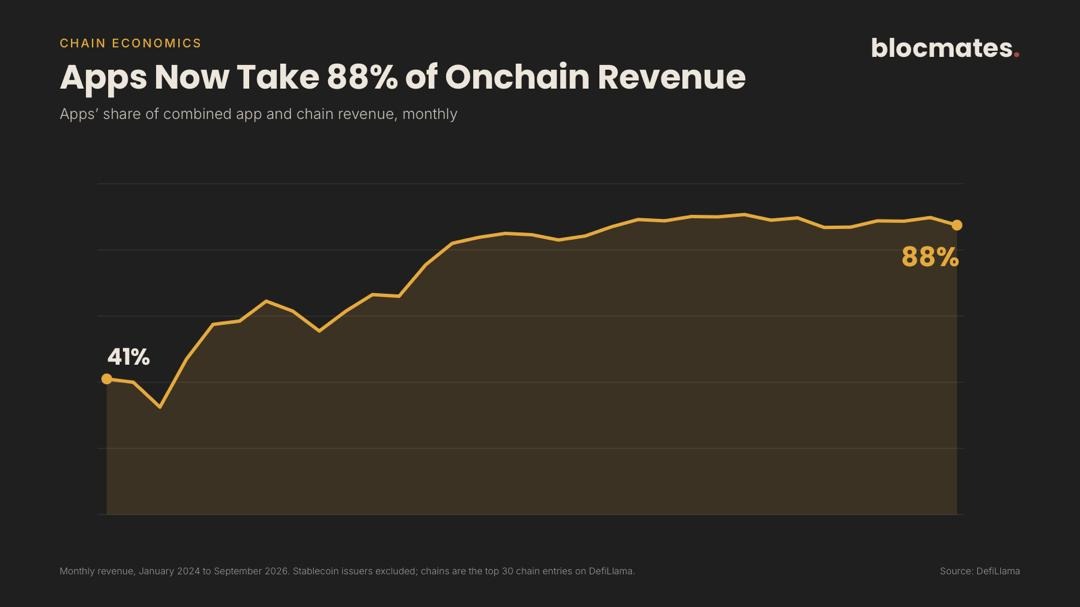
Apps are up 2.15x in onchain revenue share, moving from 41% in 2024 to 88% in 2026.
This growth in both tokenization and consumer apps is a strong indicator that we are currently living in the inflection point of mass adoption, both on the institutional front and on the consumer side.
On the tokenization side, value is moving horizontally, flowing into onchain venues with supporting infra capturing the value. We believe more inventive ways to express this trade are yet to show up.
For consumer apps, the direction of value is vertical, moving up the stack from chains to applications, but their value is based on their ability to redirect profit back to consumers.
The industry is beginning to do this without the need or immediate need for a token. Products like fomo already share revenue through referrals and creator rewards, and some tokenized protocols, such as Aave, are debuting fintech-style apps to capture the consumer upside.
Since deposits opened, the Aave app has crossed over $30 million in deposits accessible through ghost passes, with over 2738 unique deposits.
On the other hand, protocols that are profitable, have tokens, and operate a meaningful fee-sharing mechanism are emerging as consensus bets for medium- to long-term investment.
Overall, the investability argument relative to earlier cycles is showing signs of improvement, making crypto’s onchain ecosystem significantly attractive as we march towards 2027.







.webp)
.webp)
.webp)

.png)

.webp)



.webp)
.webp)
.webp)
.webp)










.webp)
.webp)

.webp)
.webp)
.webp)


.webp)
.webp)










.webp)
.webp)

.webp)
.webp)
.webp)


.webp)
.webp)


.webp)


.webp)




.webp)


.webp)


.webp)















.webp)




.webp)








.webp)

.webp)
.webp)

.webp)










.webp)

.webp)

.webp)





.webp)