What if the first person to live for 300 years is already alive?
It sounds absurd. But the idea isn’t confined to the biohacker fringe anymore, either. Researchers like Aubrey de Grey have spent decades arguing that radically longer human lives might become possible as we learn to intervene in the biological processes that cause us to age.

Their proposition isn't that we'll suddenly stumble upon immortality, but that we might gradually learn to repair aging-related damage faster than it accumulates.
Things like removing dysfunctional cells, restoring the function of aging tissues, and eventually replacing parts of our bodies that can no longer repair themselves.
This is the thinking behind "Longevity Escape Velocity" (LEV), a concept popularized by de Grey that suggests aging might eventually become something we can repeatedly treat, not dissimilar from how we combat many diseases today.
And once you understand the basis of the argument, it’s a rabbit hole that’s easy to fall down.
Outrunning the clock: What is LEV?
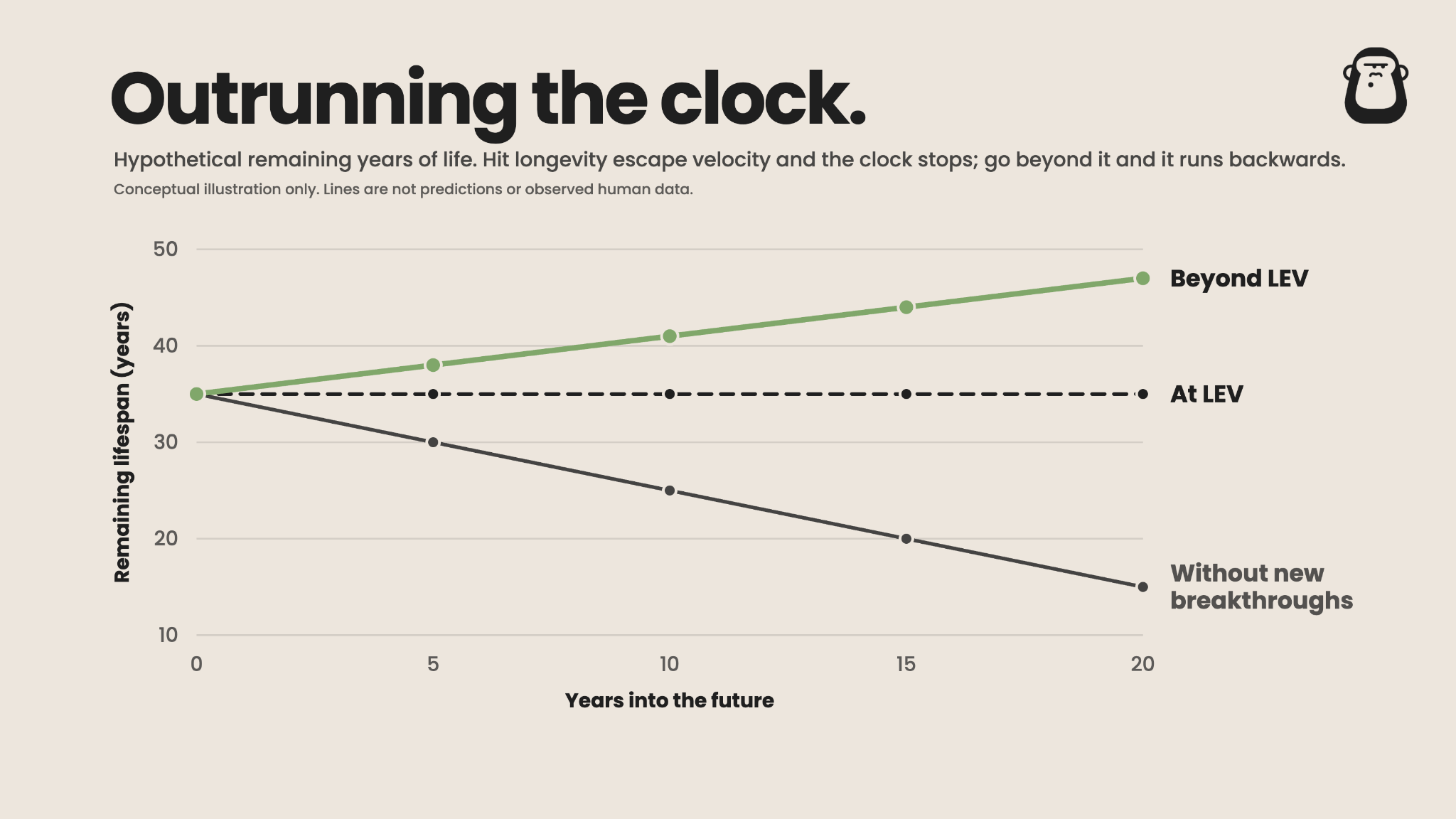
At its simplest, Longevity Escape Velocity is the hypothetical threshold where advances in medicine add at least one year to your remaining life expectancy for every year that passes.
Let's say you're 50 years old with an estimated 35 years left to live. Normally, that number would gradually shrink as you get older.
But imagine that, over the next year, a new medical treatment improves your outlook enough to bring your remaining life expectancy back up to 35 years.
Another year passes, medicine improves again, and you still have 35 years left. Keep that up, and you could theoretically continue getting older without your expected remaining lifespan shrinking.
If treatments advance even faster, that number might actually start to grow.
Think of your body like a car - a complex machine with overlapping and interconnected systems that degrade over time. Normally, a car gets closer to the scrapyard every year.
But imagine mechanics keep developing better ways to restore its aging components.
Eventually, each year's improvements in maintenance technology extend the car's expected service life as much as another year of driving wears it down.
The car keeps piling on mileage, but its expected remaining service life holds steady.
Of course, keeping a human body running is a hell of a lot more complicated than rebuilding an engine. We'll get into that shortly.
The longevity staircase: We don’t need to cure aging all at once
We don't necessarily need scientists to develop a miracle anti-aging pill anytime soon. The first generation of therapies might only need to buy enough time for better treatments to arrive.
Going back to our car analogy, imagine you pull into a workshop with an engine that's on its last legs. The mechanic has a new technique that can restore some of its worn components, buying you another decade on the road.
By the time you return, the workshop has a whole new set of tools. Mechanics can now rebuild parts of the transmission that were previously beyond repair.
Another decade passes, and they're restoring systems nobody knew how to fix when you first drove in.
That's roughly the thinking behind the "longevity staircase." Each successive generation of treatments buys us more time to develop the next, gradually tackling more of the problems that cause our bodies to deteriorate.
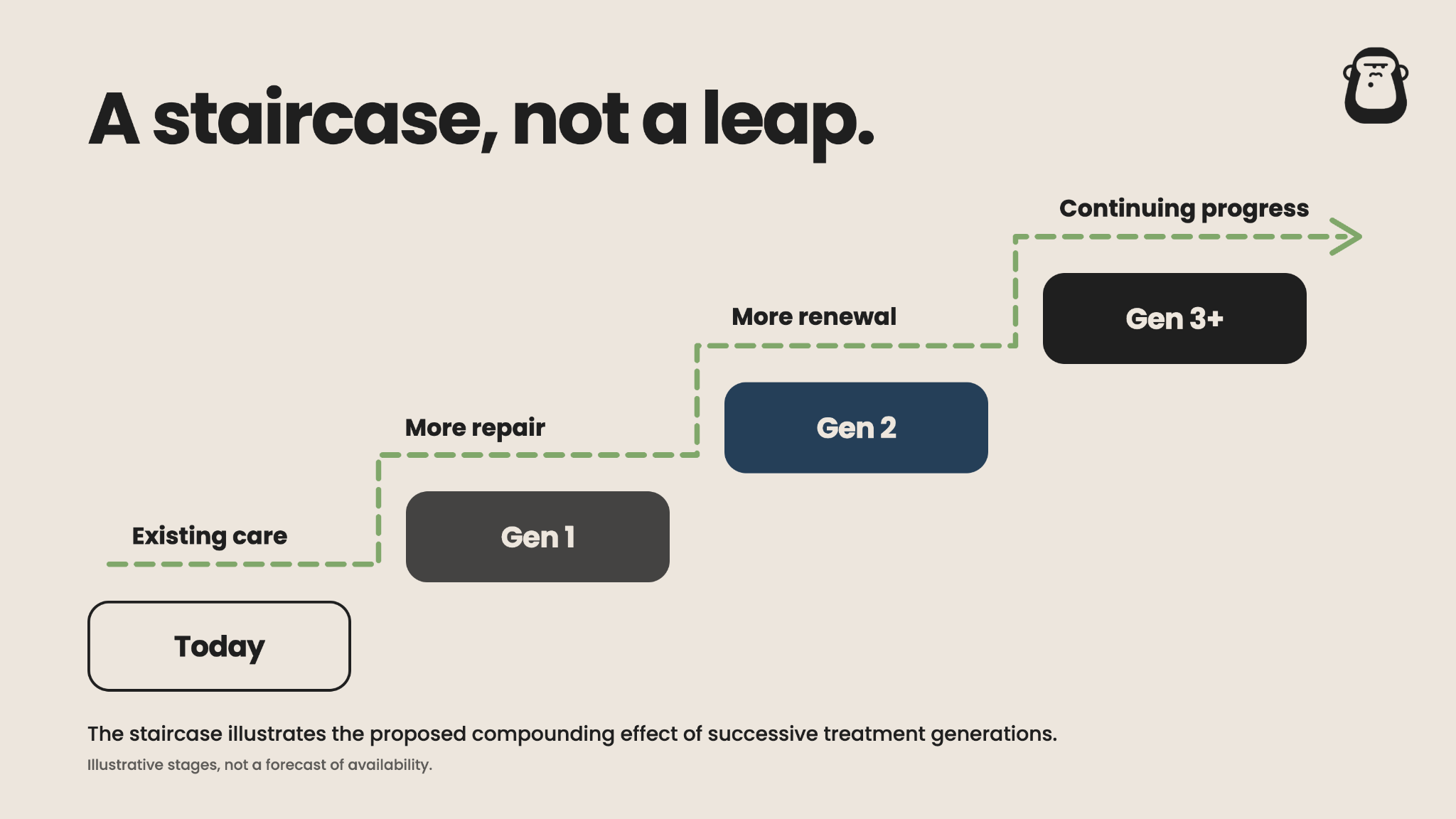
Of course, the timing is everything. Those new treatments have to arrive before the damage catches up with us, and they need to be safe enough to keep using. We've got quite a way to go before anyone can demonstrate that kind of progression in humans.
Still, it's worth understanding what even a relatively modest breakthrough might set in motion.
And researchers are already tinkering with some pretty interesting tools.
Learning to repair the machine
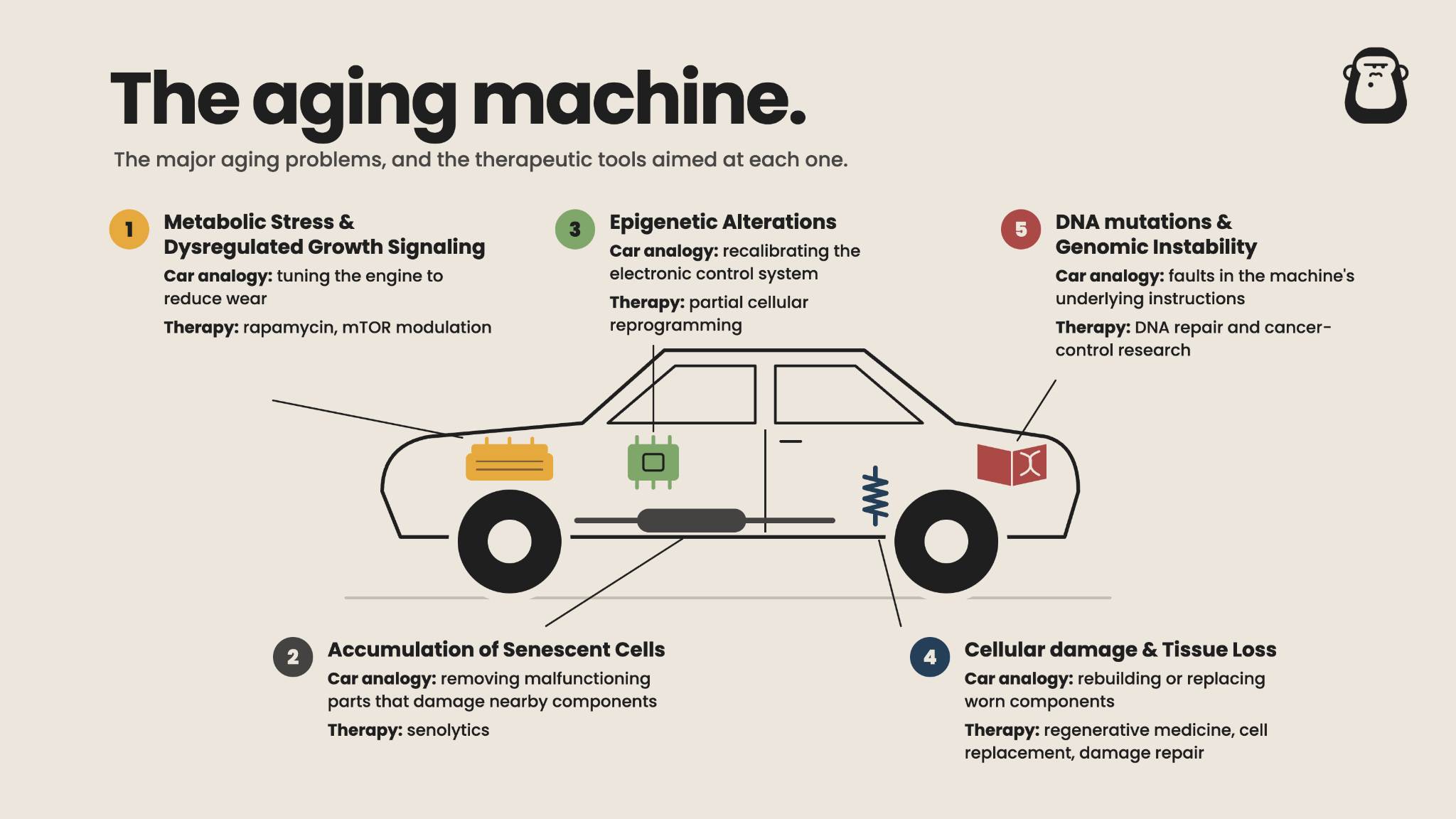
Aging isn’t a single problem. It’s a collection of interconnected biological processes which may require multiple kinds of treatments.
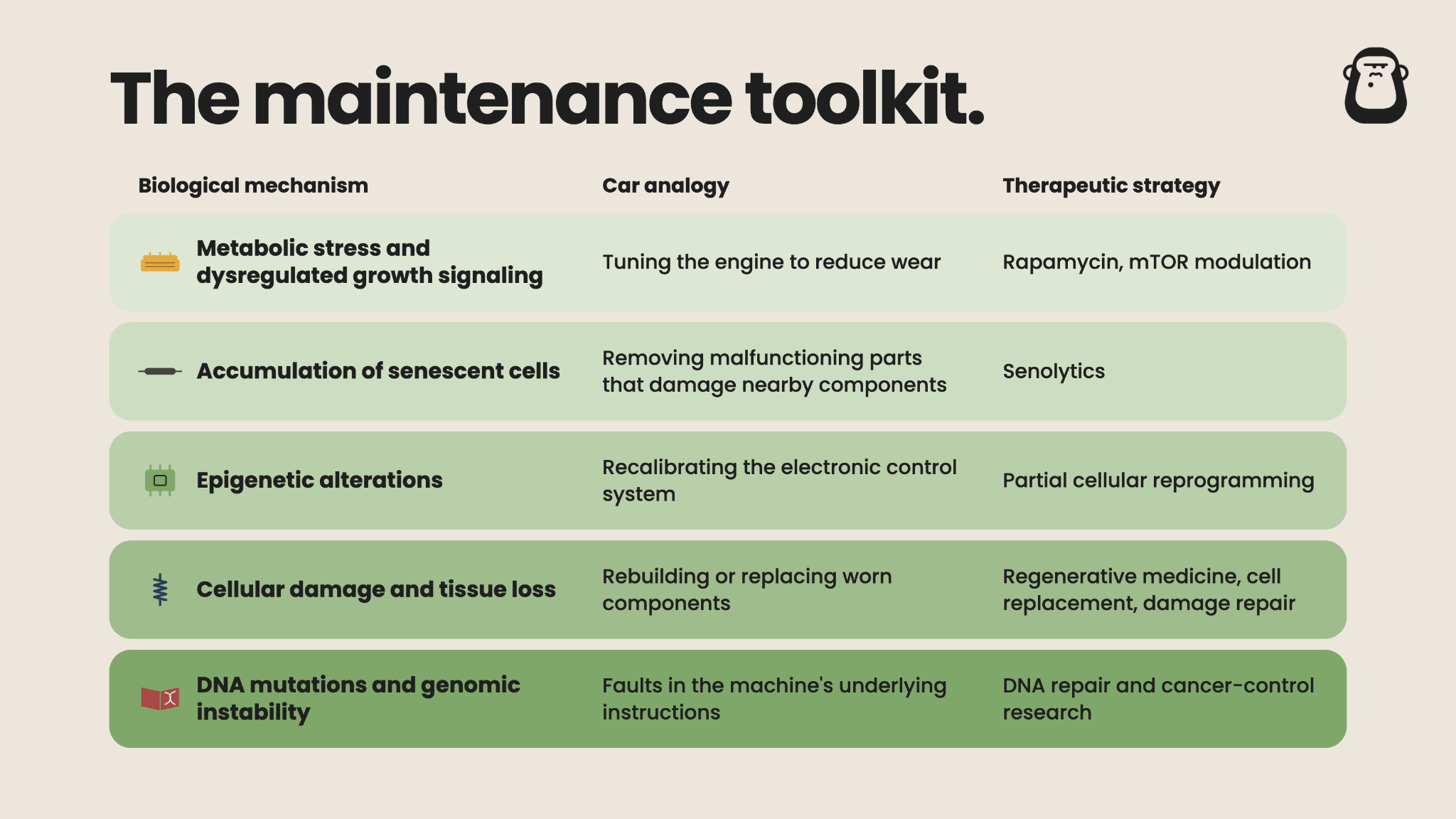
The same general thinking applies to our bodies. A therapy that addresses one problem could leave plenty of others untouched.
One of the more interesting approaches involves getting rid of cells that have outlived their usefulness.
As we age, some of our cells enter a state called senescence.
They stop dividing, which can actually be helpful in protecting against cancer, but some stick around and release inflammatory signals that interfere with nearby healthy tissue. Researchers have taken to calling these "zombie cells."
Drugs known as senolytics attempt to selectively clear these troublesome cells. Researchers have seen promising results in mice, and a small human trial published in October 2026 found that a combination of two senolytic drugs improved liver scarring in patients with a particular form of fatty liver disease.
That's encouraging, although we're still a long way from knowing whether clearing these cells can meaningfully extend human lifespan.
Then there's the possibility of restoring aging cells that are still worth keeping.
Partial cellular reprogramming is one of the more fascinating avenues here. Our DNA contains the instructions for how cells should function, while a layer of chemical regulation called the epigenome helps determine which instructions actually get used.
These regulatory patterns change as we age, and researchers are investigating whether they can restore some of the more youthful settings.
The technique involves temporarily activating certain proteins known as Yamanaka factors.
In a 2020 study, researchers managed to restore aspects of youthful cellular function and improve vision in aged mice using three of these factors.
There's a catch, though. Push the reprogramming too far and cells can lose their specialized identity, potentially creating serious problems. Figuring out how to control the process is a major part of the work.
Other researchers are looking at replacing damaged cells with healthier ones, or modifying the metabolic pathways involved in aging.
Rapamycin, for example, acts on a pathway called mTOR that helps regulate cellular growth and resource use. It's extended lifespan in mice, although we haven't demonstrated the same longevity benefits in humans.
And then there's GLP-1, probably the most topical example of treatments with potential benefits beyond their original applications.
The groundbreaking SELECT trial, published in 2023, found approximately a 20% reduction in major cardiovascular events among more than 17,000 participants taking semaglutide.
These were people with established cardiovascular disease and overweight or obesity, so the results don't tell us whether otherwise healthy people would benefit from taking it for longevity.
The excitement around GLP-1s has also met some reality checks. Novo Nordisk's large EVOKE trials failed to demonstrate that semaglutide slowed Alzheimer's progression, despite earlier research suggesting it might help.
In our workshop, GLP-1s probably belong closer to the engine-tuning department. They can reduce certain health risks, and there are hints of benefits beyond weight loss, but we have little reason to think they're capable of restoring an aging body.
So we're gradually learning to work on different parts of the machine. How much of this repair technology is actually ready for people?
How close are we, really?
Spend ten minutes reading longevity headlines and you'll find two perspectives: those convinced we're on the brink of a deathless planet, and those who think the whole field is a crock of horseshit.
There's quite a bit of interesting work happening somewhere between those extremes.
Take partial cellular reprogramming, which we touched on earlier.
In October 2026, biotech company Life Biosciences announced results from the first three patients receiving its experimental ER-100 treatment for glaucoma.
The treatment uses a gene therapy to deliver three of the Yamanaka factors into the eye, where researchers can temporarily switch them on using an antibiotic called doxycycline.
The hope is that this restores some of the function lost in damaged nerve cells.
All three patients tolerated the treatment through the first 56 days, and two showed preliminary improvements in their visual-field tests. The company has since been cleared to test a higher dose.
Pretty exciting stuff, although we're talking about three patients, less than two months of follow-up, and results reported by the company itself.
ER-100 is currently in Phase 1, where researchers are primarily concerned with safety and finding a suitable dose.
Assuming things go well, subsequent trials would need to demonstrate that the treatment actually works, ideally against a control group, before larger studies could establish its benefits and risks with greater confidence.
And that's for a treatment focused on a particular part of the eye. Applying similar technology throughout the body would introduce an entirely new set of challenges.
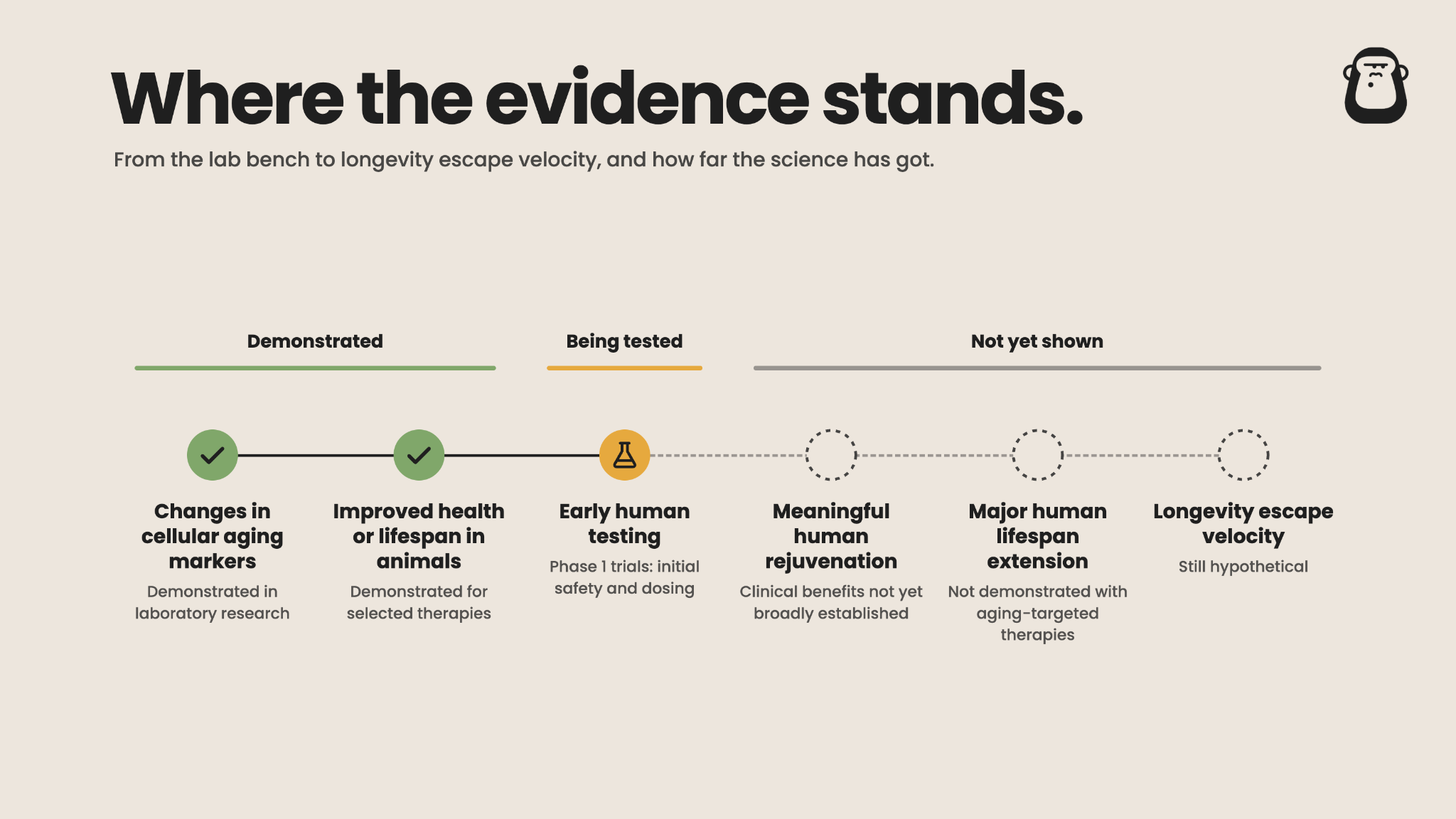
Longevity research also has an awkward measurement problem. How do you prove a drug adds ten years to someone's life without running the experiment for decades?
One possibility is to measure improvements in biological-age markers or physical function. The $101 million XPRIZE Healthspan competition, for instance, is challenging researchers to demonstrate improvements equivalent to at least ten years in muscle, cognitive, and immune function.
Those measurements could give researchers useful information much sooner, although we still need to establish how reliably they predict longer, healthier lives.
AI might help speed things along by finding promising drug candidates, improving trial design, and identifying suitable patients.
There's plenty of room to make the process more efficient. Unfortunately, there's no fast-forward button for finding out whether a treatment remains safe and effective over years of use.
That leaves us with some genuinely interesting early results and a rather long road to proving LEV. Still, even a fraction of what these researchers are pursuing could have consequences well beyond medicine.
Who’s funding the research?
There's also an awful lot of money finding its way into longevity research.
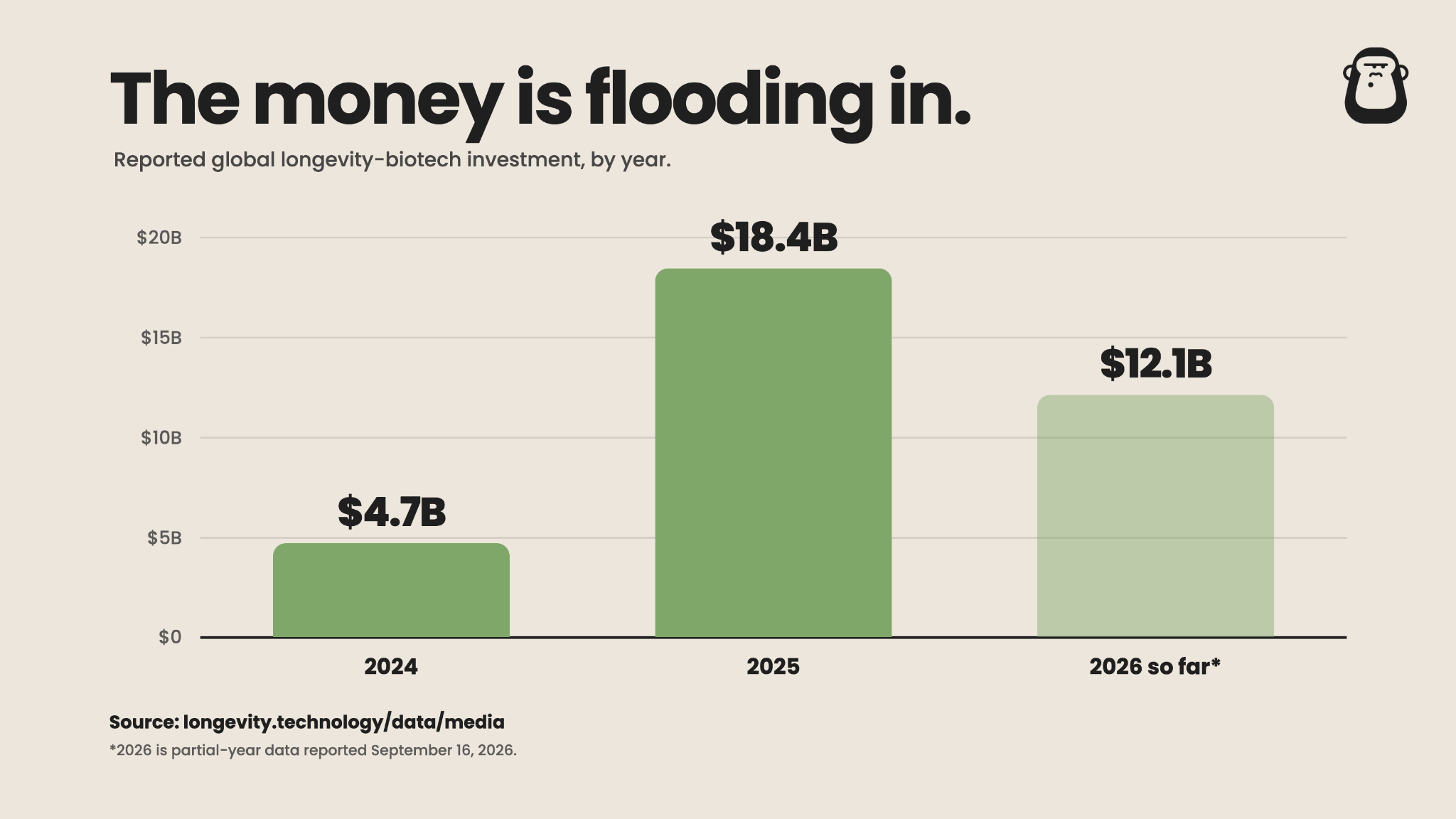
Alphabet has been backing Calico's aging research for over a decade, while Altos Labs launched in 2022 with a whopping $3 billion committed to studying cellular rejuvenation.
Sam Altman's Retro Biosciences raised fresh funding in May 2026 at a $1.8 billion valuation, and NewLimit, co-founded by Coinbase's Brian Armstrong, pulled in another $435 million in June to push its cellular reprogramming therapies toward human trials.
The interest extends beyond Silicon Valley's billionaires, too.
Saudi Arabia's Hevolution Foundation says it has allocated roughly $400 million to healthspan research, while the US government's ARPA-H is investing up to $144 million in a program aimed at understanding and treating age-related decline.
That's quite a collection of checkbooks for a field still working through its earliest human trials.
We're beginning to see longevity emerge as an investment theme in its own right, although much of the most ambitious work is concentrated in a handful of private biotech companies.
Investors are putting serious money behind the possibility that aging could eventually become treatable. Whether those investments produce effective medicines is still very much an open question.
Who wins when aging becomes treatable?
Entire industries are making plans around you dying on a reasonably predictable schedule. Pensions, insurance companies, retirement accounts, and government budgets all have assumptions about how long we're supposed to stick around.
What happens in a world where centenarians are more the rule than the exception?
As always, there will be winners and losers. A lot depends on how well our healthspan (the years we spend in good health) keeps up with our lifespan.
Imagine an extra 30 years of life, but most of them are spent battling chronic illness. We'd probably see growing demand for eldercare, more money flowing into hospitals, and an even greater burden on retirement and healthcare systems.
Now imagine those additional decades are spent in good health, with people remaining physically and mentally capable well into their hundreds.
We could see second or third careers become commonplace, a whole lot more continuing education, and an entirely new class of consumers with decades of extra spending ahead of them. Wealth managers might find themselves looking after clients for an additional 50 years.
I, for one, expect a conga line of cruise ships circling the Mediterranean once LEV takes off.
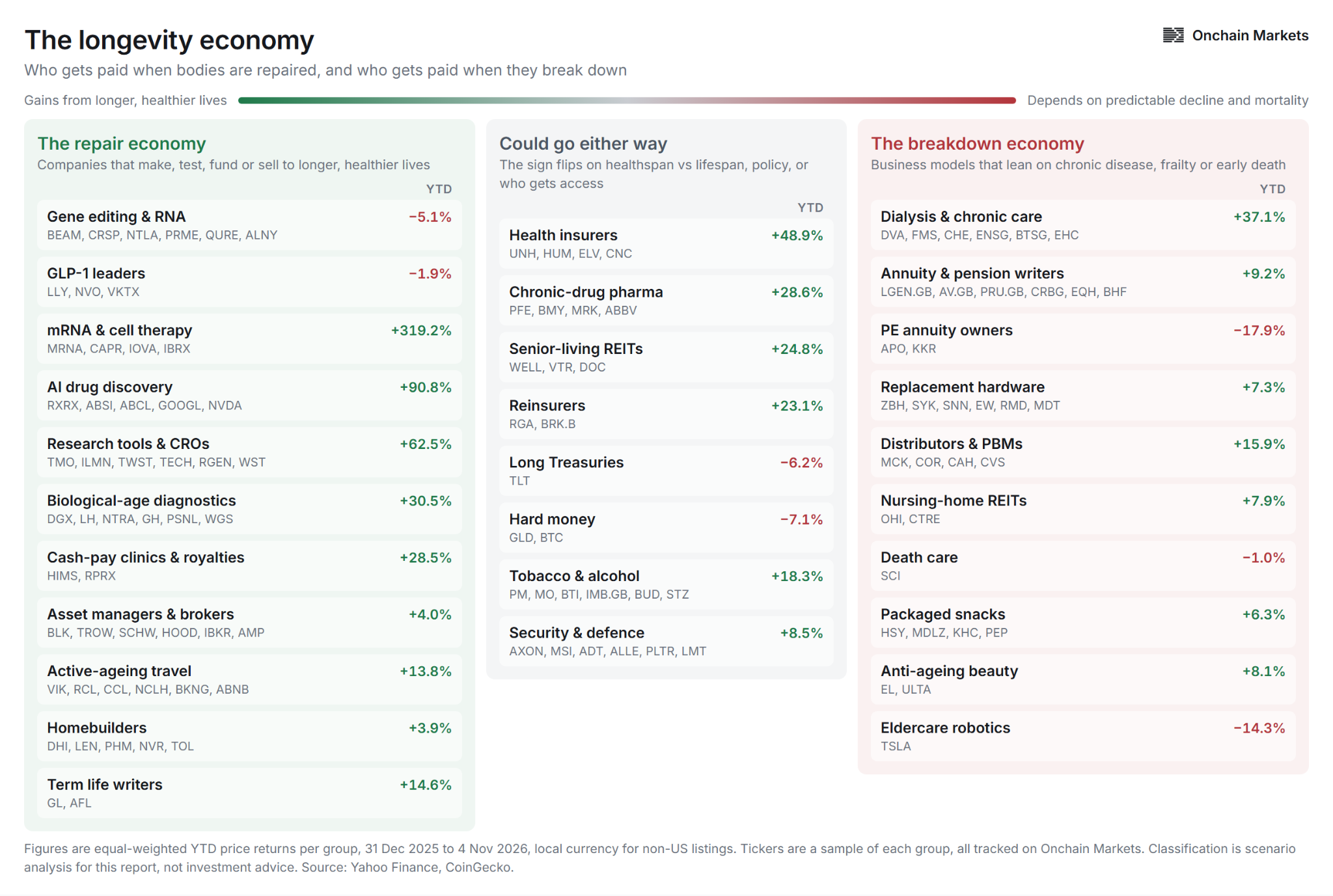
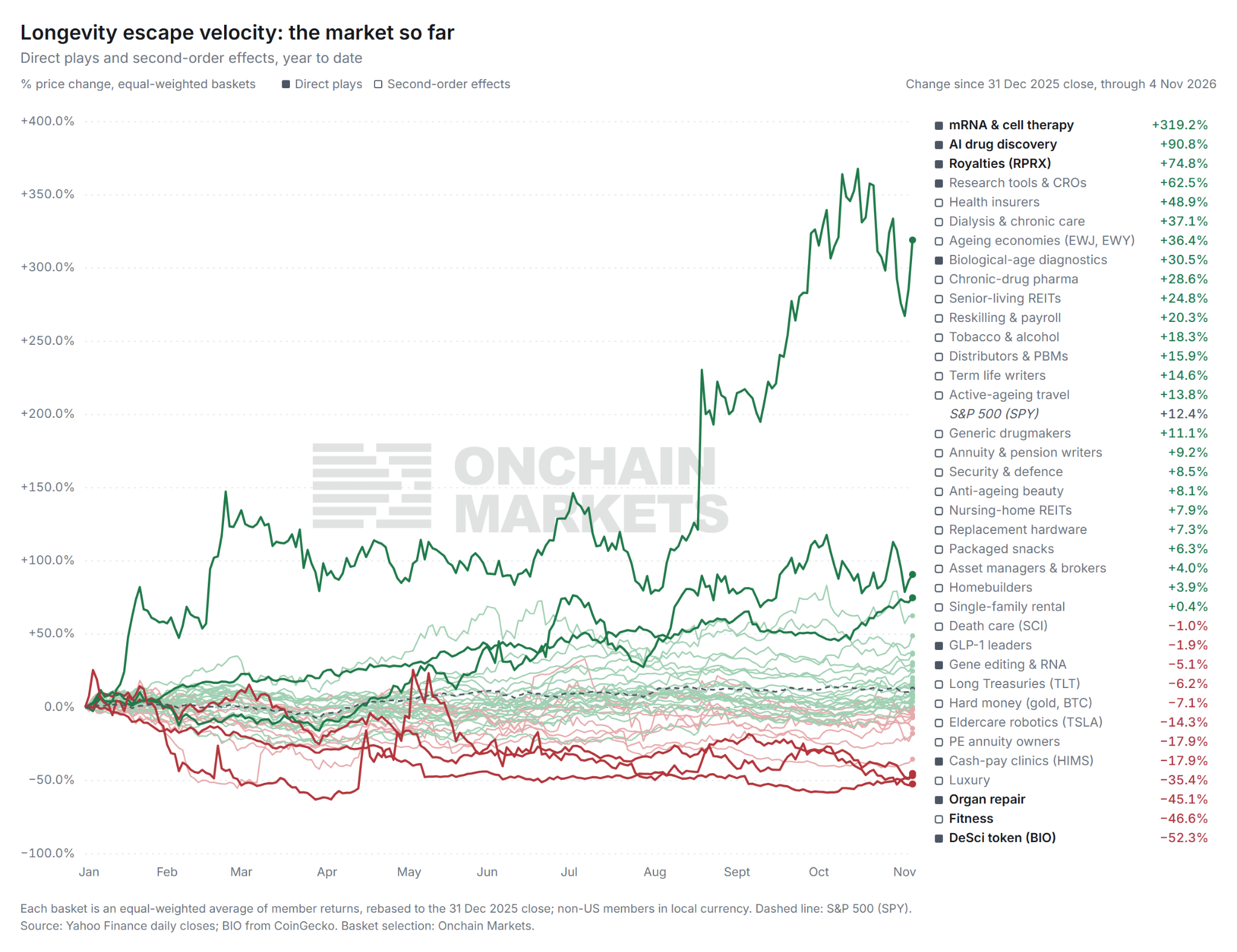
The companies developing effective rejuvenation therapies would have an enormous new market to pursue.
Businesses that depend on treating the consequences of chronic decline might find themselves in a tougher position.
It's difficult to imagine anyone mourning a drop in dialysis appointments or dementia diagnoses, even if the companies providing those services have to adapt.
Insurance gets a little more complicated. A healthier population could mean fewer medical claims, while life insurers might find themselves collecting premiums for longer before paying out death benefits.
Companies selling lifetime annuities, on the other hand, could end up making payments for decades longer than they originally planned.
And then there's retirement itself.
France had people rioting in the streets when the government raised the retirement age from 62 to 64 in 2023. How do you even begin to structure retirement in a world where someone might remain healthy for another 50 years after their 65th birthday?
There are some uncomfortable questions around housing and wealth, too. But what happens to housing when the boomers never die and release their homes? How does inheritance work when parents are still around at 130?
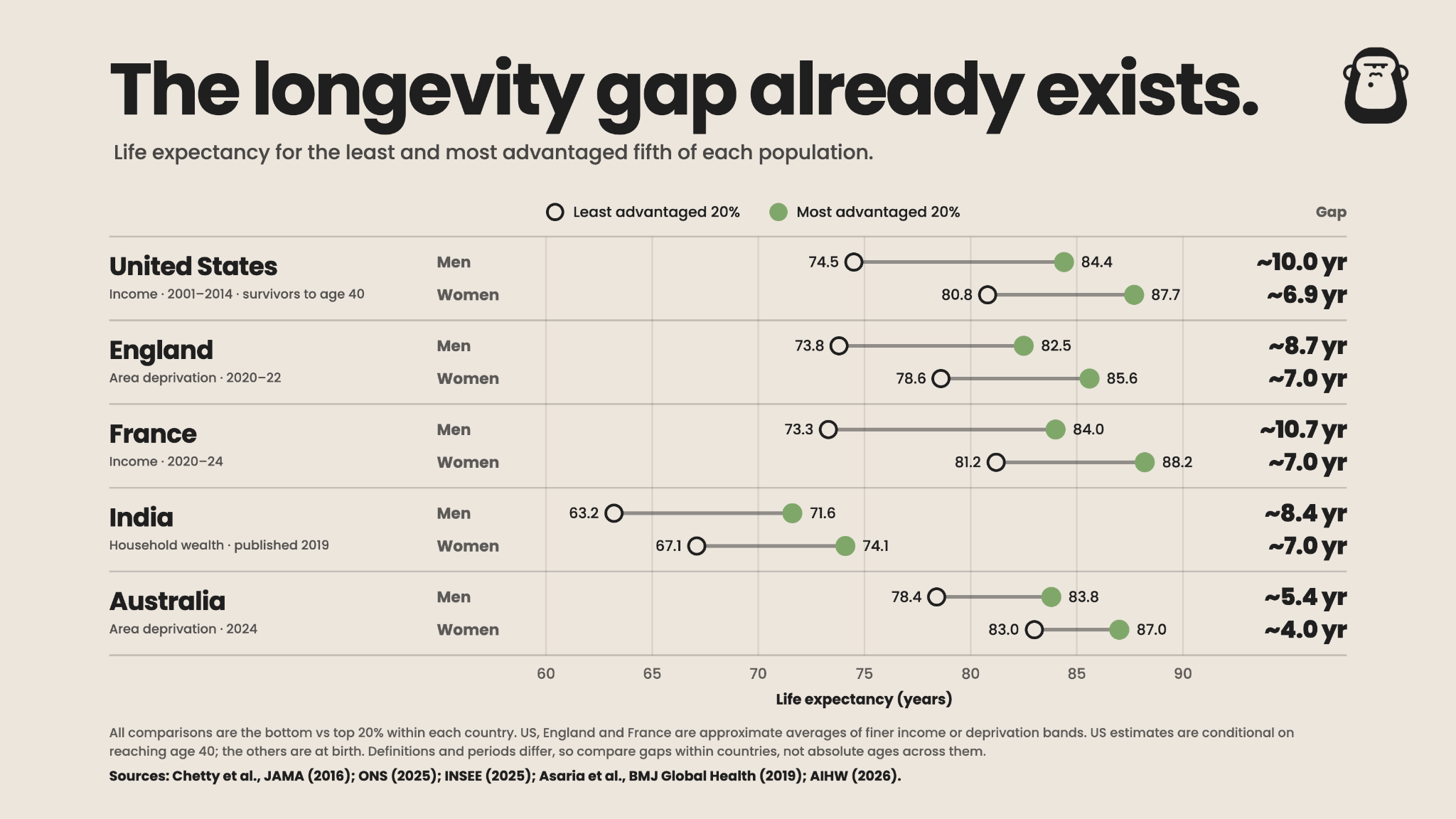
And perhaps most concerning, what happens if these therapies initially cost hundreds of thousands of dollars and only the wealthy can afford to keep taking them?
We already have enormous disparities in life expectancy. Imagine layering radical life extension on top of those existing inequalities.
There are plenty of ways this could play out, and I suspect the transition would be a mess even in a relatively successful scenario.
We've built much of society around the assumption that human lives follow a fairly predictable trajectory. If we really do learn to extend that trajectory by decades or centuries, we'll have a lot more to figure out than how to keep our bodies running.
The next repair might change everything
From my point of view, the most exciting prospect of LEV is that the breakthrough that starts it might not look particularly revolutionary at first.
A treatment that gives us another ten healthy years would be remarkable on its own, but consider what might happen during those ten years.
Imagine it's 2041. Scientists have developed a treatment that clears out one of the many types of damaged cells that accumulate as we age. Clinical trials suggest it could extend healthy life by around a decade, and you're among the first to receive it.
You go about your life, and meanwhile, researchers keep working.
By 2051, they've figured out how to restore the function of certain aging tissues using a new generation of cellular reprogramming techniques. Maybe that buys you another fifteen years.
And by 2066? Who knows what the workshop might look like by then. The mechanics certainly have a few more tools at their disposal than they did when you first pulled in.
Of course, this whole progression depends on the treatments arriving quickly enough, working as intended, and remaining safe over time. We have no idea whether the timing will actually work out.
But I find it fascinating that we could be approaching a period where even relatively modest advances in longevity have enormous consequences for what comes next.
An extra decade of healthy life gives medical science another decade to figure things out, and it's hard to imagine what the field might look like several generations of breakthroughs down the road.