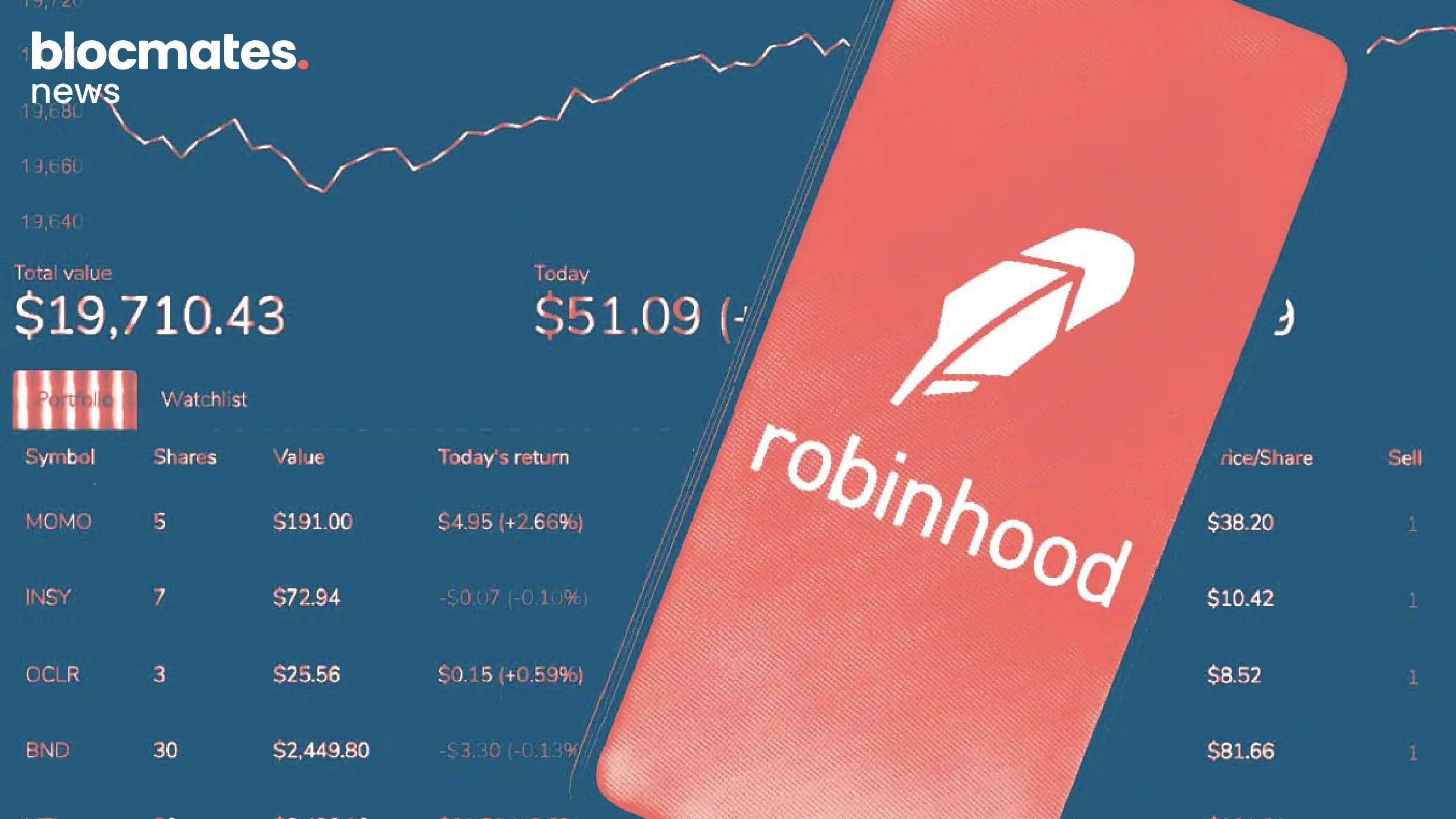
Robinhood has launched a prediction markets hub inside its trading app, allowing users to bet on event outcomes, including Federal Reserve rate decisions and sports tournaments.
The move comes as demand for event-based derivatives grows, despite regulatory scrutiny over their gambling-like nature.
Background
- Robinhood officially launched its prediction markets hub on Monday, introducing event-based derivative trading to its platform.
- The feature allows retail investors to speculate on real-world events, such as the Federal Reserve’s interest rate decisions in May and upcoming college basketball tournaments.
- The company is expanding beyond traditional stock and crypto trading, moving into event-based contracts, a sector that has been gaining traction among traders looking for straightforward, all-or-nothing bets on economic and political events.
- The rise of event-driven contracts has raised regulatory concerns, with the U.S. Commodity Futures Trading Commission (CFTC) closely monitoring the space.
- Robinhood’s move follows its short-lived attempt in February to offer Super Bowl betting contracts, which were scrapped within a day after a CFTC request.
- The platform’s prediction markets will initially be available through KalshiEX LLC, a CFTC-regulated exchange, ensuring some level of compliance with U.S. regulations.
Why should you pay attention?
- Robinhood is tapping into the growing demand for event-based derivatives, which have historically been a niche asset class but are now seeing mainstream adoption.
- The regulatory landscape remains uncertain, with the CFTC previously halting Robinhood’s sports betting contracts and closely watching other event-driven offerings.
- This launch signals Robinhood’s ambition to evolve beyond stocks and crypto, aiming to compete with traditional financial service providers.
- Eligible users can now bet on real-world events, including major economic decisions and high-profile sports tournaments, introducing a new form of speculative trading to retail investors.
- The success or failure of Robinhood’s prediction markets could shape the future of event-based derivatives, influencing whether regulators clamp down or allow further expansion.
Who said what?
- Robinhood defended its move into event-based trading, stating:
“Businesses and investors can use these markets to hedge against uncertain events and associated risks, such as election outcomes, regulatory changes, or economic shifts.”
- The company confirmed its ongoing discussions with regulators, saying:
“Robinhood has been in close contact with the CFTC in recent weeks and looks forward to continuing to work with the regulator.”
- Eric Balchunas, Senior ETF Analyst for Bloomberg, reacted to the launch on X, calling it a ‘Degen’s Paradise’, posting:
“Robinhood is going into prediction markets, going to let ppl bet on Fed, sports, politics etc.”
Zooming out
- Event-based contracts are becoming a major trend in financial markets, blending elements of trading and gambling, raising ethical and regulatory questions.
- Regulators, including the CFTC, have historically been cautious about allowing widespread event-based trading, fearing it could blur the line between financial instruments and gambling.
- Other platforms, such as Polymarket, have also attempted to enter the space, with some facing legal challenges over unregulated event wagering.
- If Robinhood’s prediction market launch is successful, this move could accelerate the mainstream adoption of event-based trading, but if regulators intervene, it could stifle the sector before it gains full traction.
- Robinhood shares responded positively, gaining 4.3% on Monday following the announcement.





.webp)

.webp)

.webp)

.png)


.webp)



.webp)
.webp)

.webp)
.webp)
















.webp)

.webp)


.webp)





.webp)
.webp)





.webp)

.webp)

























.webp)

.webp)
.webp)

.webp)
.webp)

.webp)
.webp)
.webp)


.webp)
.webp)


.webp)


.webp)




.webp)


.webp)



.webp)






















.webp)







.webp)















.webp)

.webp)
.webp)

.webp)














.webp)

.webp)


.webp)






.webp)